

October Jobs Report: Stronger-Than-Expected Hiring
Saturday, November 07, 2026
WHEN THE JOB MARKET GOES BEAST MODE: OCTOBER'S BIG JOB SURPRISE
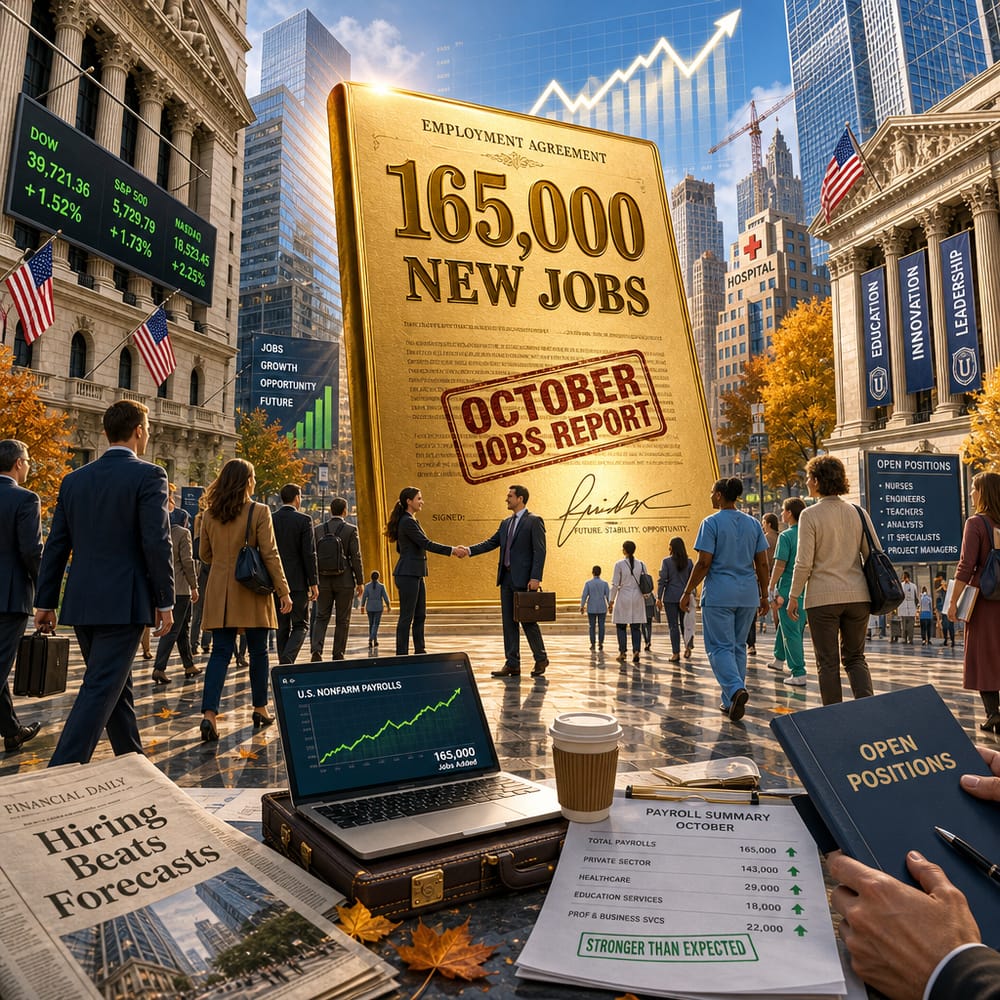
Remember when we were all glued to our screens, waiting for Squid Game season two? Well, job market watchers felt the same anticipation, but we got an episode we didn't see coming. October's jobs report just dropped, and like a surprise plot twist, it hit with a bang—165,000 new jobs. That's not just strong; it's Rocky lifting weights while running up the steps of the Philadelphia Museum of Art strong. Economists were expecting less, but the labor market had some tricks up its sleeves.
Let’s break it down: in a world of market uncertainty, what sectors are doing all the heavy lifting, how might this flex impact your wallet, and what does it mean for our friends at the Federal Reserve who are itching to tap the interest rate button?
SECTORS DRIVING JOB GROWTH
First up, who’s pulling the weight in this hiring spree? Professional and business services continue to be the employee buffet, snapping up talent like there’s no tomorrow. If you've got a thing for spreadsheets or consulting, you're in luck. Meanwhile, education and health services aren't just about giving lessons and check-ups; they’re also dishing out jobs like candy at Halloween.
These sectors are not just making waves; they’re sending a ripple effect throughout the economy. More jobs mean more paychecks, and more paychecks mean more spending.
CONSUMER SPENDING: THE REAL MVP?
Here’s where it gets personal. More jobs mean more people are walking around with paychecks that might even feel a bit thicker. This isn’t just good news for their bank accounts—it's rocket fuel for consumer spending. And when consumer spending takes off, it’s an economic party that everyone’s invited to. Retailers, restaurants, and service providers feel the love, potentially leading to a virtuous cycle of more hiring to meet demand.
Picture this: more folks hitting up local diners, upgrading their outdated phones, or planning long-overdue vacations. That's the magic of a strong labor market—it puts money back into the economy like a boomerang with a spending spree.
FEDERAL RESERVE: THE ELEPHANT IN THE ROOM
Now let’s talk about the folks in charge of the money throne—the Federal Reserve. With job numbers looking beefed up, the Fed's decision-makers might be reaching for their hiking boots, ready to give interest rates a nudge. They’ve been playing it cool amid a will-they-or-won’t-they drama regarding rate hikes. More jobs can mean inflation, and if the Fed smells too much of that, they could step in with rate increases to cool things down.
Higher interest rates would mean that loans for everything from homes to cars could become pricier. It’s like the economic equivalent of taking away the punch just as the party’s starting to pop off. But, the Fed's balancing act is all about keeping the economy humming without letting it overheat.
WHAT DOES THIS MEAN FOR YOU?
For the everyday investor, this robust job market signals both opportunities and risks. On the bright side, sectors like professional, business, education, and health services might be worth a closer look if you're considering investments. These areas are hiring, expanding, and generally strutting their stuff with confidence.
Yet, keep an eye on those Fed meetings like they’re the season finale of your favorite show. A rate hike, while not a foregone conclusion, could send ripples through stock markets, affecting everything from tech stocks to those more traditionally seen as stable investments.
In the end, October’s job report didn’t just exceed expectations; it served a reminder that in the economic world, surprises come in all forms. Whether you’re an investor, a consumer, or just someone trying to make sense of the fiscal chaos, the key takeaway is clear: the job market is flexing, and as it does, it’s steering the economy in directions that could spell both challenges and opportunities in the months ahead.
Stay savvy, keep that financial ear to the ground, and as always, happy investing.
This article is for informational purposes only and is not investment advice. Always do your own research or consult a licensed financial professional before making investment decisions.
© Copyright 2024. All Rights Reserved.
© Copyright 2024. All Rights Reserved.