

October Jobs Report: Strength Masking Weak Underneath?
Saturday, November 21, 2026
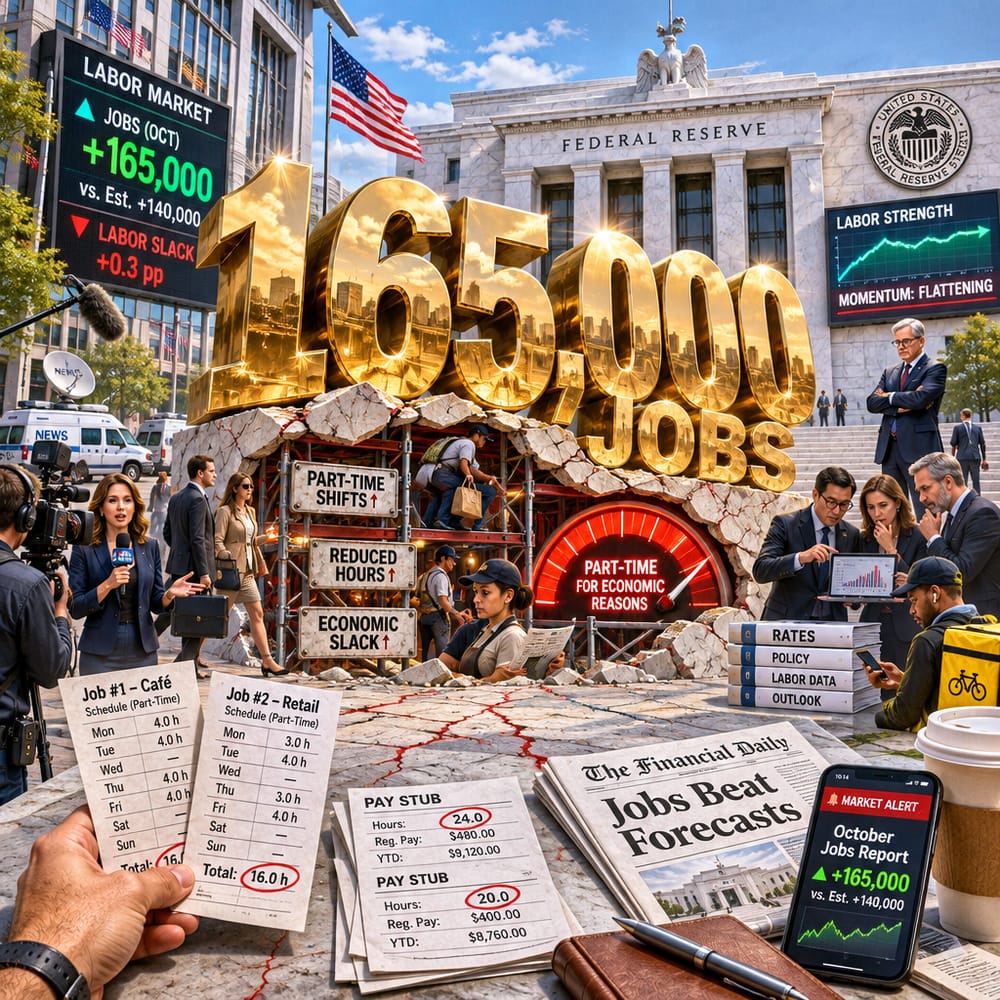
JOB MARKET JUGGLING ACT: WHEN A STRONG HEADLINE HIDES A WEAK UNDERBELLY
In the land of economic statistics, not all that glitters is gold, or so it seems with the latest October jobs report. On the surface, the U.S. economy seemed to be flexing its muscles, adding a hefty 165,000 jobs and surpassing analysts’ expectations. But peek beneath the shiny headline numbers, and the picture is murkier than a Monday morning coffee. The rise in part-time work for economic reasons is suggesting there’s more slack in the labor market than meets the eye. So, what does this juggling act between strength and weakness mean for your paycheck, the Federal Reserve, and ultimately, your investment portfolio?
THE RISE OF PART-TIME: WARNING SIGNS AHEAD?
It’s easy to celebrate a robust jobs number, but not all jobs are created equal. The real twist in this economic tale is the jump in part-time work for economic reasons. Translation: more people are settling for part-time gigs because they simply can’t find full-time employment. This rise signals that many Americans are still scrambling to make ends meet, even as the headline numbers suggest all is well in the job market paradise.
This trend of underemployment can weigh heavily on wage inflation. Why? Well, when there are more job seekers than decent-paying jobs, employers can keep a lid on wages. With fewer greenbacks in their pockets, consumers are less likely to splurge, putting a drag on broader economic growth. If this sounds like a vicious cycle, that’s because it is.
INFLATION: TO WAGE OR NOT TO WAGE
Wage inflation has been the Federal Reserve's nemesis of late. The worry is a spiral where higher wages lead to higher prices, which then demand even higher wages. But with the undercurrent of part-time work rolling in like a tide, the pressure on wages to rise broadly could relax.
The Federal Reserve, which has been walking a tightrope with interest rates, may need to reconsider its balancing act. If wage inflation takes a breather, the Fed might hold back on raising rates aggressively, giving investors some breathing room in bonds and equities alike. Think of it as a game of economic Jenga where every move matters, particularly when it comes to deciding U.S. monetary policy.
THE POLICY PLAYBOOK: WHAT’S NEXT FOR THE FED?
The Federal Reserve's to-do list is complicated enough without mixed signals from the job market. A strong jobs report traditionally would suggest a tightening of monetary policy—think higher interest rates to keep inflation in check. But if part-time work is growing because full-time opportunities are scarce, the Fed might hit the pause button on rate hikes.
This isn’t just a worry for policy wonks holed up in Washington; it’s a big deal for anyone with a mortgage, car loan, or even a savings account. The Fed’s moves dictate borrowing costs, which in turn fuel or freeze spending and investment.
YOUR STOCK PORTFOLIO: WHAT SHOULD YOU DO?
Investors, brace yourself. When the labor market sends mixed signals, the stock market can react like a cat on a hot tin roof. Rising interest rates can be bad news for stocks, particularly those that rely heavily on cheap financing. If the Fed decides to ease up on rate hikes, sectors like technology and real estate might breathe a sigh of relief.
On the flip side, if you’re betting on consumer stocks, keep an eye on wage growth—or the lack of it. Part-time workers are less likely to splurge on luxury items or new gadgets, which could put a damper on retail giants.
THE BOTTOM LINE
The October jobs report is a classic case of “seeing isn’t believing.” While more jobs are always a headline grabber, the quality of those jobs tells a different story. The rise in part-time work for economic reasons is a red flag that the labor market’s strength might be more of an illusion.
For retail investors, this might mean a few stormy seas ahead. Keep a close watch on Fed meetings like they’re the newest Netflix thriller. And remember, in the ever-complicated world of economics, certainty is rare. The key is staying nimble and keeping your finger on the pulse of these shifting dynamics, because in today’s market, adaptability is your greatest asset.
This article is for informational purposes only and is not investment advice. Always do your own research or consult a licensed financial professional before making investment decisions.
© Copyright 2024. All Rights Reserved.
© Copyright 2024. All Rights Reserved.