

October Jobs Report Bolsters Fed Rate-Hike Prospects for December
Friday, November 06, 2026
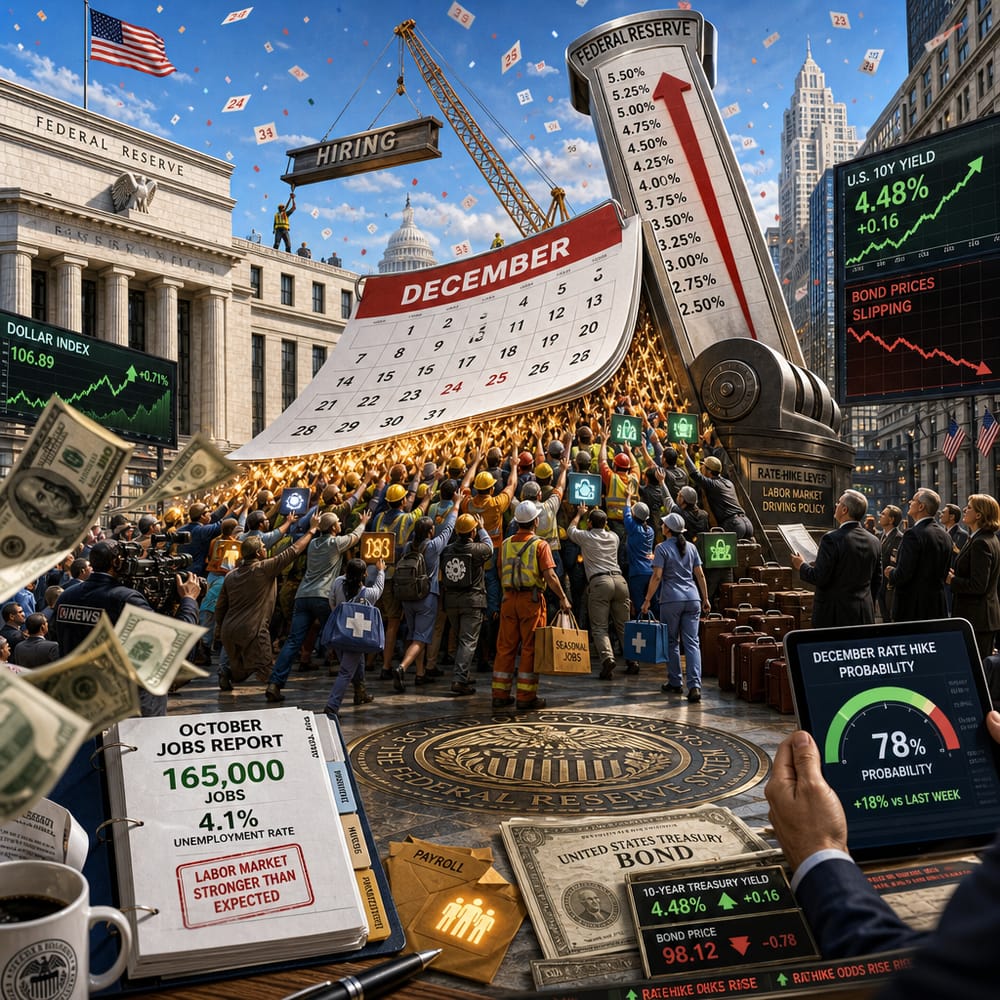
OCTOBER JOBS REPORT BOLSTERS FED RATE-HIKE PROSPECTS FOR DECEMBER
Hold onto your wallets, folks, because the economy's doing a cha-cha and the Federal Reserve's got its eye on the interest rate dial. With the U.S. adding a surprisingly robust 165,000 jobs in October and unemployment taking a nosedive to 4.1%, the Fed might just be getting that itchy trigger finger for a rate hike in December. But what does this actually mean for your pocket change and the market's mood swings?
First, let's talk about the Fed and its obsession with numbers—the kind that either gives Wall Street the warm fuzzies or sends it into a cold sweat. The Fed's primary job is to keep our economic ship sailing smoothly. When more folks are finding jobs, and fewer are lining up for unemployment, it sounds like good news, right? Well, mostly. But the Fed isn't just about making sure everyone has a job; it's also about balancing inflation, which can spike when too many dollars start chasing too few goods.
This latest jobs report could be the kind of nudge that gets the Fed thinking about turning the interest rate screw a little tighter. Higher interest rates make borrowing money more expensive, which can slow down spending and help keep inflation in check. It's not the most exciting topic at a cocktail party, but trust me, it's important.
Now, let's consider the ripple effects. If the Fed does decide to hike interest rates, it won't just be a line in a financial newspaper you skim over. Your mortgage rate could edge up, those credit card balances might get a bit pricier, and your car loan payments could start feeling a little heavier. In essence, it could cost you more to borrow money. And let's be honest, with the holiday season looming, nobody really wants that kind of extra expense.
But it’s not just consumers who feel the pinch. The broader economy has its own dance with interest rates. Equities and bonds react like teenagers at a high school dance—awkwardly and with varying levels of enthusiasm. A rate hike could mean a stronger U.S. dollar. Great for that European vacation you’ve been dreaming about, but not so hot for U.S. companies that sell goods overseas. A stronger dollar makes American products more expensive for foreign buyers, potentially putting a dent in exports.
Then there are Treasury bonds, the backstage pass of the financial world. When rates rise, these become more attractive since they start offering better returns, which can pull investors away from riskier stocks. Imagine Uncle Sam as the reliable older sibling offering a steady allowance compared to the stocks’ promise of a big, but risky, payday.
And let's not ignore the elephant in the room—the dreaded "R" word: recession. Too much tinkering with rates can slow down the economy more than planned, tipping it into a downturn. It's a delicate balance, and the Fed knows it’s walking a tightrope without a net.
But hey, it’s not all doom and gloom. A strong job market means more people with money in their pockets, ready to spend on everything from avocado toast to new cars. This could keep the economy humming even as borrowing costs inch up.
So what should you, the savvy investor, be doing as the Fed deliberates? Keep your eye on the Fed's next move and think about how your portfolio might weather a rate hike. Diversification is your best friend—don't put all your eggs in one basket, especially if that basket is teetering on the wobbly leg of interest rate uncertainty.
In the meantime, while the markets do their best impression of a rollercoaster, take a moment to relish the fact that jobs are up and unemployment is down. It's a sign that, at its core, the U.S. economy is resilient. So, whether you’re planning your next investment move or just trying to keep your credit card interest at bay, use this time to strategize. Because one thing is certain: just like those intermittent Fed meetings, the financial world will keep on spinning.
This article is for informational purposes only and is not investment advice. Always do your own research or consult a licensed financial professional before making investment decisions.
© Copyright 2024. All Rights Reserved.
© Copyright 2024. All Rights Reserved.