

October Inflation Still Running Hot — Wilting Shelter and Energy Lead Another Sticky CPI Print
Sunday, November 22, 2026
OCTOBER INFLATION STILL RUNNING HOT — WILTING SHELTER AND ENERGY LEAD ANOTHER STICKY CPI PRINT
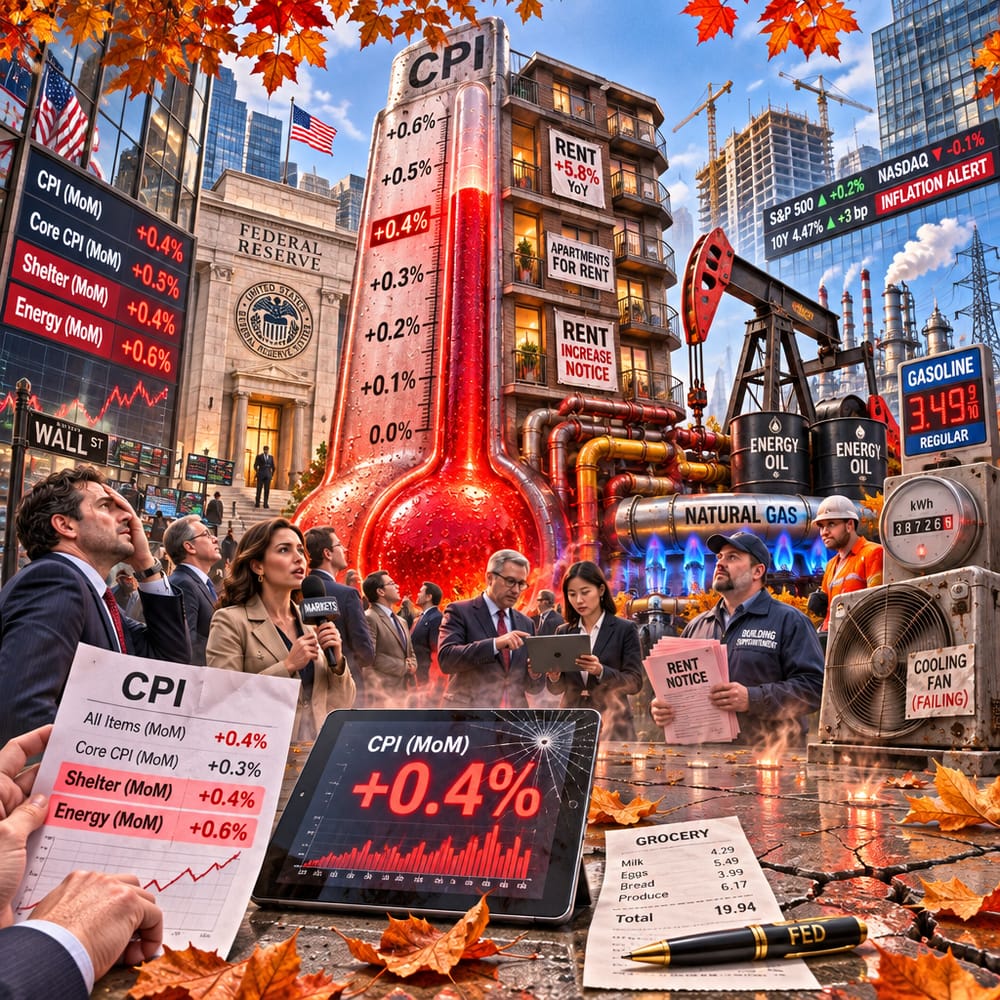
If October's inflation data were a Tinder date, it might not get a second swipe. The Consumer Price Index (CPI) rose a solid 0.4% from the previous month, keeping inflation at the party long past its welcome. Just when we thought price pressures might chill out, they’ve decided to stay and mingle, leaving the Federal Reserve no choice but to contemplate its next move.
INFLATION'S UNWELCOME GUESTS: SHELTER AND ENERGY
Shelter and energy — the twin terrors of the inflation spectrum — had a significant hand in keeping that CPI hot and sticky. Shelter costs, which include our monthly rent or mortgage payments, continued their relentless climb. And energy prices, well, they decided this was the month to act like a bad ex, showing up uninvited just to stir things up.
Shelter prices are the heavyweight champ of the CPI. They account for a hefty chunk of the index, making them the big boulder in the road to calming inflation. As for energy, it’s that erratic friend who either brings the party or burns it down — this time, it leaned toward the latter.
WHAT DOES THIS MEAN FOR THE FED?
The Federal Reserve, those financial jugglers trying to keep the economy balanced, now face the prospect of more rate hikes. The Fed’s been playing a game of monetary Jenga, carefully removing blocks (read: raising interest rates) without toppling the whole thing. But with inflation showing it's here for the main event, they might need to get more aggressive.
Investors are already taking their positions, with markets anticipating a Fed move come December. Betting against the Fed at this point feels a bit like doubling down on a losing hand.
LOOKING AHEAD TO THE DECEMBER FOMC MEETING
The impending FOMC meeting is shaping up to be the financial equivalent of a season finale cliffhanger. Everyone’s waiting to see if the Fed will raise rates again, and if so, by how much. The possibility of another hike isn’t just an abstract fear—it’s a real consideration as the Fed tries to squelch the flames of inflation without dousing the entire economy in water.
The stakes are high, and the Fed is under pressure to navigate this precarious situation without pushing the economy into a recession. Every move they make will be scrutinized, analyzed, and over-analyzed by investors and economists alike.
IMPLICATIONS FOR RETAIL INVESTORS
For everyday investors, this scenario is like watching a high-wire act from below: thrilling but a bit nerve-wracking. Interest rates have a direct influence on our mortgages, credit cards, and savings accounts. If the Fed raises rates again in December, borrowing costs will go up, making it more expensive to finance homes, cars, and even those tempting holiday credit card splurges.
On the flip side, higher rates might offer some relief for savers, with better returns on savings accounts and CDs. But that’s a small consolation if inflation continues to outpace interest earnings.
WHAT'S NEXT?
All eyes are on the Fed’s next move. Will they raise rates in December to keep inflation at bay, or will they hold, hoping previous hikes will finally do their job? For now, the only thing that seems certain is uncertainty.
For retail investors, the best defense might be a good offense: Stay informed, diversify holdings, and keep a close watch on how interest rate changes could impact your wallet and portfolio. Navigating these financial waters requires a cool head and a steady hand.
Let's just hope those Fed folks have both — because if October’s CPI is any indication, the road ahead could get a little bumpy.
This article is for informational purposes only and is not investment advice. Always do your own research or consult a licensed financial professional before making investment decisions.
© Copyright 2024. All Rights Reserved.
© Copyright 2024. All Rights Reserved.