

October CPI Exceeds Expectations, Strengthening Rate Hike Prospects
Tuesday, November 17, 2026
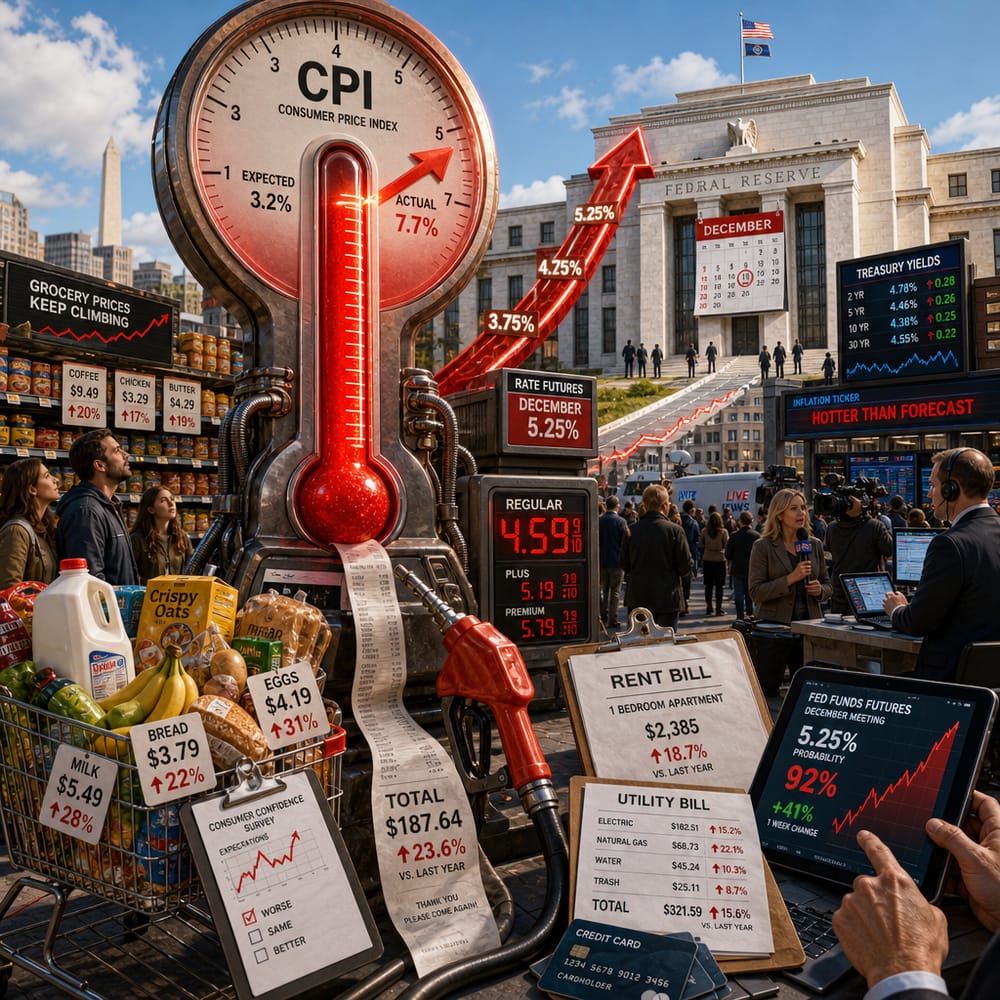
OCTOBER CPI EXCEEDS EXPECTATIONS, STRENGTHENING RATE HIKE PROSPECTS
If you’re hoping for a gentle lullaby from the economic data front, wake up and smell the inflation. The October Consumer Price Index (CPI) has just barged in with a higher-than-expected rise, and it's got the Federal Reserve thinking about tightening the screws come December. Here’s what you need to know before Uncle Sam potentially hikes up those borrowing costs.
WHAT’S COOKING IN THE CPI KITCHEN?
When you hear “CPI”, think of it as the price tag on your everyday life. It’s the shopping list of goods and services that you, I, and everyone else in the U.S. buy. And lately, those price tags have been climbing. The usual suspects? Housing and food prices, which have been sneaking upwards faster than a Black Friday sale’s price tag.
Housing costs, making up about a third of the CPI basket, are a major culprit. Rent is up, and so are home prices, thanks to a potent blend of demand outstripping supply and builders being slower than a Monday morning start. On top of this, food prices are still simmering thanks to climate hiccups and supply chain snarls. Eggs, for instance, aren’t just for breakfast anymore—they’re a full-fledged financial decision.
But let’s not forget energy prices, which have been a bit like a roller coaster lately. After some wild swings, they're now relatively stable but still contributing to the overall increase.
FEDERAL RESERVE: TO HIKE OR NOT TO HIKE?
Now, here’s the real tea: What does this mean for the Federal Reserve? Picture a room full of economists, perched on the edge of their seats, frantically revising their rate hike bingo cards. The Fed has been flirting with the idea of bumping up interest rates, and this hot CPI report might just be the nudge it needs to go steady with a December rate hike.
Higher interest rates mean borrowing costs go up—think mortgages, car loans, and those pesky credit card balances. It’s the Fed’s way of saying, “Hey, slow down” to an economy that's been sprinting like it’s training for a marathon. By making it more expensive to borrow, the Fed hopes to cool things down a bit, bringing inflation back to its target range.
Investment markets? They’re already taking note. Interest rate futures are reacting, and traders are placing bets like it’s the Kentucky Derby of economic policy. The message is clear: buckle up, because a rate hike might just be around the corner.
THE RIPPLE EFFECT: FROM MARKETS TO MAIN STREET
What does all this mean for you, the intrepid retail investor scrolling through your newsfeed? Well, if the Fed decides to hike rates, it could hit your wallet and your portfolio. Higher interest rates typically mean higher yields on bonds, which is great if you’re an income-seeker but not so awesome for stocks as borrowing gets pricier for companies too.
For consumers, this could mean revisiting budget plans as loan rates climb. It’s time to channel your inner financial ninja, cutting unnecessary costs and maybe postponing that splurge on a new gadget. And for businesses, especially those heavily reliant on borrowing, this could mean recalibrating growth plans to accommodate tighter financial conditions.
Of course, not everyone sees a rate hike as a villain in this story. Some argue it’s a necessary evil, keeping the economy from overheating and ensuring that inflation doesn’t spiral out of control. After all, nobody wants to revisit the days of runaway inflation where prices climbed faster than a squirrel up a tree.
THE WAITING GAME
So, what’s the bottom line? With October’s CPI exceeding expectations, the Fed has a lot to consider in its December meeting. As we await their next move, one thing is clear: the economic landscape is as dynamic as ever. For investors and consumers alike, staying informed and agile will be key.
In the meantime, keep an eye on those interest rate futures and maybe stash a little extra cash for those rate hikes. Because if there's one thing the markets have taught us, it's to expect the unexpected. And right now, the only guarantee is that the ride is far from over.
This article is for informational purposes only and is not investment advice. Always do your own research or consult a licensed financial professional before making investment decisions.
© Copyright 2024. All Rights Reserved.
© Copyright 2024. All Rights Reserved.