

Nvidia’s China Comeback? Local Rivals and Red Tape Say ‘Not So Fast’
Monday, August 04, 2025
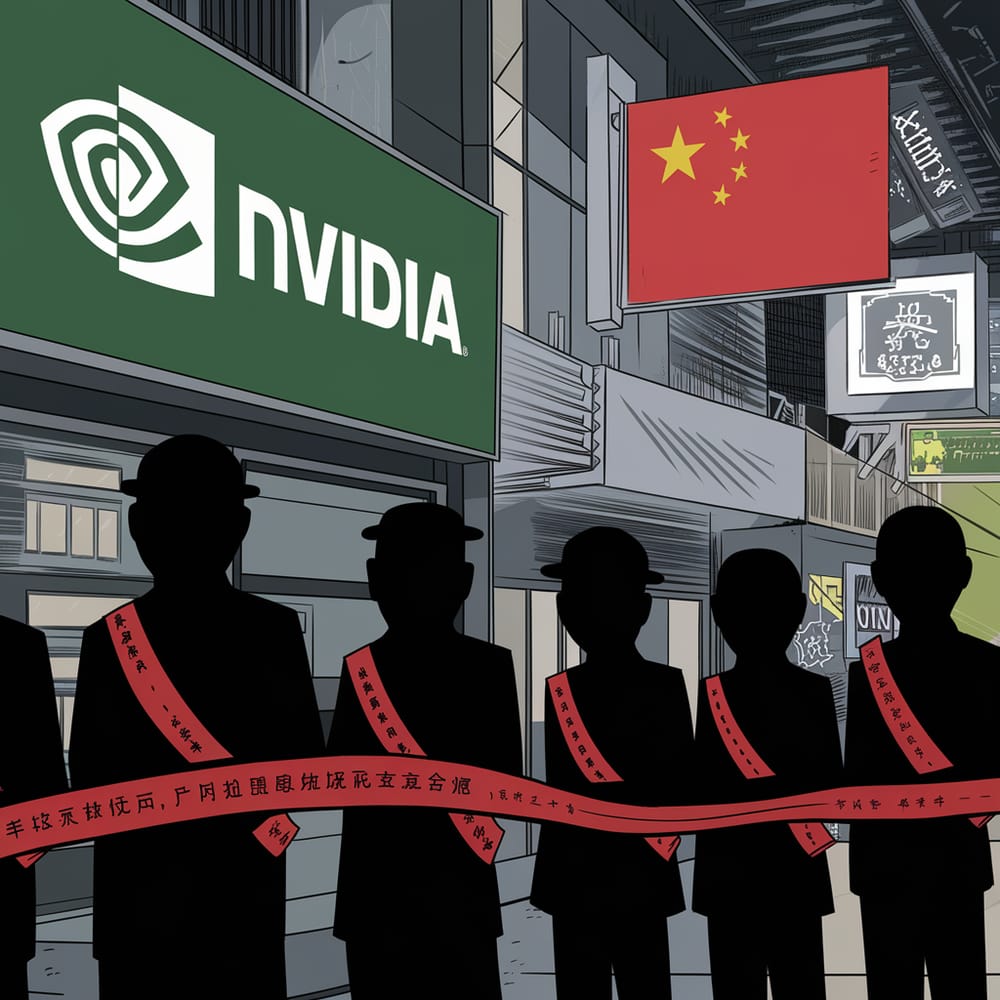
Just when Nvidia thought it was back in the China game, the reality check came in hard: market share is slipping, local rivals are thriving, and Beijing isn't exactly rolling out the red carpet.
Back in Business… But Not on Top
The H20 chips are officially headed back to China after being banned in April, thanks to the Trump administration’s new trade greenlight. But don’t pop the champagne just yet—Bernstein says Nvidia's share of China’s AI chip market is expected to drop from 66% in 2024 to 54% in 2025.
Why? While Nvidia sat out the Chinese market for months, local chipmakers like Huawei, Cambricon, and Hygon seized the moment to get their foot in the data center door. And they’re not planning to leave anytime soon.
A Rare Opportunity for China’s AI Scene
With U.S. export restrictions creating a tech vacuum, Chinese firms have been quick to fill it. Bernstein forecasts China’s AI chip localization rate will skyrocket from 17% in 2023 to 55% by 2027.
In short: America’s tech block gave Chinese chipmakers a running start—and they're sprinting.
Diluted Demand and Diminished Mojo
Even with the H20s returning, industry analysts warn that the demand isn't what it used to be. Daniel Newman of The Futurum Group points out that Nvidia customers may have shifted loyalty to Chinese alternatives during the blackout—and some of those switches could be permanent.
China’s National Security Spotlight
Nvidia’s return wasn’t all smooth sailing. The Cyberspace Administration of China recently summoned the chipmaker over national security concerns—specifically allegations that the H20s might contain "backdoors" enabling U.S. access.
Nvidia has denied the claims. But the signal was clear: Beijing isn’t just welcoming U.S. tech back with open arms—they’re watching it like a hawk.
Geopolitical Chess Match
Nvidia’s CEO Jensen Huang has lobbied hard against U.S. chip export controls, arguing they’re undercutting America’s leadership in AI. Some analysts agree, suggesting keeping U.S. tech in China could actually bolster geopolitical leverage.
Still, Beijing seems to be playing a long game. According to Reva Goujon of the Rhodium Group, China wants to preserve the option to restrict foreign chips once domestic offerings are strong enough to stand alone.
Final Word: Green Light, Red Flags
Nvidia may be shipping again, but it’s not steering the ship like before. The Chinese market has changed, and it’s not waiting for the U.S. to catch up. Between rising local competition, cautious regulators, and a complex geopolitical backdrop, Nvidia’s dominance in China may never fully recover.
Call it a comeback—but not a conquest.
© Copyright 2024. All Rights Reserved.
© Copyright 2024. All Rights Reserved.