

Nvidia Hit by China Slump as Trade Tensions Bite
Friday, November 21, 2025
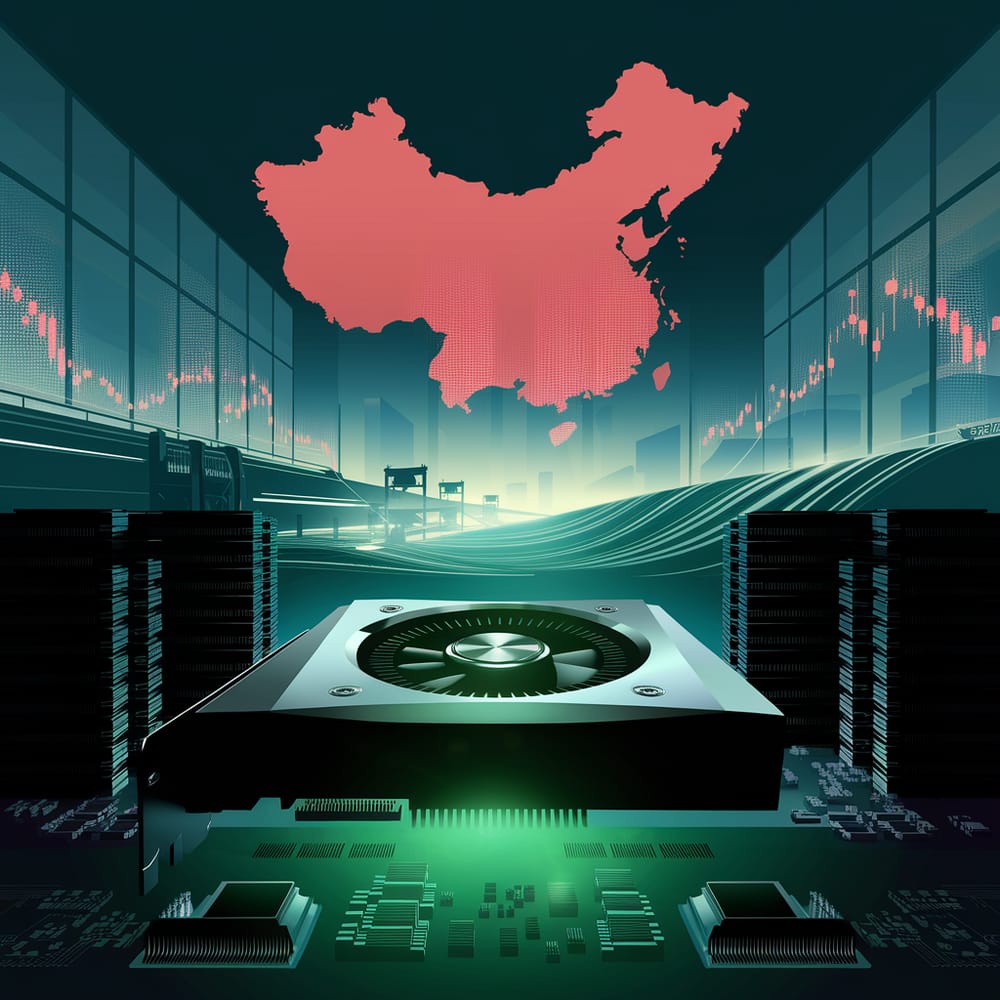
Nvidia’s China Sales Collapse
Nvidia just delivered another blockbuster quarter — but its China business fell flat. The company logged only $50 million in sales of its H20 chips, a stripped-down product line built specifically to comply with U.S. export limits.
The problem? Not enough customers. Major Chinese buyers held back amid tightening regulations, market uncertainty, and soaring competition.
Geopolitics Choke Off Demand
Nvidia’s finance chief didn’t sugarcoat it: political tensions and a crowding field of local rivals crushed demand. China accounted for just 5% of Nvidia’s quarterly revenue, a dramatic drop from more than 13% a year earlier.
Wall Street had expected far more — roughly $8.4 billion — but ongoing trade friction turned that into a distant fantasy.
The U.S. banned sales of H20 chips earlier this year, costing Nvidia an estimated $2.5 billion in missed revenue. Even after Nvidia secured a special export license, China’s own regulators blocked domestic firms from buying the chips.
Locked Out Abroad, Expanding Elsewhere
While China closes its doors, other countries are swinging them open. Nvidia is rapidly scaling in regions racing to build sovereign AI infrastructure, including the UAE, Saudi Arabia, and South Korea.
A recently approved deal will even allow Nvidia to ship up to 35,000 advanced GB300 AI servers to the UAE — a massive win as global AI adoption accelerates.
China Builds Its Own Competitors
Beijing also isn’t waiting around for U.S. chips. Chinese giants like Huawei and Alibaba are rolling out homegrown AI processors designed to chip away at Nvidia’s dominance. This new wave of competition has further clouded Nvidia’s near-term prospects in a market CEO Jensen Huang still calls a $50 billion opportunity.
For now, that opportunity is on ice.
Nvidia Tries to Keep Both Sides at the Table
Despite the setbacks, Nvidia says it will keep pushing for diplomatic and commercial solutions. Executives stressed the need for the U.S. to remain globally competitive — which, in their view, includes access to China’s developer ecosystem.
But with both Washington and Beijing tightening their grip on advanced chips, Nvidia’s ability to operate freely between the two powers is more constrained than ever.
Bottom Line
Nvidia’s latest earnings prove its global growth engine is still roaring — just not in China. Trade tensions, export bans, and rising local competitors have turned one of its biggest markets into its toughest challenge.
The company may be hitting record valuations worldwide, but winning back China remains an uphill fight.
© Copyright 2024. All Rights Reserved.
© Copyright 2024. All Rights Reserved.