

Nvidia Shares Drop ~5% as Nasdaq Falters
Tuesday, July 28, 2026
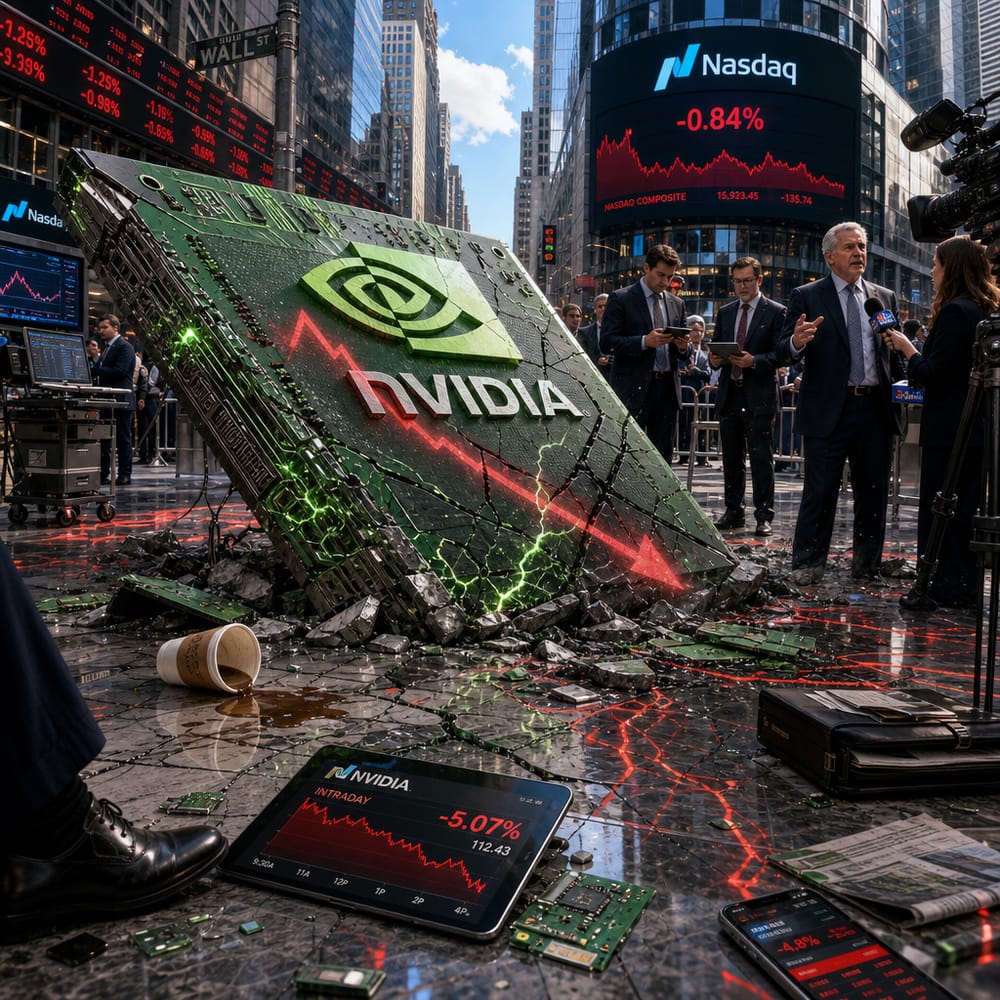
NVIDIA'S TUMBLE: WHEN SEMICONDUCTOR TITANS STUMBLE, THE NASDAQ QUIVERS
Picture this: It's just another Tuesday, and the Nasdaq, that darling of the tech world, takes a slight dip. Nothing to panic about—unless you're Nvidia, that is. On July 27, Nvidia shares took a nosedive, losing nearly 5% of their value and dragging the entire Nasdaq Composite down by 0.2%. What on earth just happened?
Nvidia, the semiconductor titan, has been the poster child of the tech boom. It's the backbone of everything from gaming to AI to crypto mining. When Nvidia stumbles, the ripple effects aren't just felt in the boardrooms but across living rooms too. Investors watch Nvidia closely, not just because of its impressive hardware, but because it's a bellwether for tech sector health. So when its shares plunge, as they did, you can bet Wall Street sits up and takes notice.
But what triggered this particular plunge? Well, the semiconductor world is feeling a bit like a Game of Thrones episode—full of drama, and not everyone makes it out unscathed. The recent sell-off across Asian chip stocks set the stage, with South Korea's SK Hynix plunging nearly 15%, dragging Nvidia and others into the turmoil. It's a tech drama of epic proportions, reflecting growing jitters around AI spending and competition from China.
Nvidia's challenges aren’t just across the Pacific. Stateside, whispers suggest that the AI trade, which has kept Nvidia's sails full, might be losing steam. The anticipated economic slowdown and uncertainties around future AI infrastructure spending paint a picture of caution. Even Jim Cramer chimed in with his usual theatrics, warning investors against holding tech stocks on borrowed money. If there's one thing the market hates, it's uncertainty—throw a bucket of cold water on speculative hype, and watch the stocks shiver.
But let’s not write Nvidia's eulogy just yet. The company still dominates the GPU market, and its ventures into AI and machine learning make it a formidable player in the tech arena. However, like any tech giant, it's navigating a minefield of challenges, such as macroeconomic uncertainties and the inevitable ebb and flow of tech cycles.
So what does Nvidia’s hiccup mean for the broader tech sector? In the short term, it’s a wake-up call. The tech sector, having ridden a wave of enthusiasm and fiscal stimulus, might be bracing for more subdued seas. Nvidia’s performance is a reminder that valuation levels need to be justified by more than just optimism about the future. For retail investors, it might be time to evaluate portfolios and assess risk levels, especially in tech-heavy allocations.
Looking ahead, Nvidia's future still holds promise—provided it can navigate the rocky terrain of global competition and fluctuating AI demand. It's a big "if," but then again, what worthwhile venture isn't? Investors will be watching how it capitalizes on its strengths in AI and data centers, all while keeping an eye on the competition nipping at its heels.
The reality is, the tech sector loves reinvention, and Nvidia has a knack for it. The company's proven adaptability in a rapidly changing landscape positions it well—for now. But the road isn’t without its potholes, and investors would do well to buckle up.
For the retail investors scrolling their phones, eyeing their Robinhood accounts, remember this: A dip in Nvidia isn’t the end of the tech world. However, it is a nudge to keep informed, stay nimble, and never bet the farm on a single tech titan. After all, as the tech world goes, so goes the Nasdaq—and so might your portfolio.
This article is for informational purposes only and is not investment advice. Always do your own research or consult a licensed financial professional before making investment decisions.
© Copyright 2024. All Rights Reserved.
© Copyright 2024. All Rights Reserved.