

Nvidia Sees Price Target Cut from Citi Amid Rising AI Competition
Tuesday, August 18, 2026
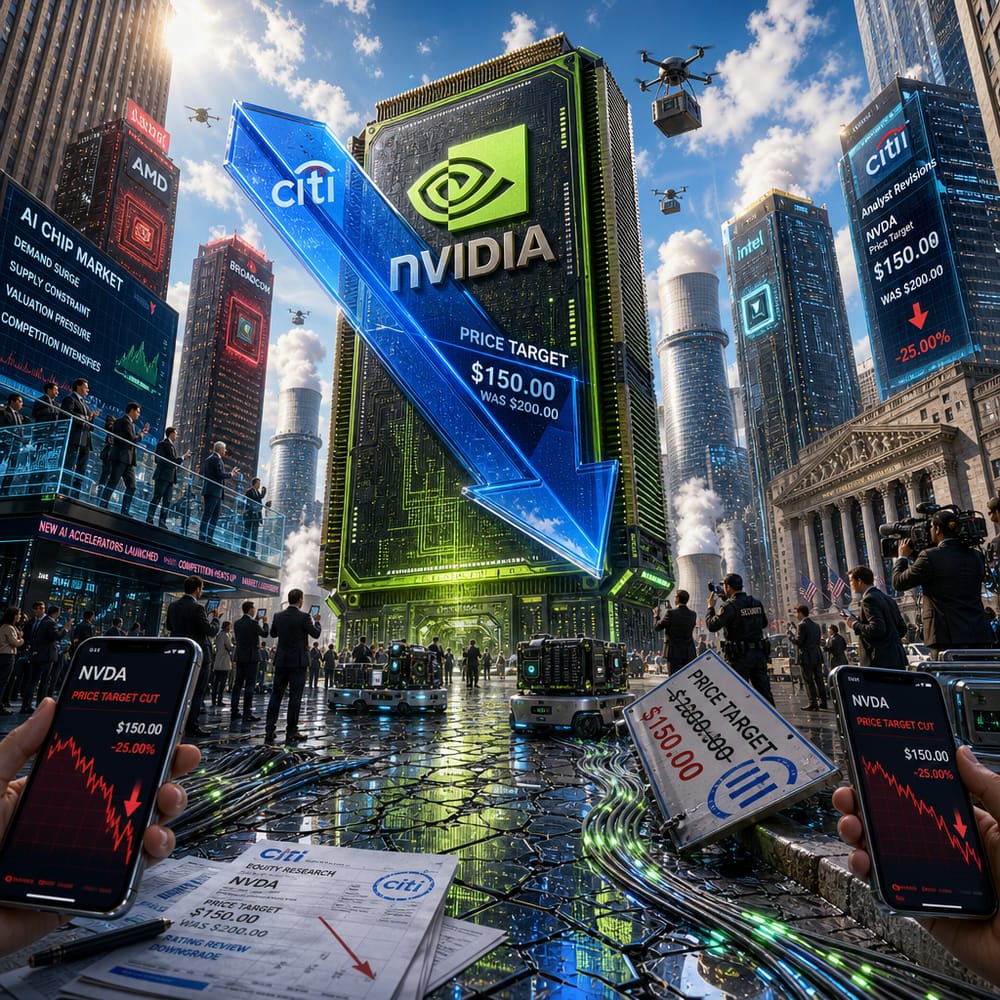
NVIDIA SEES PRICE TARGET CUT FROM CITI AMID RISING AI COMPETITION
Buckle up, folks, because the AI chip wars just got a little spicier. In a move that has sent ripples across Wall Street, Citi recently trimmed its price target for Nvidia, the titan of AI chipmaking. This comes as competition heats up in the field, threatening Nvidia's formidable lead. If you're an investor in tech, particularly in the semiconductor space, this is your cue to sit up and pay attention.
Let's set the stage: Nvidia has been the darling of the tech world, riding the AI boom like a rodeo star on a bucking bronco. But as new challengers enter the arena, it seems the bronco is getting a little more unpredictable. Citi's move to adjust Nvidia's price target is a signal that the competition is intensifying and that Nvidia may have to fight harder to maintain its crown.
WHO'S CHALLENGING THE KING?
For years, Nvidia has danced circles around its competitors, thanks to its cutting-edge graphics processing units (GPUs) that have powered everything from gaming to data centers. But the dance floor is getting crowded. Advanced Micro Devices (AMD) has sharpened its focus on AI, while tech giants like Google and Amazon have rolled up their sleeves to develop their own chips. These companies aren't just playing catch-up; they're sprinting to innovate and capture market share.
Google's Tensor Processing Units (TPUs) and Amazon's Graviton chips are whispers of a future where Nvidia isn't the only player in the AI chip space. These companies have deep pockets and the motivation to reduce dependency on external suppliers, which means Nvidia's grip on the market is being tested.
STOCKS AND STRATEGIES
So, what's in store for Nvidia's stock in the wake of Citi's decision? A price target cut can be a chilling breeze for investors, often leading to a short-term dip as the market readjusts expectations. But let's not wave the white flag just yet. Nvidia has a history of bouncing back stronger, and its fundamentals remain robust.
For Nvidia, the situation calls for some strategic maneuvers. Diversification is key—broadening its product lines to include more AI-specific solutions rather than relying solely on GPUs. Another tactic? Strengthening partnerships with cloud giants and expanding its reach into emerging markets. Nvidia's recent move to bankroll a massive data center in Ohio for OpenAI is an intriguing step, hinting at a future where capital, not just chips, becomes its ace in the hole.
Moreover, Nvidia could invest more heavily in research and development to stay a step ahead of the competition. They’ve proven they can innovate, and doubling down in this area could fortify their leadership position.
WHAT'S THE BIGGER PICTURE?
Citi's recalibration isn't just about Nvidia; it's a reflection of the tech landscape's shifting sands. The AI sector's rapid evolution means that even the big players must stay nimble. As investors, it’s crucial to keep an eye on how these companies adapt. Will Nvidia's rivals gain sufficient traction to challenge its dominance, or will the company outpace them yet again?
In the grand chess game of AI, Nvidia is still a mighty queen on the board. But queens are only as good as the moves made by the player handling them. As Citi's revised outlook indicates, Nvidia’s next moves will be critical, not only for its own future but for the broader market dynamics as well.
For now, investors might tread with caution, balancing the immediate impact of the price target cut with Nvidia's long-term potential. The tech world is nothing if not a rollercoaster, and Nvidia's journey is just getting interesting.
So, keep your eyes peeled and your portfolio flexible, because in the AI chip showdown, the only certainty is change. As Nvidia navigates these choppy waters, there’s no telling what the tech titan will pull out of its Silicon Valley hat next.
This article is for informational purposes only and is not investment advice. Always do your own research or consult a licensed financial professional before making investment decisions.
© Copyright 2024. All Rights Reserved.
© Copyright 2024. All Rights Reserved.