

Nvidia's Strategic Shift: Scaling Back OpenAI Financing
Tuesday, August 18, 2026
Nvidia Just Pulled Back $145 Billion from OpenAI: Here's Why It Matters
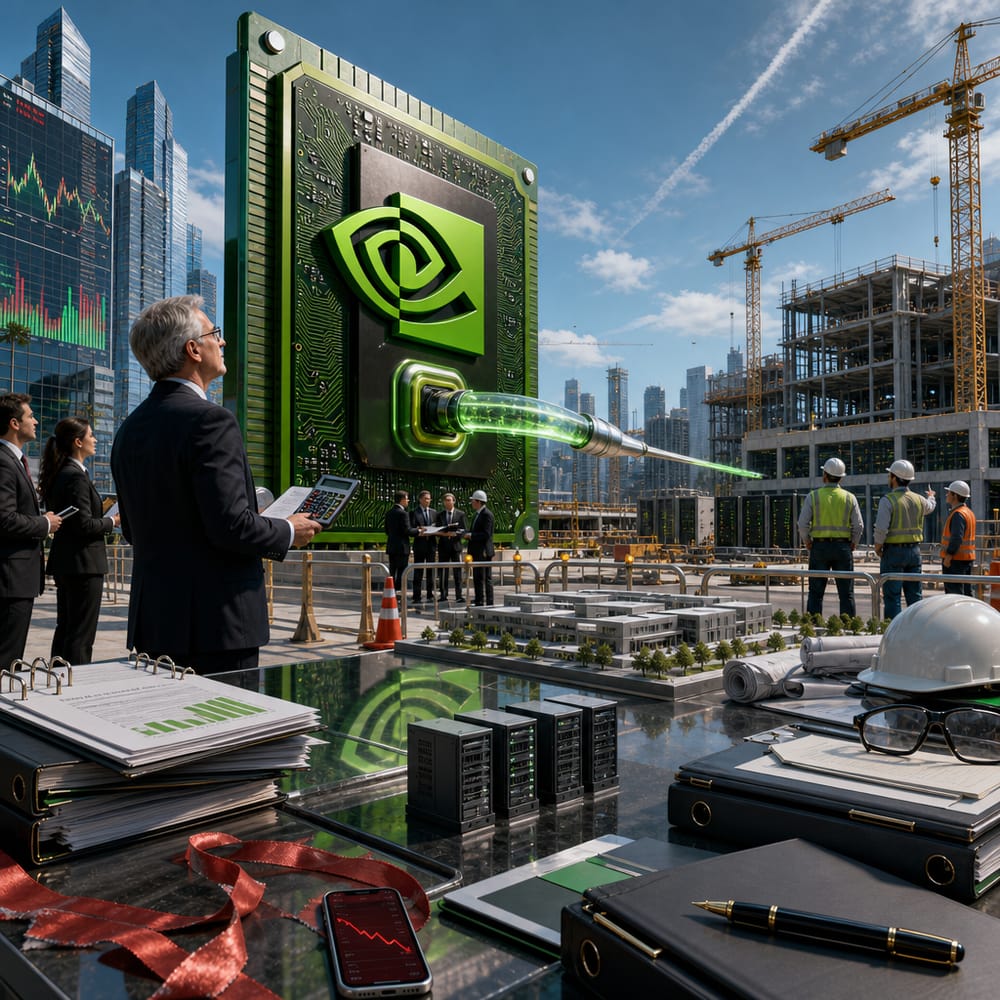
In a move that has Wall Street analysts and retail investors alike raising an eyebrow, Nvidia has decided to scale back its financial commitment to OpenAI's ambitious new data center project in Ohio. How much are we talking? From a whopping $250 billion to a "mere" $105 billion. That’s not just a budget cut; it’s like deciding you don’t need a sports car but a bicycle will do.
Now, before you clutch your pearls about Nvidia's balance sheet, let's take a closer look at what's really going on here. This isn't about Nvidia tightening its belt because it’s got financial woes—far from it. Instead, it’s about playing it smart and not going full speed without a seatbelt.
Nvidia, the darling of the AI boom with its tech-heavy crown, is no stranger to bold moves. But this time, it seems CEO Jensen Huang and his crew are taking a more cautious approach, perhaps seeing the risk of putting all their eggs—or chips, in this case—in one very expensive basket.
So what exactly are the risks and rewards of this revised strategy?
RISK VS. REWARD
The risk here is kind of like when you decide not to splurge on the new iPhone on day one. Sure, you might miss out on some flashy features, but you’re not left holding a hefty bill if the phone turns out to be a flop. By scaling back on this massive commitment, Nvidia is reducing its financial exposure. Simply put, they’re being financially savvy, because let’s face it, nothing is guaranteed in the fast-paced world of AI, where today’s innovation could quickly become tomorrow’s paperweight.
And let's not forget the 30-year Treasury yields hitting 5.33%. With borrowing costs rising, parking your cash in less risky investments might seem like the adult choice, and Nvidia seems to be hedging its bets accordingly.
On the reward side, trimming the fat on this project might just make Nvidia’s stock more appealing to the cautious investor. With the company's free cash flow having skyrocketed 18-fold over the past three years, Nvidia still has plenty of firepower to invest in other lucrative ventures without putting too much stress on its balance sheet.
IMPLICATIONS FOR INVESTORS
For the Nvidia stockholder, this might actually spell good news. Remember, less spending doesn’t equate to less value, especially if it means the company is steering clear of reckless overextension.
In the short term, this decision could be interpreted as a sign of Nvidia’s maturity—like when you decide to trade your party days for a stable 9-to-5. Some investors may appreciate this caution, viewing it as a signal of Nvidia’s commitment to maintaining its robust financial health while still backing significant projects.
In the long term, Nvidia’s strategic shift suggests a balanced approach to growth and risk management. It’s like they’re telling us, "We’re in it for the long haul, folks, not just the quick win." This could bolster investor confidence and provide a solid foundation for sustained stock performance.
WHAT'S NEXT?
Moving forward, Nvidia will continue to capitalize on its strengths—its chips, which are still the bee’s knees in the AI market. But with rivals like AMD and Google closing in on their technology lead, Nvidia's pivot to using its capital as a strategic advantage isn't just smart; it's necessary.
So, what should retail investors do with this juicy tidbit of info? Keep your eyes peeled on Nvidia’s moves and market responses. If they can continue to juggle the balancing act of strategic investment and financial caution, Nvidia might just maintain its position as the belle of the AI ball.
Ultimately, Nvidia’s reduced financial commitment to OpenAI is a clear message: They’re not afraid to step back and reassess when needed. For investors, it’s a reminder that sometimes, slow and steady really does win the race. And in a market as volatile as tech, having a company that knows when to shift gears can be worth its weight in gold—or, in Nvidia's case, silicon.
This article is for informational purposes only and is not investment advice. Always do your own research or consult a licensed financial professional before making investment decisions.
© Copyright 2024. All Rights Reserved.
© Copyright 2024. All Rights Reserved.