

Nvidia's Strategic Move into Energy Infrastructure
Monday, August 17, 2026
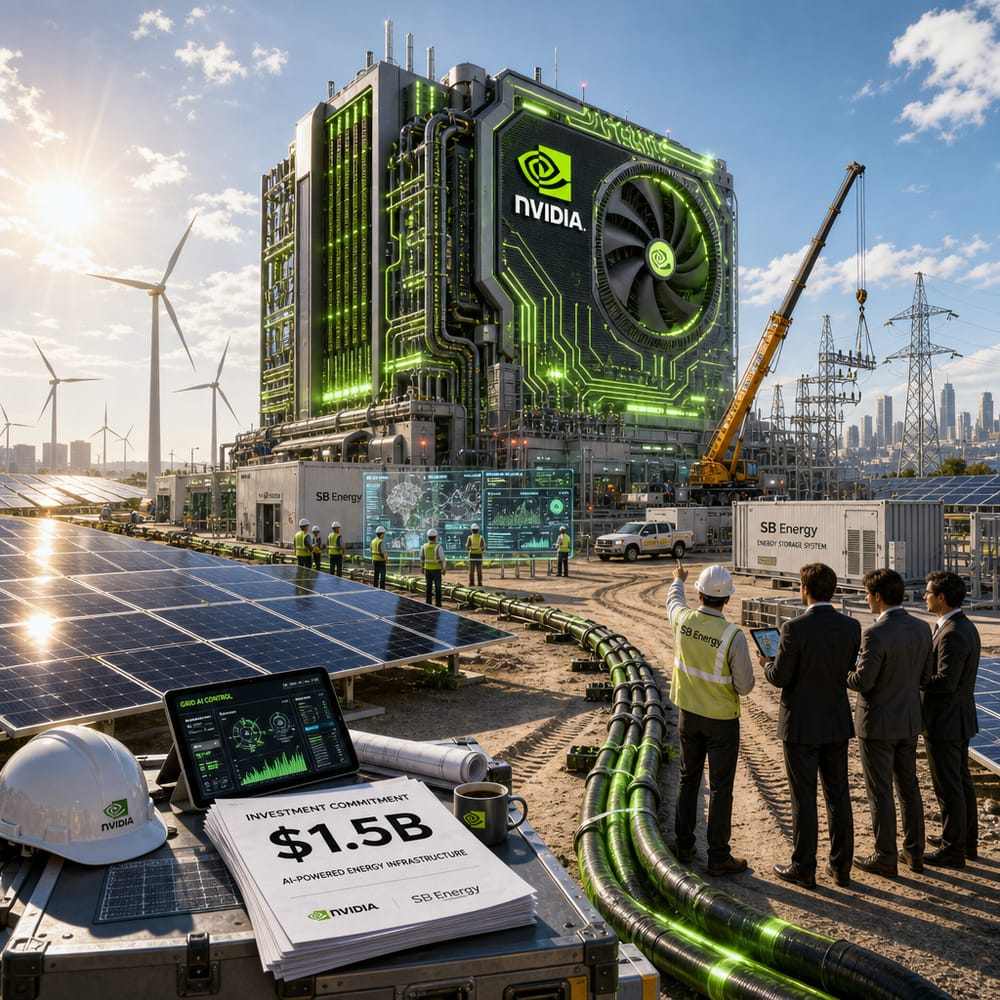
NVIDIA'S STRATEGIC MOVE INTO ENERGY INFRASTRUCTURE
What do you do when you're at the top of the tech mountain, reigning as the King of Chips? You take a leap into energy, of course. In a jaw-dropping move that might even make Elon Musk raise an eyebrow, Nvidia has decided to throw a cool $1.5 billion into SB Energy. And yes, it's as big a deal as it sounds.
Sure, Nvidia is known for its cutting-edge graphics cards that make gamers drool, but the company's latest maneuver signals so much more. This isn't just a 'hey, let's invest in something shiny' kind of move. It's part of Nvidia's broader strategy to grow beyond chipmaking and sow seeds in the fertile ground of energy infrastructure. With that investment, Nvidia is taking a bold step into a realm usually dominated by oil giants and utility companies.
So, what's cooking here? For one, Nvidia's investment in SB Energy isn't just a cash injection; it's a statement. It’s Nvidia whispering (okay, shouting) to the market that it's ready to harness the power of artificial intelligence to revolutionize energy as we know it. SB Energy, backed by SoftBank and OpenAI, is already a big player, focused on gigawatt-scale power generation. And as Nvidia throws its weight behind SB Energy, it's not just about money—it's about marrying tech with energy, creating a powerhouse that could redefine both industries.
WHY DOES THIS MATTER FOR NVIDIA'S GROWTH STRATEGY?
First off, Nvidia's latest foray paints a picture of diversification. It’s a calculated bet on a sector that's ripe for disruption. The energy sector, with its vast infrastructures and age-old practices, is a playground waiting for tech innovations. Thanks to AI, the potential for smart grids, efficient power consumption, and better renewable energy management is immense. By getting in early, Nvidia is positioning itself as a pioneer, not just a player, in this newfound synergy between tech and energy.
In terms of impact on Nvidia's stock, the market might initially quiver at such a massive investment. But the long-term outlook? That's where things get exciting. As Nvidia strengthens its foothold in energy, it's not just diversifying its portfolio—it's potentially opening new revenue streams. Investors who have been riding the Nvidia wave for its AI and chip innovations could soon find themselves celebrating gains from the energy sector too.
IMPLICATIONS FOR TECH AND ENERGY SECTORS
Broadly speaking, Nvidia’s investment represents a significant marker in the growing intersection of tech and energy. It's a wake-up call for other tech giants: Either adapt to this new age of energy or risk being left behind. As AI continues to evolve, its role in optimizing energy systems will become increasingly crucial. Nvidia is setting the pace, and other companies will likely follow suit, leading to a ripple effect across both tech and energy markets.
For the energy sector, it signals an impending transformation. The integration of AI can help address some of the sector's biggest challenges, like inefficiencies and sustainability issues. Nvidia's move could accelerate the pace of innovation, pushing traditional energy companies to embrace digital transformation faster than they had perhaps planned.
A WIN-WIN SCENARIO?
At the end of the day, Nvidia’s $1.5 billion gamble could redefine what we expect from both the tech and energy sectors. It’s a reminder that in today’s hyper-connected world, boundaries between industries blur, creating opportunities for companies willing to think boldly and act decisively.
For everyday investors, keeping an eye on Nvidia's stock is more exciting than ever. As the company steers into uncharted waters, it may face storms, but the potential payoff could be nothing short of epic. So, if you're scrolling through your phone contemplating your next investment move, Nvidia's latest strategy could just be the spark you were looking for. Stay tuned—this energy revolution is just getting started.
This article is for informational purposes only and is not investment advice. Always do your own research or consult a licensed financial professional before making investment decisions.
© Copyright 2024. All Rights Reserved.
© Copyright 2024. All Rights Reserved.