

Nvidia's Strategic $7 Billion GPU Buyback
Tuesday, August 25, 2026
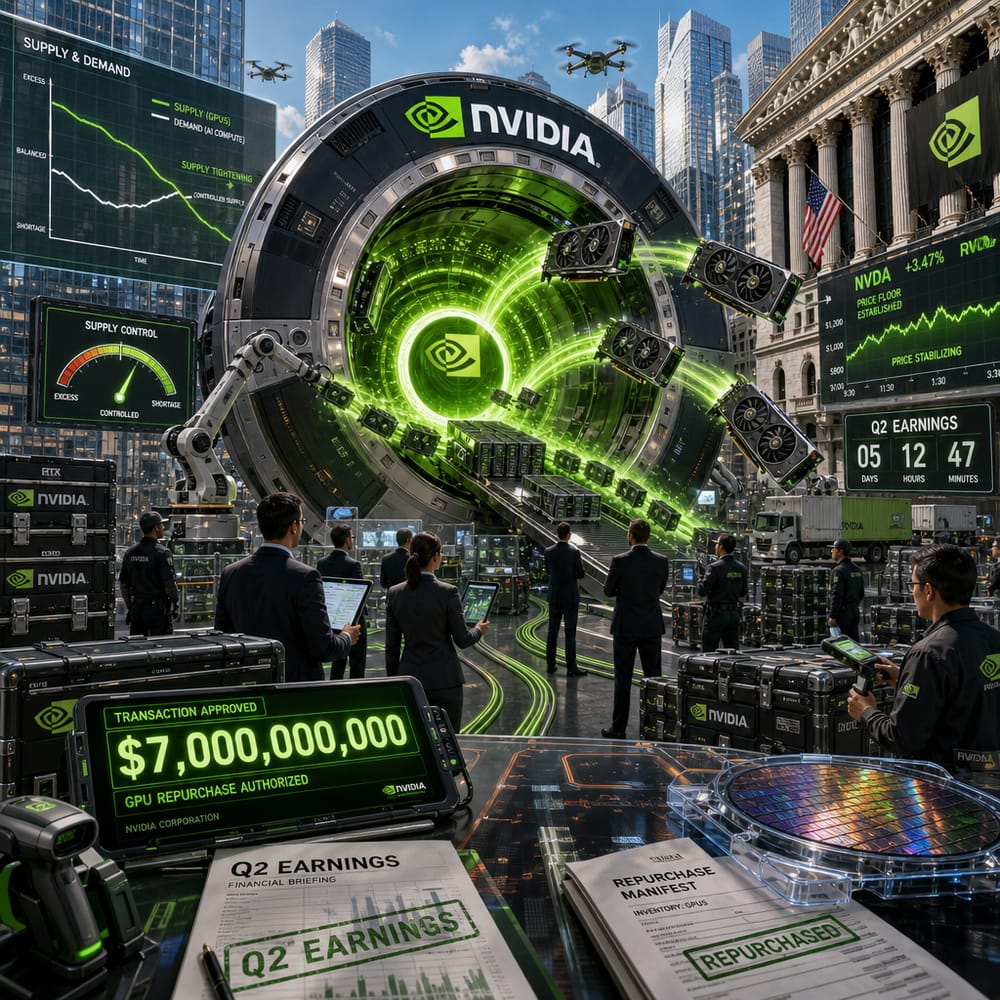
Nvidia's Strategic $7 Billion GPU Buyback
In the digital age of gaming, AI research, and cryptocurrency mining, Nvidia’s silicon chips are hotter than a summer sidewalk. Yet, in an unexpected plot twist straight out of a tech thriller, Nvidia has decided to splash a cool $7 billion to buy back its own graphical processing units, or GPUs. This move, coming right before the Q2 earnings report, is raising eyebrows and questions faster than a high-frequency trade.
Now, you might be wondering, why would Nvidia want to scoop up its own precious chips? After all, isn't the whole point to sell these things in the first place? Well, folks, welcome to the high-stakes game of market strategy, where controlling supply can be just as important as meeting demand.
When you think of a buyback, you probably imagine a company buying its own stock to boost share prices. But Nvidia's latest maneuver is all about inventory control. By repurchasing GPUs, Nvidia is aiming to keep a tight grip on supply and stave off any price drops that could hit if there’s a glut in the market. It's like a game of poker, where Nvidia is holding its cards close to the vest, ready to play them when the price is right.
But what does this GPU buyback mean for Nvidia's financials? For starters, this buyback isn't just a random act of corporate kindness. It’s a strategic play to stabilize prices, which could cushion Nvidia’s revenue from any unexpected downturns in GPU prices. In the short term, this means Nvidia can potentially keep its profit margins healthy, even if the market shows signs of slowing down. After all, nothing spells investor confidence like robust margins in the face of a shaky market.
From a long-term perspective, this buyback could position Nvidia as a market leader with the ability to influence pricing trends. By controlling a portion of the supply, Nvidia can effectively set the stage for a future where it can dictate pricing, much like an orchestra conductor guiding the symphony. It’s a bold move that could see Nvidia solidify its market share and fend off competitors nipping at its heels.
So, how might this strategic grab-influence Nvidia’s market share? Well, Nvidia isn’t just any player in the semiconductor space; it’s the star quarterback. Its GPUs are the backbone of everything from gaming to AI research and even the crypto mining craze. By maintaining control over its supply, Nvidia can ensure steady availability and pricing, keeping its clientele happy and competitors scrambling.
Moreover, this buyback could send a strong signal to the market that Nvidia is confident about its product demand and future growth. In the fast-paced tech world where consumer preference can change at the drop of a hat, such a display of confidence can be as reassuring as a hot cup of cocoa on a winter night.
But let’s not get too carried away. This move does come with its risks. For one, if the demand for GPUs doesn’t keep pace with expectations, Nvidia might find itself sitting on a stockpile of chips that are gathering dust rather than dollars. Plus, with $7 billion tied up in inventory, that's money that could have been used for R&D or acquiring new technologies to stay ahead of the innovation curve.
Ultimately, Nvidia's $7 billion GPU buyback is a high-stakes gamble, but one where the odds might just be in its favor. By controlling supply, Nvidia not only stabilizes its pricing strategy but also reinforces its stronghold in the tech arena. Investors should keep their eyes peeled on Nvidia’s upcoming earnings report, which will shed more light on whether this strategic play was a masterstroke or a misstep.
As Nvidia continues to navigate the tech landscape with precision and poise, one thing is for certain: this buyback is a bold testament to the company's unwavering belief in its strategic vision and its products. And in the world of tech, that kind of confidence can be the difference between leading the pack or trailing behind. So, as we wait for the curtains to rise on Nvidia's Q2 performance, grab your popcorn because this tech drama is just getting started.
This article is for informational purposes only and is not investment advice. Always do your own research or consult a licensed financial professional before making investment decisions.
© Copyright 2024. All Rights Reserved.
© Copyright 2024. All Rights Reserved.