

Nvidia's Strategic $3B Investment in Lancium: Building AI Infrastructure
Tuesday, August 11, 2026
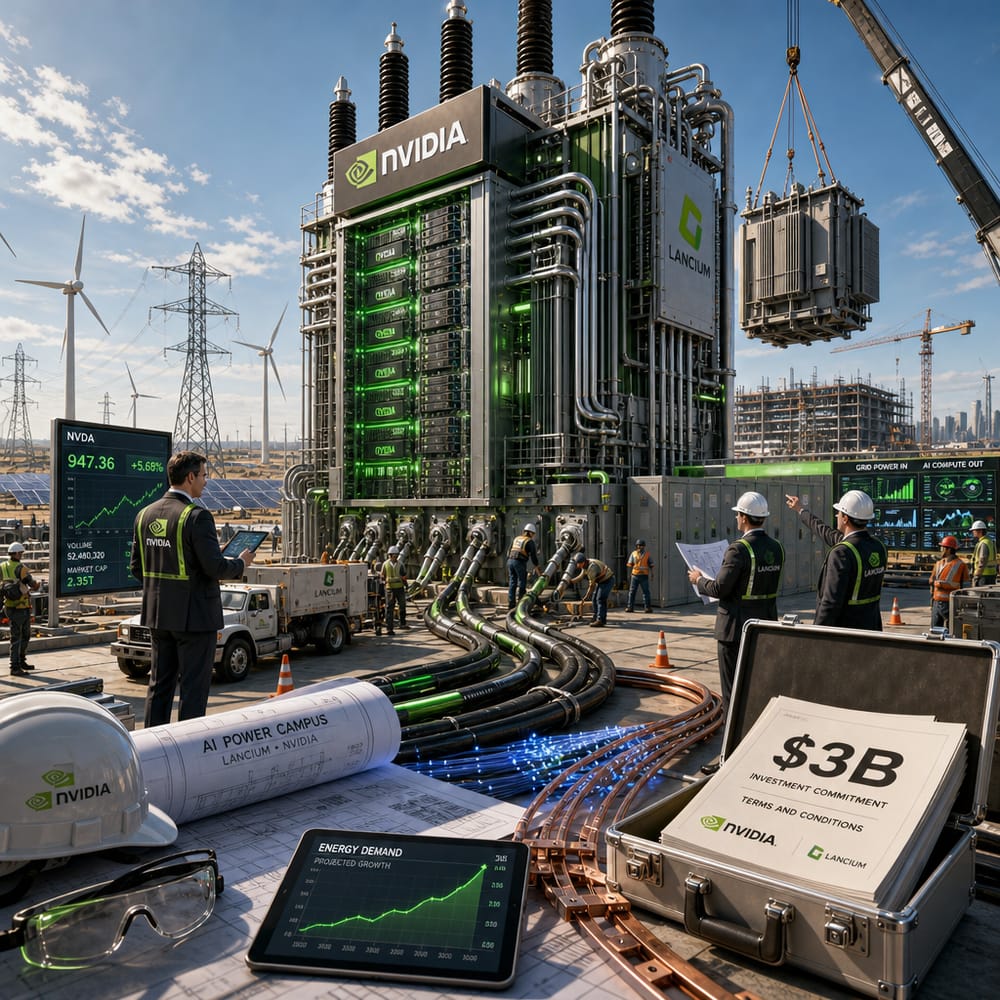
NVIDIA TAKES A BOLD LEAP INTO ENERGY WITH $3B LANCUM INVESTMENT
In a move that seems more sci-fi than semiconductor, Nvidia is splashing out a staggering $3 billion on Lancium, a power infrastructure firm with aspirations as high as its energy grids. It might sound like an odd match at first—after all, Nvidia is a name more synonymous with graphics cards and gaming glee than power plants and kilowatts. But mark my words: there's more strategy here than meets the eye, and it could turbocharge Nvidia's foray into the ever-expanding world of artificial intelligence.
So, what's the big deal? Why is Nvidia, the GPU giant, throwing its chips into the energy market? The key is in the rapid evolution of AI and the ludicrous amounts of power it demands. Think of AI as the hungriest of digital beasts, constantly craving energy to churn out complex computations, drive innovations, and, hopefully, make our lives easier. By aligning itself with Lancium, Nvidia isn't just feeding the beast—it’s building the buffet.
Now, if you've been keeping an eye on Nvidia’s moves, you won't be entirely surprised. The company has been quietly and not-so-quietly beefing up its AI game, with its tech now steering everything from autonomous vehicles to data centers. This investment in Lancium is their bet on a future where AI needs are met not just with powerful chips, but with robust, sustainable energy infrastructure. It's a bit like Elon Musk buying a solar company—it's about building the whole ecosystem, not just the shiny end product.
For Nvidia, this isn't just about keeping the lights on. It’s about securing a competitive edge that could tower over rivals like Intel and AMD. These firms are all vying for dominance in the AI space, and Nvidia's move suggests it sees power infrastructure as a critical battleground. By leveraging Lancium's strengths, Nvidia can ensure its AI systems have the juice they need to perform at top speed without causing your local power grid to sputter and die.
But let’s not forget the broader implications. Nvidia's investment signals a potential reshaping of the AI infrastructure terrain. If successful, it could set off a chain reaction, with more tech behemoths turning to energy solutions as a critical component of their AI strategies. This could mean a surge of interest and investment in energy sectors, particularly those that can offer sustainable and scalable solutions.
Moreover, Nvidia isn't just thinking about today’s tech. It’s planting seeds for tomorrow’s AI-driven world. Picture a future where AI controls massive data operations, powers smart cities, or even manages climate change initiatives. Those systems will need unprecedented power levels, and Nvidia's move into energy infrastructure could position it as an indispensable player in shaping that future.
For retail investors, the takeaway is clear: Nvidia's shift isn't just a story of expansion; it's an evolution. This pivot could potentially inflate Nvidia's stock value, making it a tasty tidbit for those invested—or thinking about investing—in the AI space. But it’s also a reminder that the tech landscape is changing, with energy becoming an essential part of the digital conversation.
In the grander scheme of things, as Nvidia takes this bold leap, it's a cue for investors and market watchers to rethink traditional boundaries. The lines between tech, energy, and infrastructure are blurring, and those who can adapt are likely to come out on top. Just as Nvidia’s graphics cards became synonymous with unparalleled visual experiences, its foray into energy could redefine how we think about powering the AI-driven future.
So, keep your eyes peeled, your ears open, and your portfolio flexible. Nvidia’s latest move isn’t just a headline—it's a harbinger of what's to come in the tech world. And whether you're cheering from the sidelines or diving headfirst into the investment pool, it’s an era you won’t want to miss.
This article is for informational purposes only and is not investment advice. Always do your own research or consult a licensed financial professional before making investment decisions.
© Copyright 2024. All Rights Reserved.
© Copyright 2024. All Rights Reserved.