

Nvidia's Stock Rebound: Analyzing Analyst Ratings Amidst Market Volatility
Monday, November 16, 2026
NVIDIA'S STOCK REBOUND: ANALYZING ANALYST RATINGS AMIDST MARKET VOLATILITY
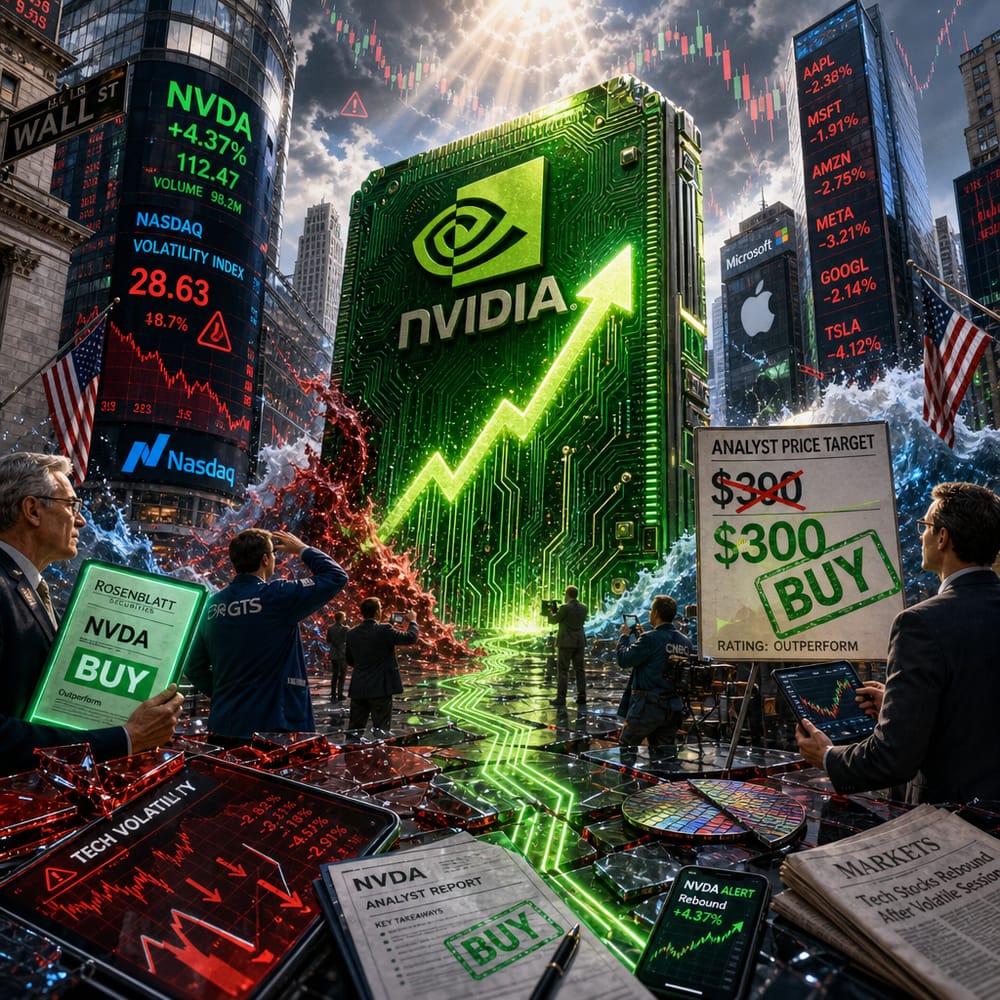
Hold onto your hats, folks. Nvidia, the AI chip behemoth, is on a wild ride, and it's not just the latest video game graphics that are keeping investors on edge. In an unexpected shake-up, Rosenblatt Securities reaffirmed a 'Buy' rating on Nvidia’s stock, but trimmed its price target from an ambitious $390 to a more conservative $300. It's like being told you can still have dessert, but it’s just not the triple-layer chocolate cake you were expecting.
So, what's behind this recalibration? Is Nvidia’s superhero status in the tech universe losing its shine, or is this just another blip in the volatile world of stock markets? Let's dig in.
THE PRICE TARGET TWIST
First off, why the adjustment? The market’s been more jittery than a cat in a room full of rocking chairs lately, and tech stocks have been feeling the burn. Nvidia's downgrade in its price target doesn’t mean investors should dump its stock like last season's fashion. Instead, it's more of a recalibration reflecting broader market uncertainty.
With inflation fears, geopolitical tensions, and interest rate hikes playing havoc, investors are treading cautiously. They're wary of over-optimistic projections and prefer a conservative approach that factors in the economic rollercoaster we’re all strapped into right now.
But what keeps Nvidia in the 'Buy' basket despite this adjustment? Well, that's where the company’s dominance in the AI space comes into play. Nvidia isn't just a player; it's the reigning champ in the realm of artificial intelligence hardware and solutions.
HOW DOES NVIDIA STACK UP AGAINST THE TECH TITANS?
Comparatively, Nvidia’s volatility isn't unique; it's part of a larger narrative sweeping through the tech sector. If you're keeping score, other big names like Meta, Amazon, and Alphabet also experienced turbulence recently. It's a sector-wide dilemma, like a bad day at the tech carnival where everyone's rollercoaster ride feels a tad too extreme.
Yet, Nvidia’s fundamentals remain solid. Their chips power everything from data centers to gaming consoles, and they hold a crucial position in the burgeoning AI landscape. Remember, in the land of tech, being an AI innovator is akin to holding the keys to the kingdom. AI is set to transform industries, and Nvidia’s cutting-edge technology positions it well to lead the charge.
THE LONG GAME: NVIDIA'S FUTURE IN AI
Looking ahead, can Nvidia continue to defy gravity and aim for the stars? The company's future is tied hand-in-glove with the AI industry's trajectory. AI isn't just a buzzword; it’s the next big wave, transforming sectors from healthcare to automotive. Nvidia's strength lies in its ability to provide the computational power fueling AI advancements.
And let's not overlook the potential leadership shuffle. With Jensen Huang, Nvidia's charismatic former CEO, rumored to be contemplating a return, investor sentiment could swing positively. Huang’s leadership has been synonymous with Nvidia’s meteoric rise, so any whispers of his comeback could invigorate the stock like a double espresso to your morning routine.
THE CRYSTAL BALL PREDICTION
For the everyday investor, the Nvidia saga underscores a critical lesson: volatility is part and parcel of the market, especially in the tech sector. But savvy investors know that behind every dip is an opportunity. While price targets may be adjusted, Nvidia’s core appeal lies in its resilient position within the AI landscape.
In closing, while Nvidia’s journey might look like a plot twist from an edge-of-your-seat thriller, remember that in the long haul, the company’s potential in AI could spell blockbuster returns. So, whether you're a seasoned investor or just dipping your toes into the market, keeping an eye on Nvidia could pay dividends. Just make sure you keep some popcorn handy for the show.
This article is for informational purposes only and is not investment advice. Always do your own research or consult a licensed financial professional before making investment decisions.
© Copyright 2024. All Rights Reserved.
© Copyright 2024. All Rights Reserved.