

Nvidia's Selective Gains Amidst Memory Stock Momentum
Tuesday, August 18, 2026
Nvidia's Selective Gains Amidst Memory Stock Momentum
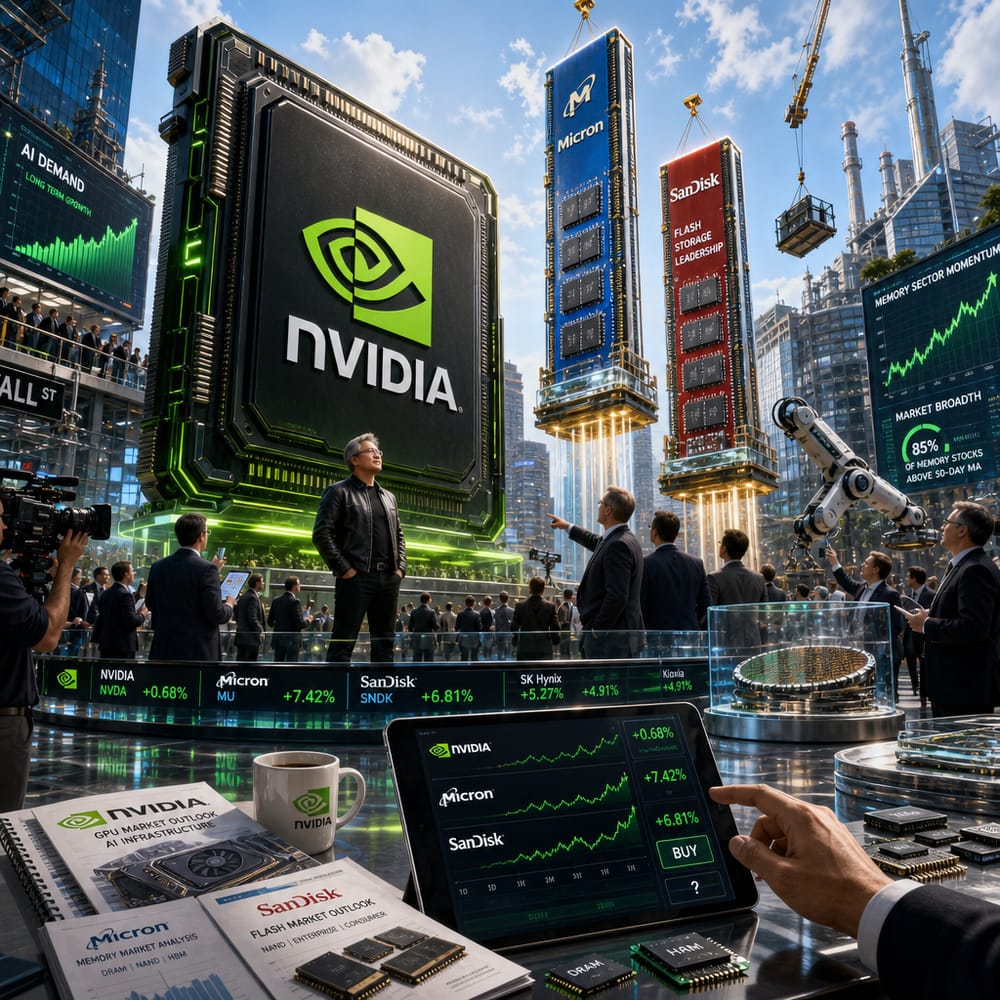
When the dust settles after a market shake-up, who comes out on top can be as intriguing as a season finale cliffhanger. Right now, memory stocks like Micron and SanDisk are throwing a money-making party, and everyone's invited—except, it seems, Nvidia. With memory stocks experiencing a surge, Nvidia's performance currently resembles more of a gentle jog than a heady sprint. So, what's the deal with the chip giant that seemed unstoppable in recent years?
Let's dive into Nvidia's recent narrative. For years, Nvidia has been the darling of the tech world—its graphics cards becoming synonymous with gaming and AI advancements. But even legends have their quiet seasons. As memory stocks rally, Nvidia is taking a backseat, leaving investors scratching their heads and asking: is this just a lull, or a sign of a deeper shift in the semiconductor sector?
WHY IS NVIDIA UNDERWHELMING?
One reason Nvidia is lagging behind could be the tidal wave of excitement surrounding the AI boom. Remember when everyone was talking about Bitcoin and suddenly every other company had its own cryptocurrency? Well, AI might just be the new crypto. While Nvidia has a solid foothold in AI, investors might be taking a breather, assessing whether its current valuation matches the anticipated gold rush or if it's more of a fool's gold situation.
It's also worth noting that rising Treasury yields are casting a shadow on tech stocks overall. Higher yields often mean investors veer towards safer shores, like bonds, than swimming with high-risk tech stocks. Nvidia, like its tech brethren, hasn't been immune to this shift. Inflation fears and fiscal uncertainties, with Treasury yields hitting a 19-year high, act like a wet blanket on tech enthusiasm.
WHAT'S NEXT FOR NVIDIA?
As we look at the immediate future, the question is whether Nvidia can refocus the investor spotlight back on itself. The company's future stock movement might hinge on a couple of factors. First, continued innovation in AI and gaming could reignite investor interest. If Nvidia rolls out technology that’s more Iron Man than Iron Deficient, the stock might just see a surge in interest again.
Furthermore, Nvidia's partnership strategies could play a crucial role. In the world of tech, who you hang out with matters as much as what you do. Strategic collaborations or acquisitions could revamp its growth narrative, potentially catapulting it back into the financial limelight.
LONG-TERM PROSPECTS: LIGHTSPEED OR LIGHTWEIGHT?
The broader market dynamics also raise questions about Nvidia's long-term growth. If investors start seeing smaller-cap semiconductor stocks as the next big thing, Nvidia could face a different kind of pressure. Companies like Micron and SanDisk, with their current momentum, might attract those looking for hidden gems rather than established giants.
Still, it's essential to remember that Nvidia has a resilience that stems from its robust history of innovation. If the company continues to diversify its offerings and stay ahead in high-growth areas like AI and cloud computing, it could easily weather this period of stagnation.
FINAL THOUGHTS
Investors are like social butterflies at a party—they flit towards the most exciting buzz. Right now, memory stocks are humming, and Nvidia is in a quiet corner, possibly brewing its next big move. Whether Nvidia remains a colossal contender or faces a transformation into a legacy player riding past glories will largely depend on its adaptability and strategic foresight.
In the unpredictable theater of the stock market, today’s underdog can be tomorrow’s champion. Nvidia might be laying low now, but in the world of tech stocks, stories can change quicker than you can say “semiconductor breakthrough.” Keep your eyes glued to this saga; it's bound to have a few plot twists.
This article is for informational purposes only and is not investment advice. Always do your own research or consult a licensed financial professional before making investment decisions.
© Copyright 2024. All Rights Reserved.
© Copyright 2024. All Rights Reserved.