

NVIDIA’s Record-Breaking $150B Share Buyback Amid Chip-Sector Stress
Wednesday, September 30, 2026
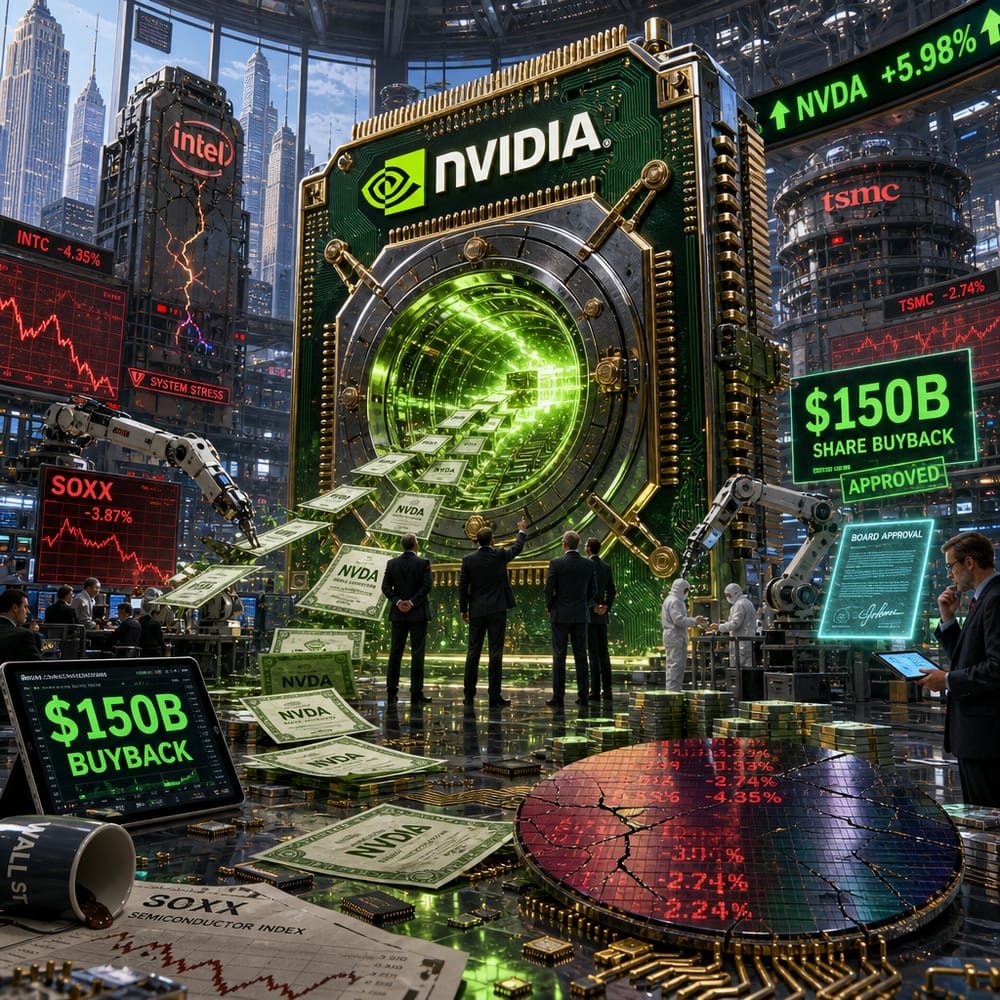
NVIDIA'S RECORD-BREAKING $150B SHARE BUYBACK: CASH KING IN A CHIP STORM
Let's cut to the chase. NVIDIA just announced a $150 billion share buyback, making history as the biggest in U.S. corporate annals. This isn't your run-of-the-mill boardroom maneuver; it's a financial fireworks display in the otherwise stormy skies of the semiconductor sector. While other chip companies are sweating bullets, NVIDIA’s lighting up cigars with hundred-dollar bills. So, what's the deal with this audacious move, and why should you care?
First off, this behemoth buyback signals that NVIDIA is swimming in cash. Flashback to the dot-com bubble and the Great Recession when stock buybacks were as popular as pet rocks. Corporations hoarded cash like squirrels in winter. Fast-forward to today, and here’s NVIDIA, not just wading but diving into its cash pools, Scrooge McDuck-style.
The sheer size of the buyback is a mic-drop moment, telegraphing to investors that NVIDIA is feeling pretty invincible. They’re telling the market, “We’ve got this,” and putting their money where their mouth is. Buybacks typically drive up stock prices because they reduce the number of shares on the market. Fewer shares mean each one is more valuable. Investors are likely eyeing NVIDIA stock like kids in a candy store.
In the short term, we could see NVIDIA's stock price skyrocket. Wall Street loves a juicy buyback, and this one is positively decadent. Look for analysts to start tossing around words like "bullish" and "upgraded" while putting on party hats as they revise their stock forecasts.
But let’s pump the brakes for a second. Even a cash king can face hazards. The semiconductor sector has hit rough patches lately — think of it as the soap opera of the tech world, complete with dramatic highs and nail-biting lows. Supply chain snags and geopolitical tensions have tripped up companies like Intel and TSMC, making chip production a high-stakes chess game.
So, can NVIDIA keep its mojo going? The risks are real. Throwing billions at a buyback means there's less cash in the vault for other investments like R&D (research and development), new acquisitions, or simply riding out the next market squall. The semiconductor landscape is volatile, and NVIDIA's aggressive buyback bet could leave them financially exposed if the market does a 180.
Moreover, a buyback binge might send mixed signals in a jittery market. Some skeptical investors might wonder if NVIDIA is struggling to find better uses for its cash. Are they running out of growth ideas? Or is this simply a savvy move to juice up their stock value? Only time will tell, but betting against NVIDIA's track record is like betting against Tom Brady in a fourth quarter.
Now, let’s zoom out and consider the broader ripple effects. NVIDIA’s move could set a precedent for the semiconductor industry. Companies like Intel might feel pressured to follow suit, but not all of them have pockets as deep. This buyback could sharpen the divide between the haves and have-nots in the sector, pushing struggling players further into the shadows.
And then there's the SOXX, the semiconductor ETF that’s like a grab bag of chip stocks. NVIDIA’s buyback could inject some adrenaline into the ETF, making it a more attractive option for risk-tolerant investors looking to ride the semiconductor roller coaster.
In the end, NVIDIA’s bold buyback isn’t just a power play; it's a high-stakes poker game where they’re going all-in. For retail investors, this could be a mint condition trading card or a cautionary tale. The semiconductor sector is a wild frontier, and NVIDIA just fired the starting pistol in what promises to be a wild race.
So, whether you're a seasoned trader or a newbie dipping your toes into the stock market, NVIDIA’s record-breaking buyback is a headline you can't ignore. Keep your eyes peeled and your investment strategy sharp, because in the world of high-tech finance, the only constant is change.
This article is for informational purposes only and is not investment advice. Always do your own research or consult a licensed financial professional before making investment decisions.
© Copyright 2024. All Rights Reserved.
© Copyright 2024. All Rights Reserved.