

Nvidia's Rebound: Navigating Leadership Changes and Market Sentiment
Monday, November 23, 2026
NVIDIA'S REBOUND: NAVIGATING LEADERSHIP CHANGES AND MARKET SENTIMENT
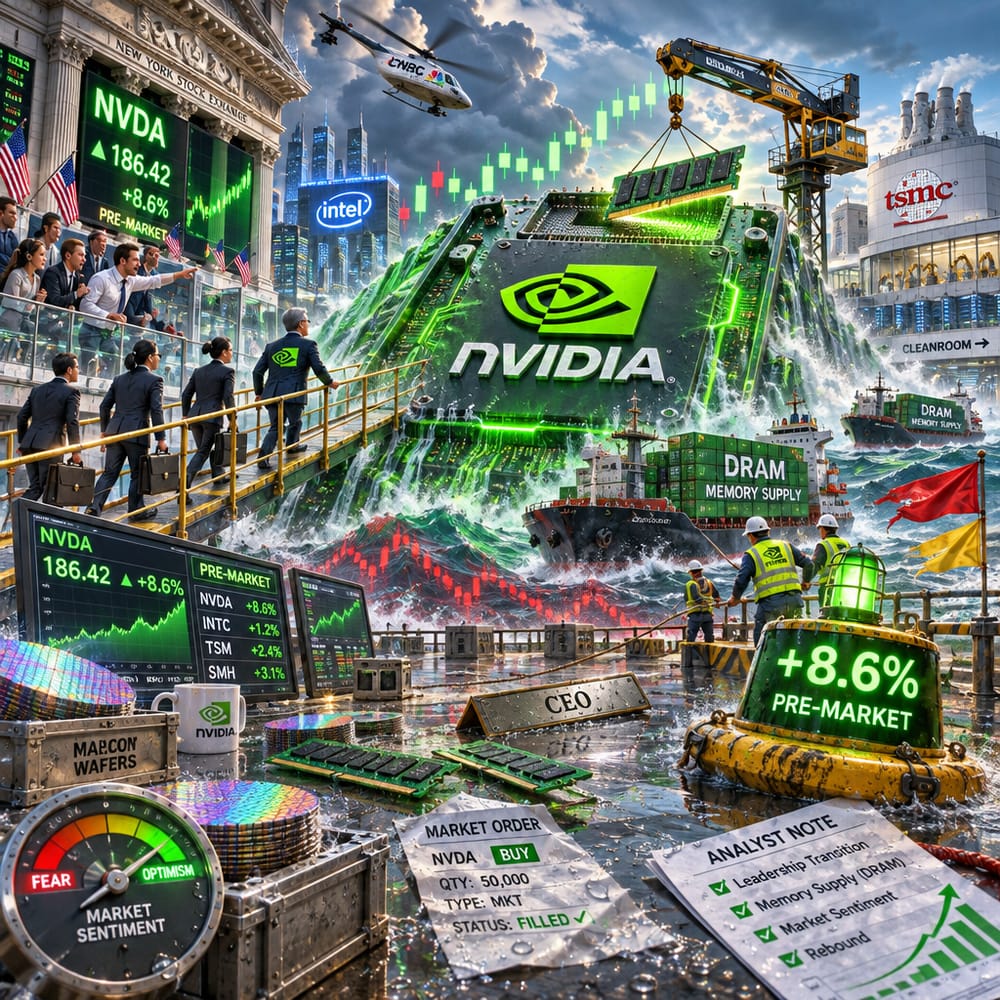
Nvidia just dunked on market doubts with an 8.6% pre-market leap, reminding investors why it's still a heavyweight in the tech world. How did this chip wizardry pull off a Houdini-style escape act from a labyrinth of leadership turmoil and whisperings of shaky memory supply? Sit tight, because it's a plot twist worth dissecting.
For starters, Nvidia's recent stock rally looks like an epic comeback scene from a blockbuster, especially after the founder Jensen Huang was shown the door. Yep, the same Huang who etched Nvidia's name in the tech hall of fame had to bow out due to some James Bond-level intrigue involving personal blunders and alleged espionage. Yet here we are, with investors donning rose-colored glasses again. So, what's sparked this newfound optimism?
THE INVESTOR REACTION
Investors, it seems, have a knack for bouncing back just as quickly as they panic. Nvidia's stock spiking in pre-market trading indicates they're willing to look past its recent soap opera. Perhaps it's because they know Nvidia's real magic lies in its tech prowess, not just in who sits at the helm. And let's be real—Nvidia's chips are still the gold standard for AI and gaming. A little leadership shake-up isn't going to change that overnight.
Moreover, the tech sector collectively inhaled a breath of relief with Nvidia's surge. The chip giant has always been a bellwether for tech stocks. Its recovery offers a glimmer of hope that the AI investment frenzy isn’t about to evaporate into thin air despite the Nasdaq taking a beating.
MEMORY SUPPLY CONCERNS
Then there's the elephant in the server room: memory supply. Nvidia's been pretty tight-lipped about any potential hiccups in this area, which might be adding a layer of suspense to its stock's upward march. If the memory supply chain is indeed the next undercurrent, Nvidia’s ability to navigate it will be crucial. Investors are betting that Nvidia, with its history of innovation, won't let a little memory drama hold it back from its AI aspirations.
But here's the kicker: Nvidia’s stance on memory supply could define its next chapter in ways we haven't fully wrapped our heads around yet. If they play their cards right, the company could either cement its dominance further or let rivals like Intel and TSMC inch closer in the tech arms race.
LONG-TERM GROWTH PROSPECTS
Looking ahead, Nvidia's growth prospects remain tantalizing. Despite the leadership shuffle, Nvidia’s strategic direction seems unshaken. Its roadmap continues to be paved with AI-powered gold. The future potential for Nvidia to expand further into sectors like data centers and autonomous vehicles is vast. If it manages to stay ahead of the curve in terms of technology and supply chain management, its long-term growth story is far from over.
There's no denying that Nvidia's latest market moves are a reminder of the resilience and dynamism that characterize tech stocks. While markets may occasionally waver, Nvidia’s underlying strengths provide a solid foundation for future growth. Plus, the tech titan's ability to pivot and innovate could prove strategic, especially with AI becoming more integrated into everyday life.
THE FINAL WORD
So, what about all those other AI and tech companies watching from the sidelines? As Nvidia gets its groove back, rivals and collaborators alike will be keeping a close eye. Any misstep from Nvidia could be a golden opportunity for others to swoop in. But if Nvidia continues its current trajectory, it's likely to remain the powerhouse that investors love to rally behind.
In the end, what we're witnessing is a classic tech comeback story. Nvidia, with its flashy rebounds and strategic pivots, might just be teaching the market a lesson in resilience and adaptability. Investors should buckle up and enjoy the ride, because if history is any guide, Nvidia isn’t done making headlines just yet.
This article is for informational purposes only and is not investment advice. Always do your own research or consult a licensed financial professional before making investment decisions.
© Copyright 2024. All Rights Reserved.
© Copyright 2024. All Rights Reserved.