

Nvidia's Potential Acquisition of Hugging Face
Saturday, August 29, 2026
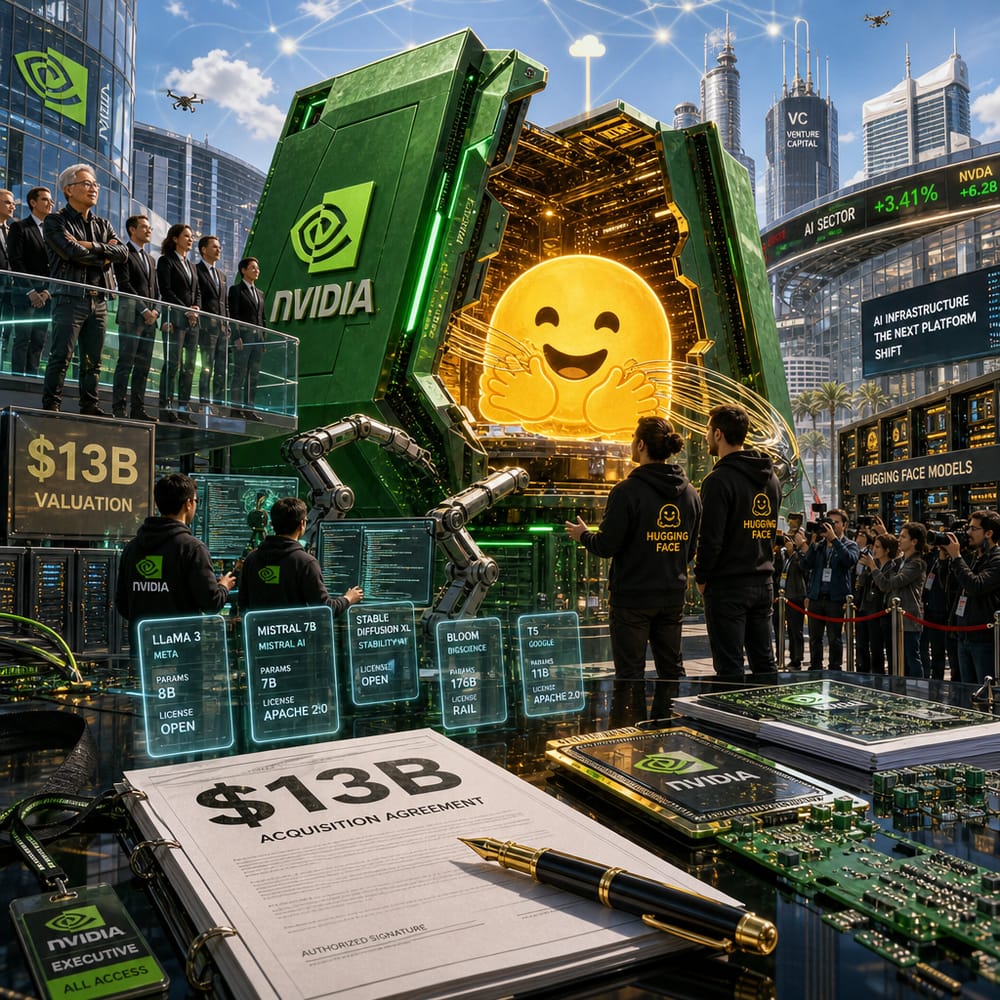
NVIDIA'S AI SHOPPING SPREE: WHAT'S THE BIG DEAL WITH HUGGING FACE?
It looks like Nvidia is about to dig deep into their pockets, and not for another round of luxury office snacks. Nope, this time they’re rumored to be eyeing a $13 billion buyout of AI wunderkind Hugging Face. While the name might evoke images of a cuddly emoji, Hugging Face is anything but soft in the world of artificial intelligence.
This acquisition isn't just a shopping spree; it's a strategic maneuver in an AI chess game that has everyone from tech giants to nervous entrepreneurs on edge. Let's dive into why Nvidia is considering dropping a hefty sum on this AI darling and what it means for them, the competition, and potentially, the regulators sharpening their pencils.
THE STRATEGIC PLAY
For those not familiar with the star player, Hugging Face isn't about facial expressions or high school yearbook quotes. They’re a prominent force in the AI community, known for their innovative natural language processing tools. These tools are the engine behind AI's ability to read, understand, and even generate human language. Think of it as the brain behind chatbots that don’t just repeat “I didn’t get that” endlessly.
So, why would Nvidia want to pick up Hugging Face? Besides the potential for a top-notch company softball team name, Nvidia is likely eyeing an opportunity to bolster their AI hardware sales. Their state-of-the-art GPUs are already the underpinnings of AI data centers worldwide, but by acquiring Hugging Face, Nvidia could offer an end-to-end solution: hardware and the AI smarts to go with it.
THE COMPETITIVE LANDSCAPE
Now, let's talk strategy. As the AI race heats up, Nvidia is cataloging its powerhouse of resources. Amazon and Google, among others, have been snapping up AI companies left and right, adding more firepower to their own arsenals. For Nvidia, acquiring Hugging Face means not just keeping pace, but potentially leaping ahead in the race to dominate AI.
Hugging Face's open-source model is a big draw. It means Nvidia could broaden its footprint in the developer community by offering tools that are already widely used and respected in AI circles. By tapping into Hugging Face’s expertise, Nvidia wouldn't just be selling chips; they'd be selling a richer, more complete AI ecosystem to developers.
REGULATORY HURDLES AHEAD
But, hold your horses—this deal isn’t all sunshine and rainbows. The regulatory watchdogs will most likely give this acquisition the stink eye. With antitrust concerns always looming in tech acquisitions, Nvidia's move could face scrutiny. Regulators might worry about Nvidia amassing too much power in the AI market, potentially stifling competition and innovation. After all, big tech mergers have been hitting regulatory roadblocks more often than not these days.
If the deal gets bogged down in legal mumbo jumbo, it could delay Nvidia's plans—or worse, derail them entirely. However, if they navigate this correctly, Nvidia could come out not just as a dominant force in AI hardware but as a leader in AI solutions, giving competitors more reasons to sweat.
THE BIGGER PICTURE
Nvidia’s potential acquisition of Hugging Face isn’t just another line item on the ledger—it's a significant leap towards reshaping the AI landscape. As AI continues to integrate into nearly every facet of our lives, from chatbots to self-driving cars, owning a significant piece of that pie makes Nvidia not just a tech producer but a key player, if not the kingpin, in the AI world.
So there you have it: a blend of ambition, strategy, and maybe a dash of regulatory drama. If this deal goes through, Nvidia might just rewrite the rules of the AI game, leaving competitors scrambling to redefine their own strategies and investors with plenty to think about. One thing's for sure—it's going to be one heck of a ride.
This article is for informational purposes only and is not investment advice. Always do your own research or consult a licensed financial professional before making investment decisions.
© Copyright 2024. All Rights Reserved.
© Copyright 2024. All Rights Reserved.