

Nvidia's Post-Earnings Surge: AI Hype or Reality?
Sunday, August 30, 2026
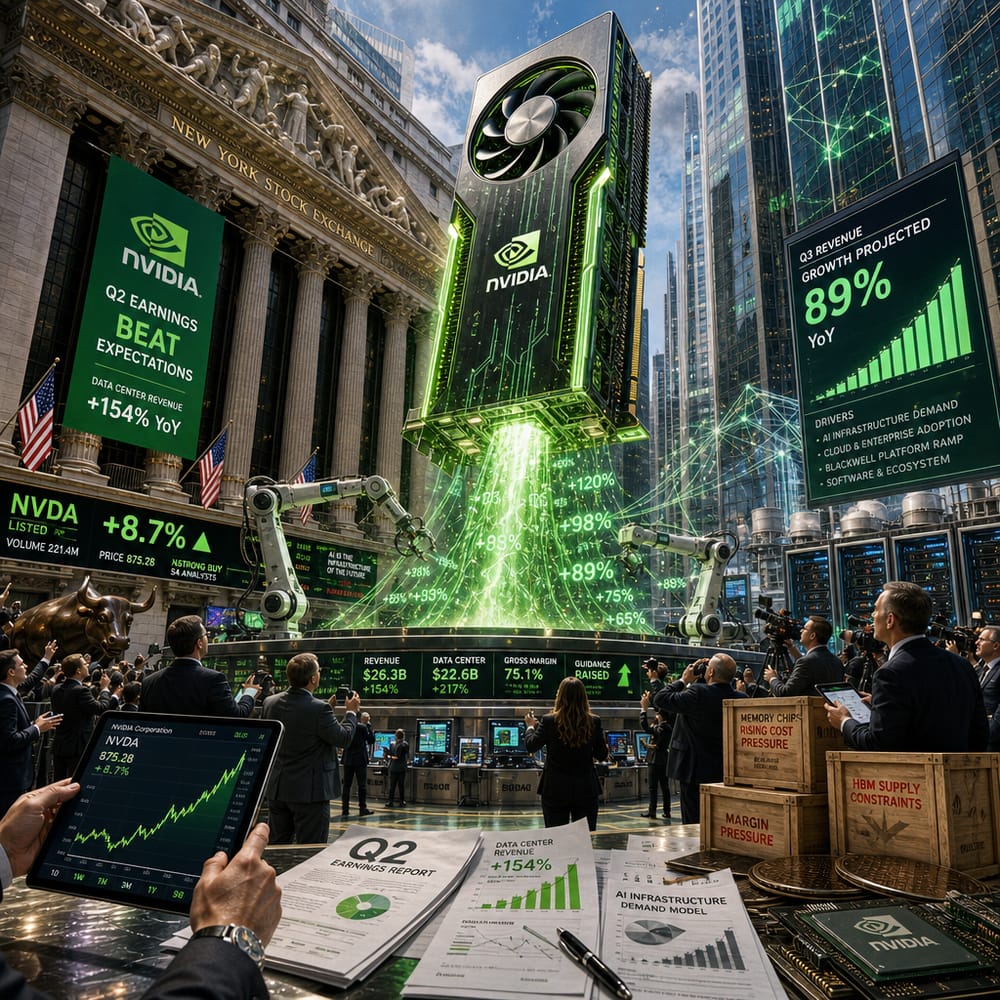
NVIDIA'S POST-EARNINGS SURGE: AI HYPE OR REALITY?
When Nvidia sneezes, the tech sector catches a cold—or in this case, gets a fever. Just ask your portfolio after Nvidia's shares soared by 8.7% following its latest earnings report. Wall Street seems to have swapped its usual caffeine for some high-octane AI enthusiasm, but the big question is: Is this surge in Nvidia's stock a flash in the pan or a long-term play? Let's dive in.
Imagine a rocket, powered not by fuel, but by numbers. Nvidia just reported a jaw-dropping 89% projected revenue growth for Q3, despite a slight trip-up with margins due to pesky, rising memory costs. It’s like the company’s racing towards the AI-powered future with blinkers on, ignoring the bumps along the way. But can Nvidia keep up this pace without overheating?
Riding the AI wave, Nvidia has positioned itself as the golden child of tech stocks. But as any surfer will tell you, it's not just about catching the wave; it’s about staying on it. The AI boom has every tech company from San Francisco to Shenzhen scrambling to ride its crest, and Nvidia, with its GPUs (graphics processing units) acting as the brain of AI applications, is right at the front. But is the AI hype justified, or are we looking at a bubble that could burst?
Investors are gazing into their crystal balls, asking, “What’s next for Nvidia?” The company’s long-term growth prospects are undeniably juicy. With AI transforming everything from healthcare to finance, Nvidia’s hardware is more in demand than espresso shots at a tech conference. But here's the catch: maintaining these growth levels will require not just riding but controlling the waves, and that means navigating the turbulent sea of rising costs.
Those rising memory costs are like weights on Nvidia’s wings. Memory isn’t just a line item on the balance sheet; it’s the lifeblood of Nvidia's performance. As these costs creep up, they nibble away at margins, the profit left after you’ve paid all the bills. Picture Nvidia as a marathon runner—it's gaining ground, but needs to pace itself or risk burning out mid-race.
So, what does this mean for your hard-earned dollars parked in Nvidia stocks? Well, if you’ve been riding the Nvidia rocket, you're probably feeling like a financial genius right now. But every rose has its thorns, and investors need to watch out for more than just those rising costs. The relentless rally in AI stocks has driven prices sky-high, and what goes up must, at some point, consider gravity.
The broader market implications are equally intriguing. Nvidia isn’t just a company; it's a bellwether for AI enthusiasm. Its performance influences investor sentiment far beyond its share price. If Nvidia continues its winning streak, it could cement the belief that AI is not just a fad but the future, prompting a cascade of investments into AI technologies and related stocks. However, a stumble could trigger a reality check, reminding everyone that trees don't grow to the sky.
So, is the AI hype justified? That depends on who you ask. Tech evangelists will tell you it’s just the beginning, while skeptics might advise keeping an eye on the exits. As with any investment, the truth probably lies somewhere in between.
Nvidia’s journey ahead is like navigating a high-stakes video game level. Success will require strategic maneuvers, managing rising costs, and staying ahead of the competition. For now, Nvidia's post-earnings surge highlights the incredible potential of AI, but whether it translates into sustained growth or fizzles out is a story still being written.
Ultimately, retail investors should keep their wits about them. Track Nvidia's moves, keep an eye on the broader tech landscape, and maybe pack a parachute just in case. It's an exciting time, and whether you’re an AI optimist or a cautious observer, watching Nvidia's play will be anything but boring.
This article is for informational purposes only and is not investment advice. Always do your own research or consult a licensed financial professional before making investment decisions.
© Copyright 2024. All Rights Reserved.
© Copyright 2024. All Rights Reserved.