

Nvidia's Plunge and Its Impact on Mega-Cap Funds and Retirement Portfolios
Monday, November 16, 2026
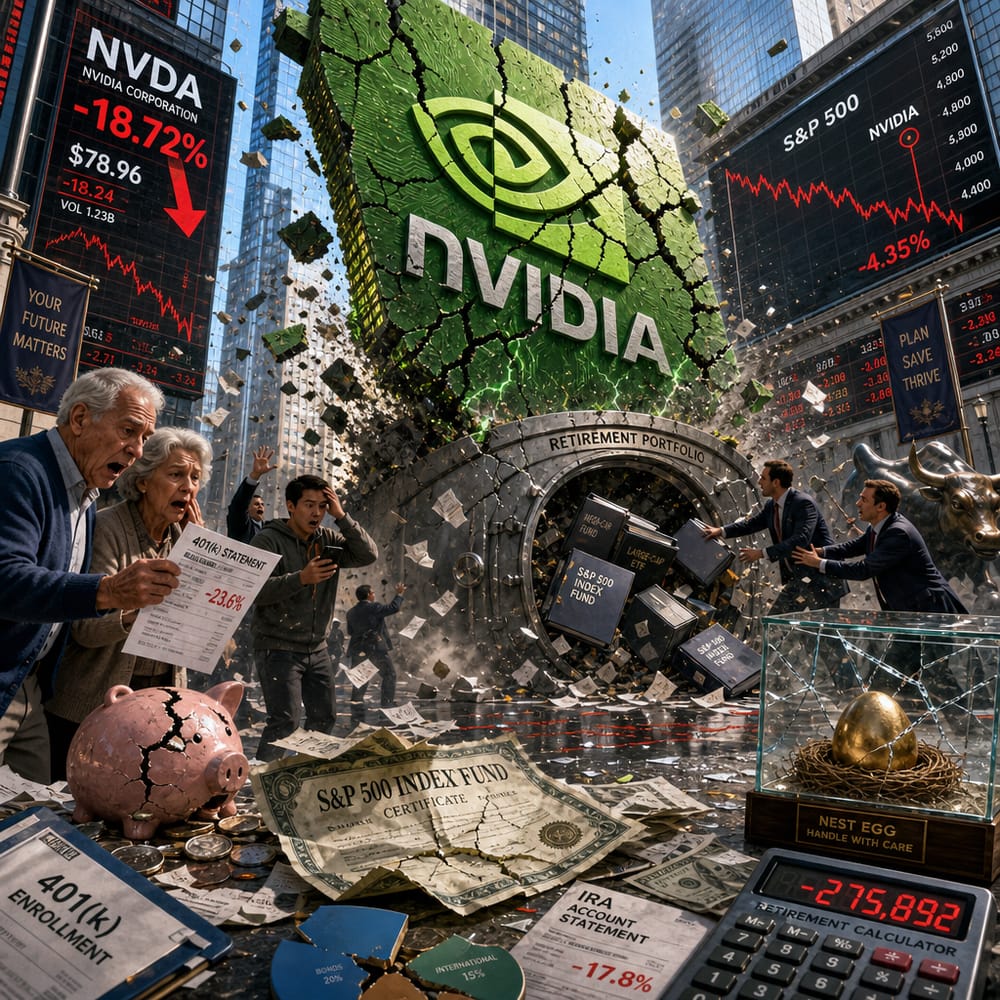
Nvidia's Plunge: The Domino Effect on Mega-Cap Funds and Your Retirement Nest Egg
Picture this: You're chilling on your couch, scrolling through your investment app, and suddenly your heart skips a beat. Nvidia, the tech titan you're banking on for your retirement, is nosediving. But this isn't just a routine market hiccup—it's the fallout from a corporate bombshell that could reshape how we think about tech-heavy investments. Buckle up, because the aftershocks are coming for your portfolio.
Nvidia, celebrated not just as the king of graphics cards but as a central player in the AI revolution, took a nosedive this week. A whopping 13% plummet in share price was triggered by the sudden exit of CEO Jensen Huang amidst scandal—think Jason Bourne meets Silicon Valley soap opera. Huang’s alleged affair with a Chinese spy is the plot twist nobody saw coming, and investors are feeling the heat. As the company grapples with this leadership shake-up, the ripples are being felt far beyond its own walls.
So, how does this impact the S&P 500 funds that many of us have padded our retirement accounts with? Well, Nvidia hasn't just been a background player in these funds; it’s been a front-row star. When a single stock in a mega-cap index fund takes a dive, it’s like dropping the bass at a party—everyone feels it. As Nvidia's value deflates, so too could the value of S&P 500 funds, pinching the pockets of anyone who’s counting on these for steady, reliable growth.
But wait, there's more. Nvidia's tumble raises a red flag about the broader vulnerability in mega-cap tech stocks, the celebrity lineup of the investment world. These giants—think Apple, Microsoft, Amazon—have become staple ingredients in many of our financial diets. They're sexy, they're high-return, and when they’re on a roll, they make our portfolios look like rockstars. But what happens when they hit a rough patch?
This Nvidia debacle is a stark reminder of the dangers of putting all our eggs in the mega-cap basket. It’s a reality check that even the most robust tech stars can falter, and when they do, they don't just stub a toe—they faceplant in a very public way. With Nvidia at the helm of AI advancement, its trials raise questions about the entire sector's stability and our reliance on these behemoths to carry our financial futures.
Investors are now faced with a dilemma: Do we hold tight, hoping Nvidia will regain its footing under interim CEO Colette Kress, or do we diversify to hedge against future faceplants in the tech arena? Equal-weight funds, which spread the love more evenly across companies rather than focusing on the big players, have been getting a second look lately for their ability to dodge some glancing blows from these kinds of upheavals.
In the wake of all this drama, how are mega-cap stocks likely to fare? The sector's magnetic pull hasn't disappeared, but the narrative might shift. As the dust settles on Nvidia's scandal, investors could grow wary of betting too heavily on a handful of tech juggernauts. A diversified portfolio isn’t just a financial planner’s cliché—it’s a shield against precisely this kind of volatility.
Sure, Nvidia could rally spectacularly under new leadership, or it could face a long road to recovery. Either way, this episode is a wake-up call for any investor with retirement dreams tied closely to tech stocks. It’s a reminder that while high returns are enticing, they come with high risk—especially when your portfolio’s balance hinges on the fortunes of a few mega-companies.
So, what’s the takeaway from all this? It’s time to check your portfolio’s tech exposure and see if you’re comfortable with the risks. Diversification might sound about as exciting as watching paint dry, but when the market throws a curveball, it’s the safety net you didn’t know you needed. Whether you’re a seasoned investor or just getting your feet wet, remember: In the world of investing, it’s not just about riding the highs, but weathering the storms. And right now, with Nvidia’s plunge as a stark reminder, it’s worth asking yourself: Is your portfolio prepared for the next tempest?
This article is for informational purposes only and is not investment advice. Always do your own research or consult a licensed financial professional before making investment decisions.
© Copyright 2024. All Rights Reserved.
© Copyright 2024. All Rights Reserved.