

Nvidia's Multifaceted Role in the AI Ecosystem
Saturday, August 29, 2026
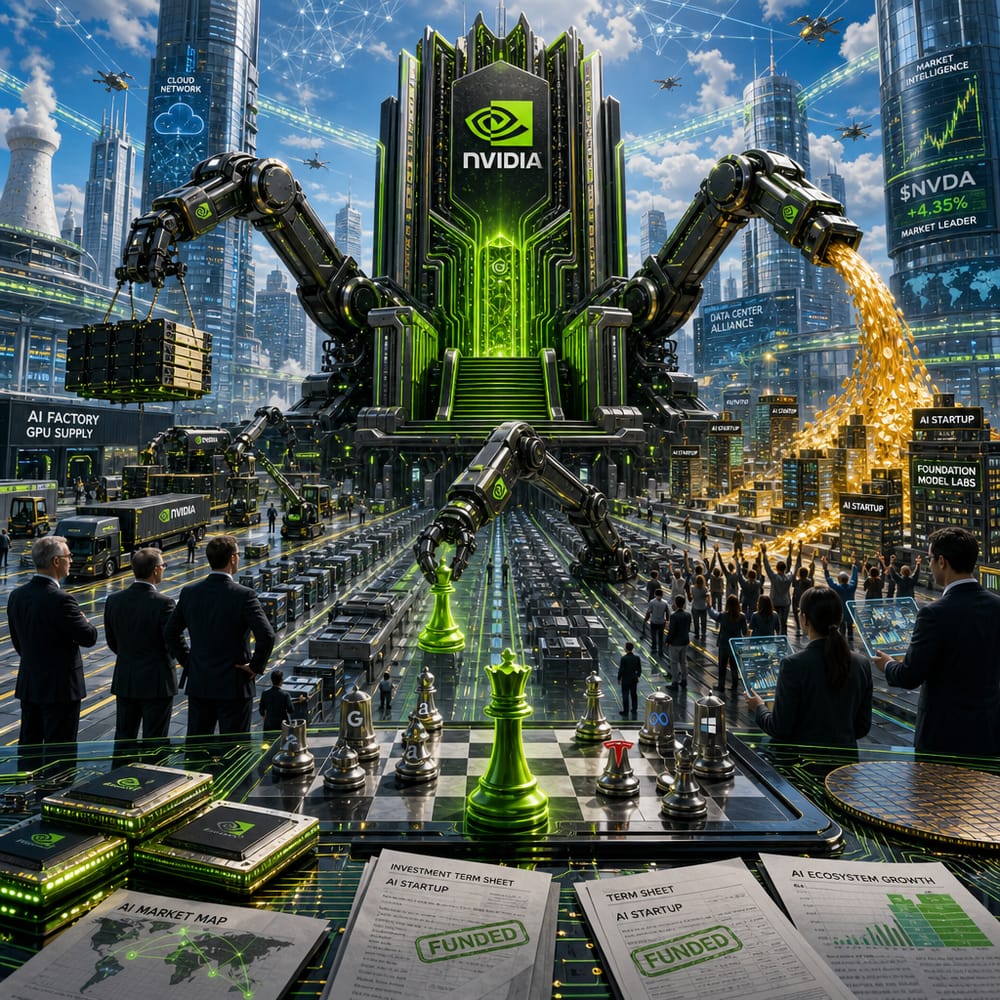
NVIDIA'S MULTIFACETED ROLE IN THE AI ECOSYSTEM
If you thought Nvidia was just your average chipmaker riding the AI wave, think again. This tech titan is playing three-dimensional chess in the artificial intelligence world, all while we're still trying to figure out checkers. With its burgeoning role as a supplier, investor, and competitor, Nvidia is becoming the Swiss Army knife of the AI industry, and it's leaving everyone else scrambling to catch up.
Let’s start with the basics. Nvidia is the go-to supplier for AI chips, and that's no secret. The company's hardware powers everything from gaming PCs to data centers that practically hum with the sound of machine learning. With its hardware in demand like Black Friday deals, Nvidia’s revenue has shot up faster than a rocket-fueled Tesla, doubling its sales and thrilling investors who are already eyeing future growth like kids in a candy store.
But here's where things get interesting, and perhaps a bit dicey. Nvidia isn't just sticking to its knitting. It's expanding its influence by investing in AI startups and acquiring companies, all while staking its claim as a direct competitor in the AI software realm. Picture this: the same company supplying your hardware is also your rival and investor. It’s like your landlord also being your roommate and your boss.
This multi-faceted role brings up a host of questions. How does Nvidia juggle these roles without stepping on toes or, worse, causing a full-blown market avalanche? So far, it's been a balancing act worthy of Cirque du Soleil, with Nvidia walking the line between cooperation and competition. While Nvidia's dominance can drive innovation, it also poses risks akin to putting all your eggs in one high-tech, very expensive basket.
The potential risks of Nvidia's growing dominance can't be ignored. For one, there's the question of market dynamics. When one player holds most of the cards—or in this case, chips—it can stifle competition, potentially leading to less innovation and higher prices. Not to mention, there's the not-so-small matter of conflicts of interest. Imagine playing poker with someone who knows your every move because they sold you the cards in the first place.
Moreover, Nvidia's growing influence raises concerns about dependency. If Nvidia suddenly shifts strategy or faces a supply chain hiccup, it could send ripples across the entire AI ecosystem. Nvidia's sheer size and influence mean that any stumble or strategic shift could be like dropping a boulder in a pond—a splash that could soak investors, competitors, and customers alike.
On the flip side, Nvidia's role as an investor could spur growth for startups that otherwise might struggle to find funding. By pumping money and resources into budding companies, Nvidia could help cultivate the next generation of AI innovations. But here's the catch: those startups better not plan to step on Nvidia's turf unless they enjoy living dangerously.
Ultimately, Nvidia's position in the AI landscape is a double-edged sword. While it has the clout to accelerate AI advancements, its widespread influence could potentially lead to a market where Nvidia calls the shots. For investors, this raises the question: is Nvidia's growth a golden opportunity or a potential pitfall waiting to happen?
So, what's the takeaway for retail investors casually scrolling through their phones, trying to decide where to park their hard-earned cash? While Nvidia's stock might look as appealing as a shiny new gadget in a tech store window, it's essential to keep an eye on the broader picture. Diversifying your investments, considering alternative sectors like utilities or even other AI-related plays, might be a wise move. After all, as the AI landscape evolves, today's dominant player could find tomorrow's competition nipping at its heels—or worse, tripping it up.
In the high-stakes world of AI, Nvidia is the player everyone is watching. Just be sure to watch your own step, too.
This article is for informational purposes only and is not investment advice. Always do your own research or consult a licensed financial professional before making investment decisions.
© Copyright 2024. All Rights Reserved.
© Copyright 2024. All Rights Reserved.