

Nvidia's Midweek Rally and Friday Reversal
Sunday, August 30, 2026
NVIDIA'S WEEK OF WHIPLASH: FROM TECH DARLING TO INTEREST RATE DREAD
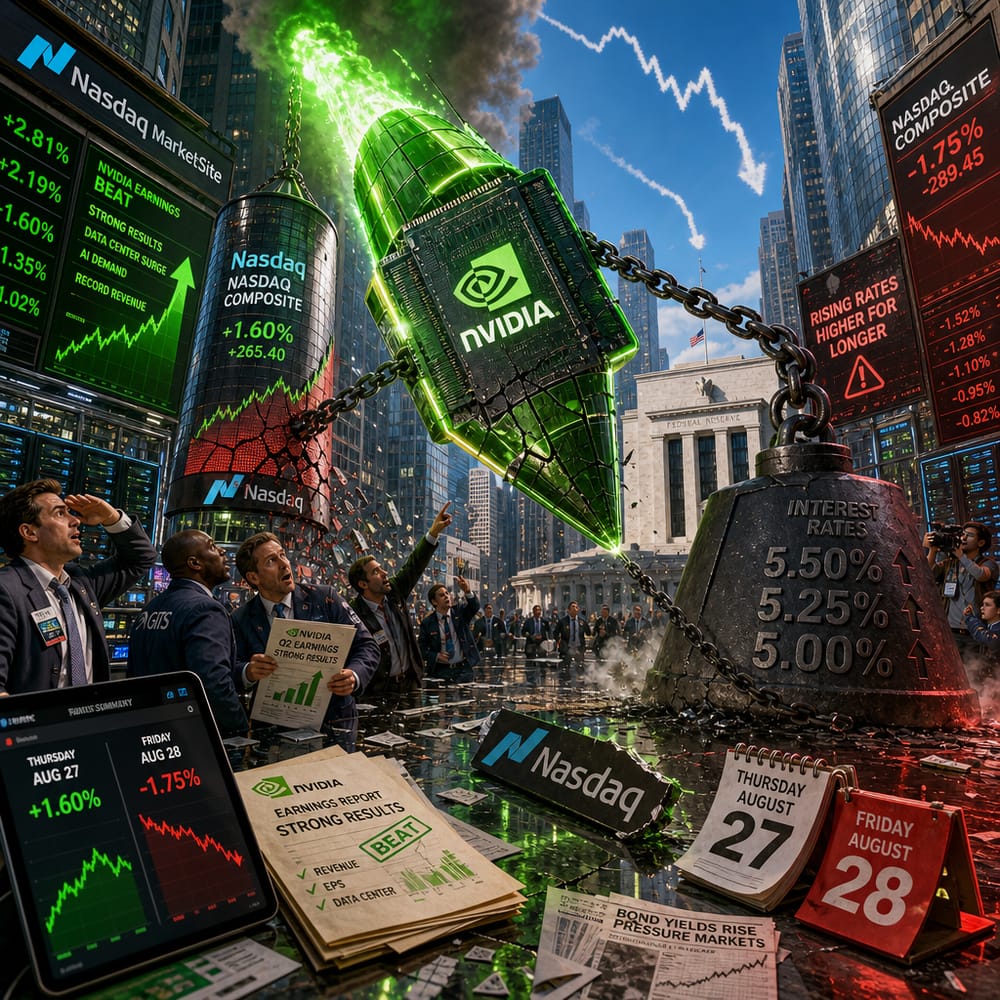
In the world of tech stocks, Nvidia is the cool kid that everyone wants to hang out with—or at least invest in. Last week, this semiconductor powerhouse was having one of those moments when everything seems to go right. Earnings? Through the roof. Stock price? Rocketing skyward, pulling the Nasdaq Composite along with it like some kind of market Moses parting the sea of investor skepticism. And then came Friday, when the party got crashed by the ghost of interest rates future.
Let’s break down the drama: Wednesday saw Nvidia report that its revenue had doubled over the past year, a jaw-dropping leap that had analysts everywhere scrambling to update their spreadsheets and buy confetti for the celebrations. The company’s secret sauce? Being smack dab in the middle of the AI boom, where Nvidia chips are as essential as avocado on toast at a millennial brunch. By Thursday, investors were cheering so hard it seemed like the market might just sprout pom-poms.
The Nasdaq Composite, buoyed by Nvidia's smashing performance, rose by 1.6%. It wasn’t just a tech rally; it was more like a tech jubilee. Wall Street was basking in this splendid glow, and Nvidia was the superstar headlining the show.
But if the stock market were a soap opera—and let’s face it, it's got the twists to qualify—Friday was the day the plot took a dark turn. Enter stage left: concerns over interest rates, the perennial party pooper of financial markets.
The Federal Reserve, with its cryptic signals and unpredictable maneuvers, decided to remind everyone that “concerning” inflation is still very much a thing. This brought back fears of interest rate hikes, breathing down the neck of investors like that one overzealous coach who just won’t let you enjoy the game. In a flash, the excitement from Nvidia’s stellar performance was eclipsed by the dread of the Fed’s next move, reversing those hard-earned gains.
So, what gives? Why did the market pivot so quickly from celebration to caution? It all boils down to the fundamental tug-of-war between earnings optimism and macroeconomic realities. Nvidia's earnings stoked visions of an AI-driven utopia, where every data center and smart device is running on their chips. But interest rates are like gravity; no matter how high you soar, they’ll eventually pull you back to earth.
For tech investors, this financial rollercoaster is a vivid reminder of the current landscape. Companies like Nvidia are not just weather vanes—they’re more like the GPS for the entire tech sector. When they point north, it’s tempting to follow blindfolded. But one must remember that the broader economic climate is just as influential, if not more so.
What does all of this mean for you, the retail investor scrolling through your feed, coffee in hand and wondering what to make of your tech-heavy portfolio? Well, buckle up. The tech sector's fortunes are increasingly hitched to the wagon of macroeconomic policies. Nvidia and its peers can deliver dazzling growth, but external factors like interest rates can quickly put a dampener on the party.
Here’s the takeaway: Be aware of the larger economic signals that could impact your investments. Diversification isn’t just a buzzword; it’s your shield against the volatility that comes from being overly dependent on any single sector. Keep an eye on both the exciting earnings stories and the cautious tales of interest rates and inflation. After all, balance is key, whether you’re investing in stocks or just trying to make it through another storyline on Wall Street’s ongoing saga of thrills and chills.
In the meantime, enjoy the ride. The tech sector will undoubtedly have more stories to tell, and Nvidia will likely remain a major player in those narratives. Just remember to keep an eye on the broader economic stage—it’s where the real dance of the markets happens.
This article is for informational purposes only and is not investment advice. Always do your own research or consult a licensed financial professional before making investment decisions.
© Copyright 2024. All Rights Reserved.
© Copyright 2024. All Rights Reserved.