

Nvidia's Financing Strategies: Investor Scrutiny Intensifies
Wednesday, August 26, 2026
NVIDIA'S FINANCING STRATEGIES: INVESTOR SCRUTINY INTENSIFIES
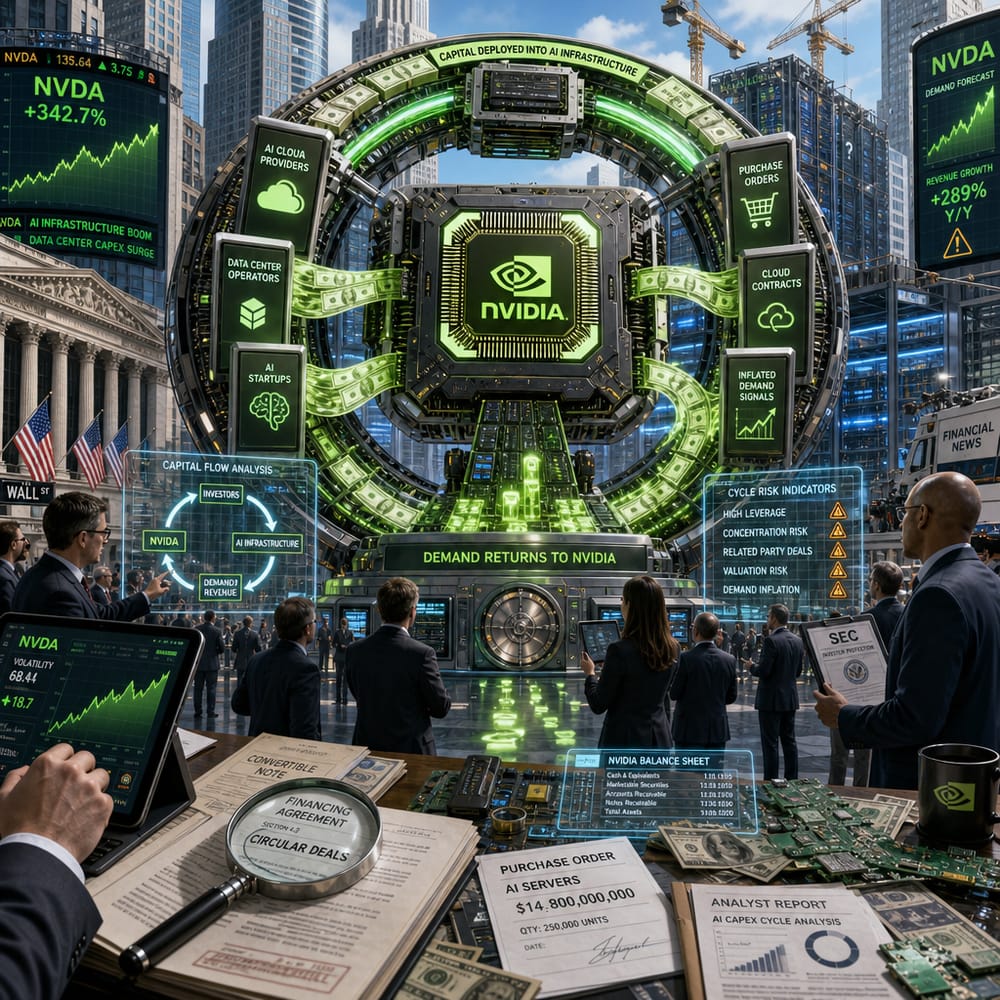
Imagine being accused of inflating demand — not with hot air, but with cold, hard cash. Welcome to Nvidia's world, where the tech giant's recent financing strategies are raising eyebrows higher than a bulging GPU price tag. If you’re wondering why everyone in the financial world is suddenly playing detective, it's because of Nvidia’s alleged ‘circular deals’ — a financing maneuver that might have them walking a fine line between savvy strategy and shady spectacle.
Let’s unravel this knot. Nvidia, the darling of the graphics processing universe, has been reportedly engaging in financing arrangements that involve sparking demand for AI infrastructure. But here’s the kicker: some accuse them of artificially inflating demand signals. In plain English, it’s like a magician pulling rabbits out of hats, except the rabbits are revenue figures, and the hats are investors' trust.
So, how do these financing arrangements impact demand visibility? Well, the essence lies in what the experts call ‘circular deals.’ It's as if Nvidia is lending money to a buyer to purchase its products, thereby boosting sales figures. While it may sound smart, critics argue it’s a bit like giving yourself a five-star rating on Yelp. It looks good on the surface, but is it genuine?
This maneuver impacts demand visibility by potentially painting an overly rosy picture of sales and demand. Investors, relying on these numbers, may not get a true picture of the market demand, leading to decisions based on inflated expectations. It’s akin to buying a house because it looks great in photos, only to find out later that it’s all Photoshop and smoke machines.
The ripple effects of this strategy are being felt across the tech sector. Similar financing themes are bubbling up as companies scramble to ride the AI wave. The tech-capital financing frenzy is like the Wild West right now — everyone’s looking for gold in the form of artificial intelligence, and some are willing to use unconventional maps to get there.
Take Salesforce, for instance. Their stock recently soared after they reported an impressive leap in revenue, partly driven by strategic investments in AI startups. These investments, however, spotlight the broader industry trend of capital-heavy plays to boost tech growth. It’s like tech companies are in a race to build the biggest, shiniest castle, and some aren’t too picky about where the bricks come from.
But what does this mean for investors and Nvidia’s market position? For one, investor scrutiny is intensifying, with many adopting a wait-and-see approach. Trust is like a glass vase — once shattered, it’s hard to put back together. If these financing strategies continue to muddy the waters of demand visibility, investor trust might take a hit, affecting Nvidia’s standing in the market.
The question on everyone’s mind: Are these strategies sustainable? Well, it’s a double-edged sword. On one hand, they can drive growth and propel the company to new heights. On the other, they could lead to an artificial bubble that bursts at the first sign of market correction. It’s high stakes poker, and Nvidia is betting big on its hand.
As the AI gold rush continues, all eyes will be on Nvidia’s next moves. Will they adjust their strategy to regain investor trust, or will they continue to ride the wave of circular deals? The stakes couldn’t be higher — not just for Nvidia, but for the tech industry as a whole.
In the end, Nvidia’s financing saga is a cautionary tale for investors. It's a reminder that in the world of high finance, dazzling numbers and impressive growth stories need to be backed by solid and genuine demand. Otherwise, those eye-catching revenue figures might just be another magician’s trick, designed to dazzle but ultimately empty once the spotlight fades.
This article is for informational purposes only and is not investment advice. Always do your own research or consult a licensed financial professional before making investment decisions.
© Copyright 2024. All Rights Reserved.
© Copyright 2024. All Rights Reserved.