

Nvidia's Earnings Beat Overshadowed by CEO Departure and AI Market Turmoil
Saturday, November 21, 2026
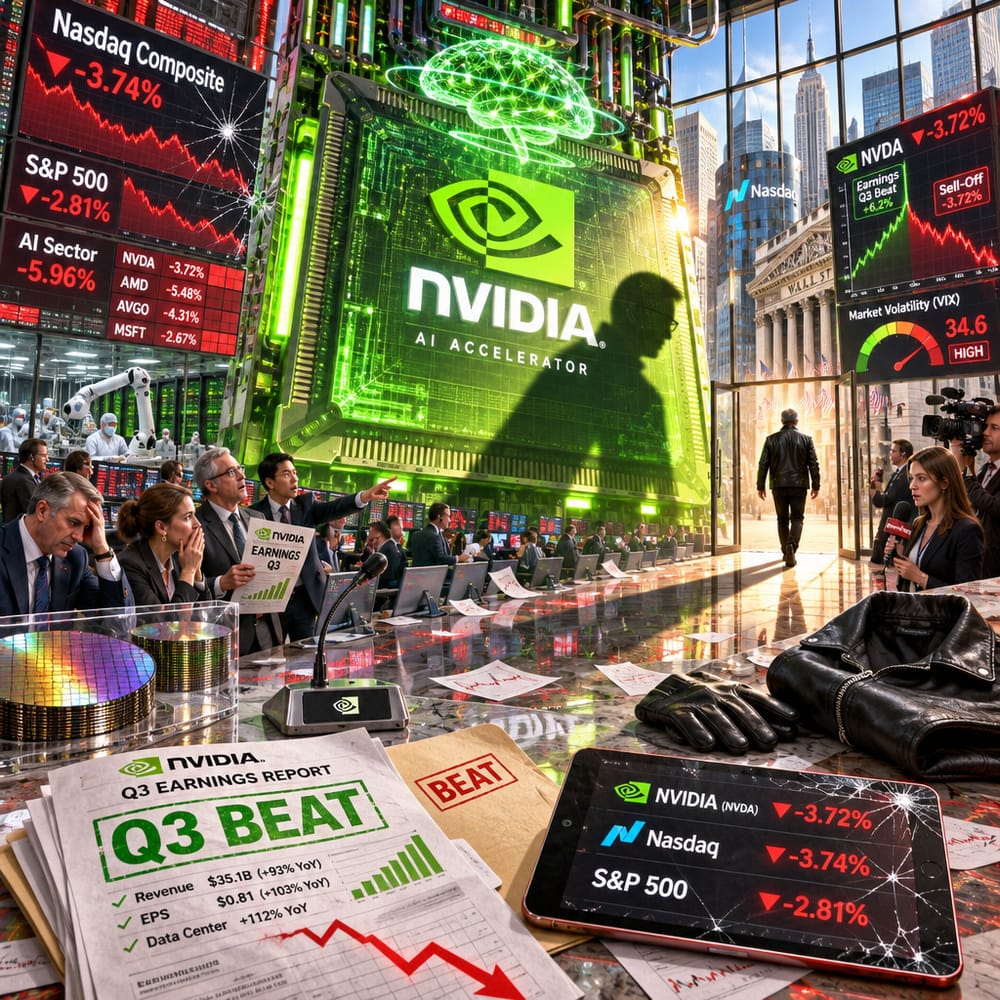
NVIDIA'S EARNINGS BEAT OVERSHADOWED BY CEO DEPARTURE AND AI MARKET TURMOIL
What’s cooking in the tech world’s kitchen? Well, how about a spicy dish of drama with a side of stock market jitters? Nvidia, the beloved heavy-hitter of the semiconductor industry, just served up some savory Q3 earnings. But the spotlight quickly shifted when CEO Jensen Huang dropped the mic and exited stage left, leaving investors with more questions than answers. Add the AI market’s recent rollercoaster ride to the mix, and you've got a recipe for uncertainty that's making even seasoned traders reach for the antacid.
Let’s start with the earnings — the appetizer before the main act of chaos. Nvidia’s third-quarter numbers were a tasty spread, exceeding expectations and giving investors what they crave: growth, resilience, and a shining example of how to dominate in semiconductor chess. But, just as Wall Street was getting comfy with Nvidia’s success story, Jensen Huang decided to retire his signature leather jacket and ride into the sunset. Boom. Suddenly, the beautiful banquet turned into a potluck of confusion.
Why all the fuss? Leadership stability is the backbone of tech companies, especially one riding the AI wave like Nvidia. Investors adore a steady hand at the helm, someone who knows the ship and can navigate stormy seas with ease. Huang was more than just a captain; he was the visionary force behind Nvidia’s rise to glory. His departure feels like waking up to find the GPS was swapped for a paper map. It’s disorienting and a bit unsettling.
So, how do leadership changes like this typically affect stock prices? Well, they’re kind of like a high-stakes game of Jenga. Pull the wrong block, and the tower wobbles. In the tech sector, leadership transitions can spark a flurry of stock sell-offs as investors brace for the unknown. Nobody likes uncertainty, especially when it feels like you're strapped into a rollercoaster with no seatbelt. The market’s immediate reaction? Nvidia’s stock took a slight dip, mirroring the jitters felt by investors globally.
Now, let’s talk turkey about the AI market downturn. Nvidia has been riding high on the AI boom — think of them as the rock stars of the silicon world, powering everything from data centers to your latest favorite gadget. But recently, the AI market’s glitter has dulled a bit. Blame it on the macroeconomic headwinds, rising interest rates, or just the cyclical nature of tech trends.
So, what does this AI hiccup mean for Nvidia's future? While the current downturn might feel like a winter chill, it’s important to remember that spring usually follows. Nvidia’s roots in AI are deep. They’ve got the tech, they’ve got the talent, and they’ve got the drive. In the long term, this might just be a speed bump — annoying, yes, but not insurmountable. However, short-term investor sentiment? That’s another beast entirely.
It's a tense time for tech investors, as they hang onto every headline and whisper about mega-cap tech stocks, like a soap opera addict waiting for the next plot twist. The S&P 500 and Nasdaq could very well swing in tandem with Nvidia’s fortunes. It’s like a game of dominoes where one big tile can set off a chain reaction.
So what’s a savvy investor to do? Keep your eyes peeled and your portfolio diversified. Nvidia might face some turbulence, but tech companies, especially those with Nvidia's pedigree, tend to have a knack for reinvention. It’s a poignant reminder that in investing, much like life, the only constant is change.
As the dust settles, investors will be watching for Nvidia’s next move. Will they find a dynamic new CEO to lead them into the future? Can they weather the AI market’s storm and emerge stronger on the other side? Only time will tell.
In the meantime, keep your finger on the pulse of the tech markets and maybe consider investing in a good stress ball or two. After all, if Nvidia has taught us anything, it’s that the ride might be bumpy, but boy, is it worth it.
This article is for informational purposes only and is not investment advice. Always do your own research or consult a licensed financial professional before making investment decisions.
© Copyright 2024. All Rights Reserved.
© Copyright 2024. All Rights Reserved.