

NVIDIA's Downgrade Cascade: Impact on Mega-Cap Tech
Sunday, November 15, 2026
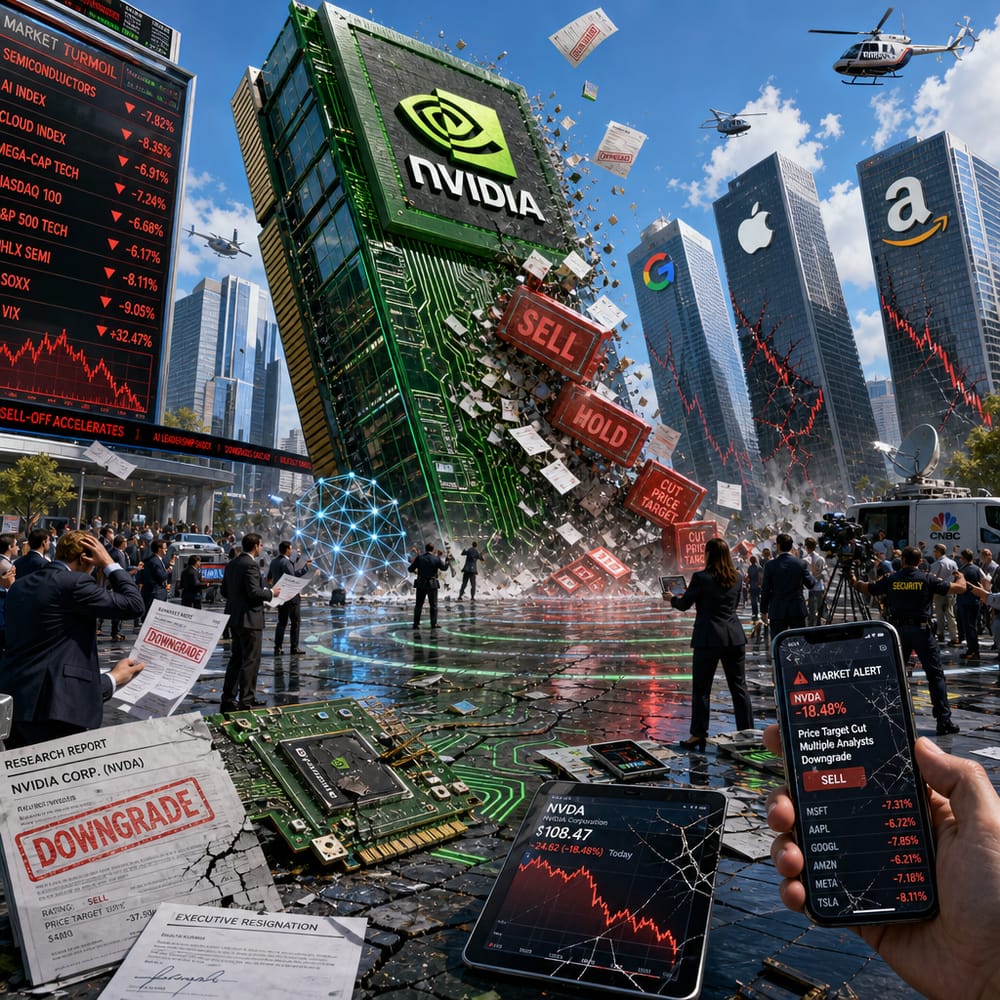
NVIDIA'S DOWNGRADE CASCADE: IMPACT ON MEGA-CAP TECH
In the world of mega-cap tech, the mighty fall hard. Just ask Jensen Huang, the former head honcho of Nvidia, who recently exited the company in a storm of scandal and intrigue. His resignation has sent shockwaves across the tech industry, leading to a series of analyst downgrades that have left Nvidia's stock – and its investors – reeling. But before we dive into the financial fallout, let's take a step back and consider the broader implications.
AT THE HELM, UNTIL HE WASN'T
Jensen Huang wasn't just any CEO. For 33 years, he was the beating heart of Nvidia, transforming it from a run-of-the-mill chipmaker into a titan of the AI industry. Known for his signature leather jacket and relentless drive, Huang became synonymous with Nvidia's brand and success. But, as it turns out, even tech royalty isn't untouchable.
Huang's resignation, sparked by scandalous allegations of extramarital affairs and potential espionage ties, has left a power vacuum at the top of Nvidia. With CFO Colette Kress stepping in as interim CEO, Nvidia is scrambling to reassure investors that it's business as usual. But the market isn't buying it – at least not yet.
THE RIPPLE EFFECT
In the wake of Huang's departure, major firms wasted no time in downgrading Nvidia's stock. The impact was immediate and brutal, with the company's market value taking a nosedive. But why do analyst downgrades hold so much sway over investor behavior? It's simple: Analysts are like the oracles of Wall Street, their predictions and ratings often seen as gospel by traders and investors alike.
When big-name firms lower their expectations for a company, it sends a message that something's amiss – a red flag for cautious investors. And in the cutthroat world of mega-cap tech, where fortunes can change with a single tweet or headline, confidence is everything. Without it, even the mightiest companies can find themselves on shaky ground.
LEADERSHIP MATTERS
Huang's exit shines a harsh spotlight on the vulnerability of mega-cap tech stocks to leadership changes. A charismatic leader like Huang can be a company's greatest asset, but they can also become its Achilles' heel. When such a figure steps down, especially amid controversy, it can erode investor confidence and send stock prices spiraling.
But what about the long-term impacts of leadership changes on stock performance? Historically, they can go either way. Sometimes a fresh face at the top can reinvigorate a company, bringing new ideas and strategies to the table. Other times, it can lead to a period of instability and uncertainty, as the new leader struggles to fill the shoes of their predecessor.
In Nvidia's case, much will depend on who the board chooses as the permanent CEO. A seasoned leader with a clear vision for the future could stabilize the ship and restore investor faith. But a misstep here could prolong the uncertainty, leaving Nvidia vulnerable to further declines.
A CAUTIONARY TALE FOR TECH TITANS
Nvidia's woes serve as a cautionary tale for the entire tech sector. In an industry where innovation is king and reputations can be made or broken overnight, the fallout from Huang's resignation is a stark reminder of the fragility of market sentiment. Even the biggest players aren't immune to the whims of investor confidence and the harsh glare of public scrutiny.
For retail investors, it's a lesson in the importance of diversification. Relying too heavily on any single stock, no matter how dominant, is a risky game. The tech giants may seem invincible, but as Nvidia's recent troubles demonstrate, they can falter just like the rest.
So, as the dust settles and Nvidia charts its path forward, investors will be keeping a close eye on the company's next moves. Will Nvidia bounce back stronger, or will it struggle to regain its footing in the hyper-competitive tech landscape? Only time will tell, but one thing's for sure: In the world of mega-cap tech, the only constant is change.
This article is for informational purposes only and is not investment advice. Always do your own research or consult a licensed financial professional before making investment decisions.
© Copyright 2024. All Rights Reserved.
© Copyright 2024. All Rights Reserved.