

Nvidia's CEO Resignation Sparks Market Volatility
Thursday, November 19, 2026
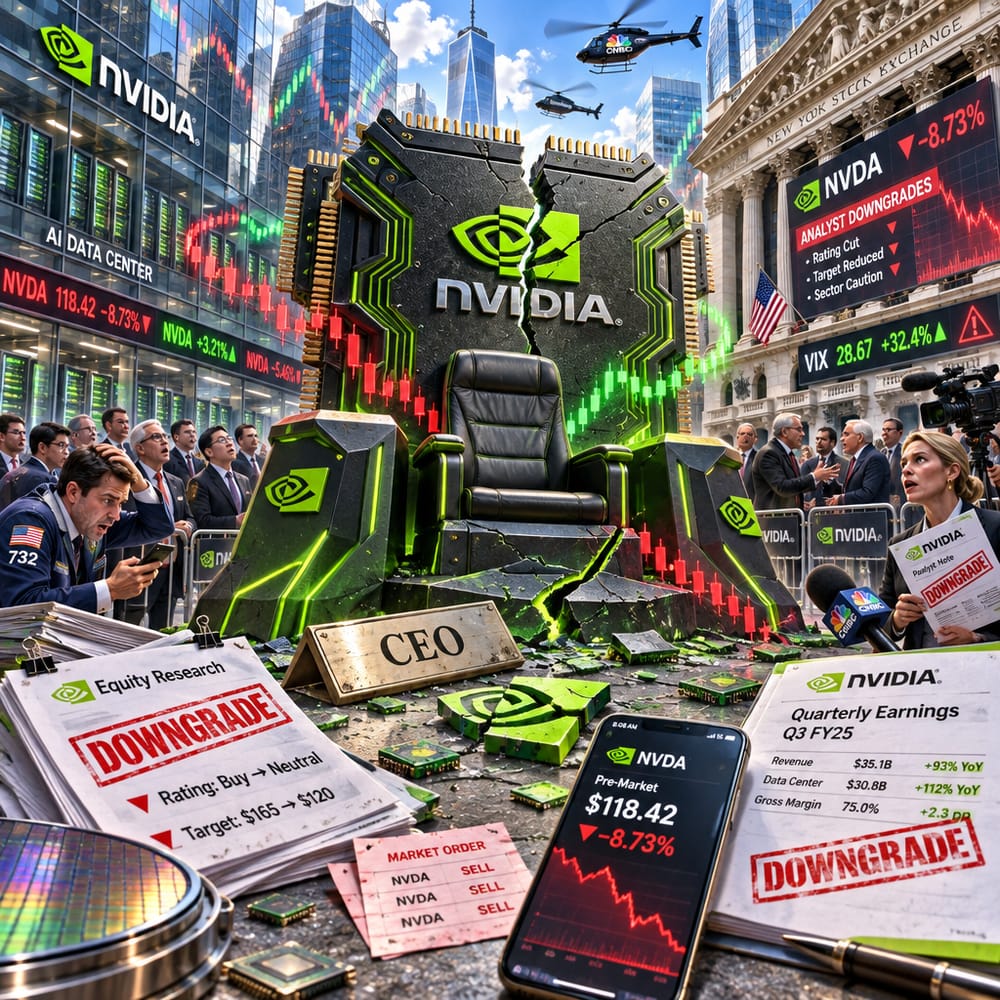
NVIDIA'S CEO EXIT DRIVES STOCK JITTERS: WHAT HAPPENS NEXT?
Picture this: Nvidia drops a bombshell Q3 earnings report—think record-breaking numbers that put other tech giants to shame. But instead of champagne toasts and high-fives, investors are reaching for the antacids. The culprit? None other than the stunning resignation of its charismatic CEO, Jensen Huang, amidst a swirling scandal that's got everyone from Wall Street to Silicon Valley buzzing.
Now, if you're thinking, “What gives? Isn't this just another corporate shuffle?” Let's put it this way: When a leader like Jensen, who's basically the Steve Jobs of semiconductors, drops out of the picture, it's like yanking the lead guitarist from a rock band mid-solo. The show might go on, but the crowd's definitely got questions.
CEO RESIGNATIONS: NOT YOUR AVERAGE TUESDAY
Let's dive into the chaos cocktail that is a CEO resignation, especially for a mega-cap behemoth like Nvidia. You see, when a company's at the top of its game, leadership stability is the secret sauce investors crave. A sudden change at the helm can shake investor confidence faster than you can say "stock sell-off." And that's exactly what's happening here, with Nvidia's shares taking a nosedive as analysts scramble to re-evaluate their stances and the stock market plays musical chairs.
This leadership jolt has sent the analysts into a downgrade frenzy, each trying to outdo the other in pessimism over the potential fallout. And here's where things get spicy: when analysts start issuing downgrades, they're essentially telling investors, "Hey, maybe cool it on the Nvidia stock for a bit." This kind of sentiment can whip the stock into a volatility storm—something like watching your little toddler on a sugar high at a candy store.
THE RIPPLE EFFECTS OF ANALYST DOWNGRADES
But wait, there's more! Analyst downgrades don't just spook the casual investor; they add fuel to the fire of stock volatility. Picture it like this: Analysts are the weather forecasters of the stock market. When they predict stormy weather, investors grab their coats—or in this case, their sell orders. This creates a whirlpool of trading activity that can send stock prices on a roller-coaster ride, sometimes faster than you can blink.
So, what's the deal for Nvidia? Well, in the short term, it means navigating through the stormy seas of analyst skepticism. But how about the long-game, you ask?
LONG-TERM OUTLOOK: CALM AFTER THE STORM?
Let's not hit the panic button just yet. If history's taught us anything, mega-cap giants like Nvidia have a knack for bouncing back. Sure, there might be turbulence ahead as the company hunts for a new captain to steer the ship. However, Nvidia's underlying strengths—think unmatched innovation in AI and semiconductors—are the kind of solid foundation that can weather many a storm.
The key here is how Nvidia handles this transition. Can they find a leadership rockstar who inspires confidence and keeps the innovation engine running? If so, Nvidia's stock could very well rebound, potentially stronger than ever. After all, investors love a good comeback story.
WHAT SHOULD INVESTORS DO?
Alright, so here's the million-dollar question: What's an investor to do? First off, don't lose your cool. Keep an eye on Nvidia's moves—watch how they handle the leadership transition and take note of any strategic shifts that might unfold in the aftermath.
Also, pay close attention to how the market reacts over the next few weeks. If Nvidia manages to stabilize and regain investor trust, you might just find a buying opportunity waiting in the wings. Remember, the market rewards those who can see beyond the immediate chaos to the potential gold mine that lies beneath.
In the world of finance, the unexpected is the only constant. The trick is navigating the volatility with a cool head and an eye for the long game. Nvidia might be down, but don't count them out just yet. This could be the start of a new chapter, and as any good page-turner knows, the best is often yet to come.
This article is for informational purposes only and is not investment advice. Always do your own research or consult a licensed financial professional before making investment decisions.
© Copyright 2024. All Rights Reserved.
© Copyright 2024. All Rights Reserved.