

Nvidia’s Blowout Q3 Sets Up a Value Rebound Amid Leadership Turmoil
Saturday, November 21, 2026
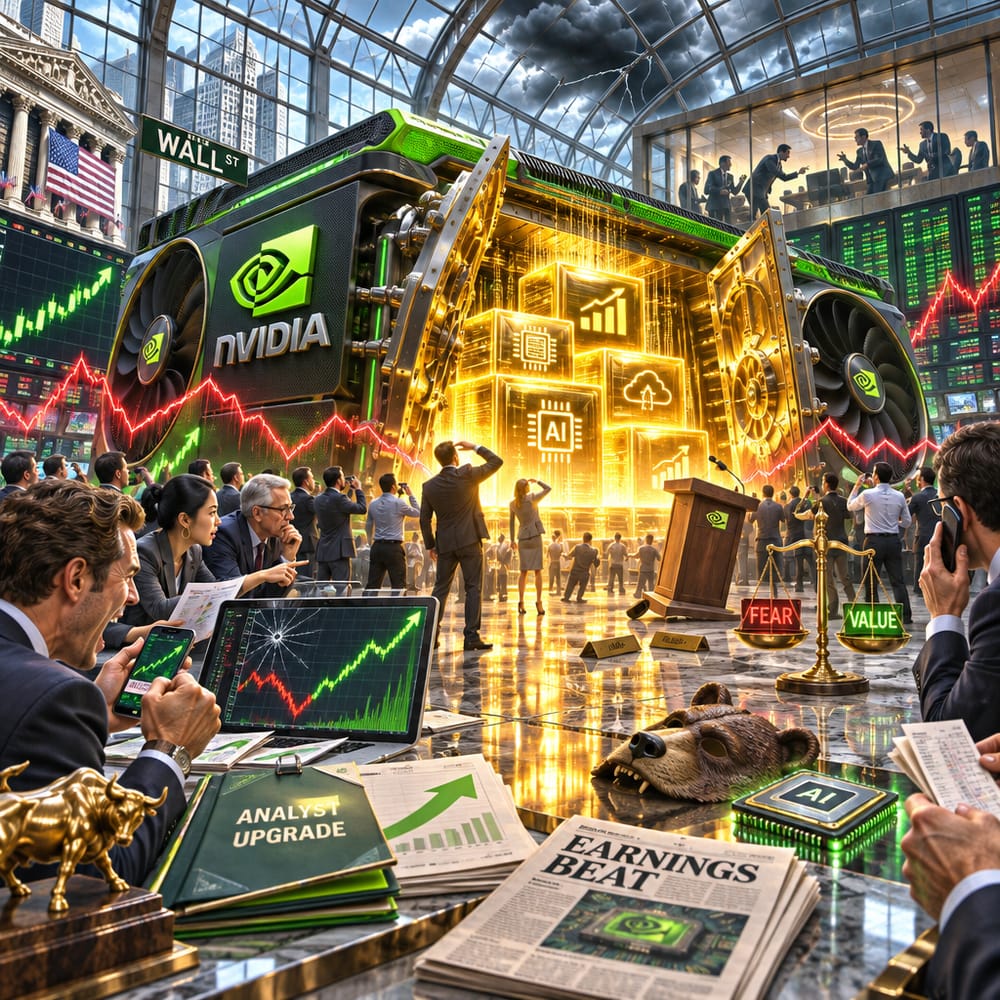
Nvidia Crushes Q3 but Leadership Drama Keeps Investors on Edge
Imagine Nvidia as the rock star of the tech world. Every time it drops a new track, or in this case, a quarterly report, fans and critics alike can't help but lean in closer. This time around, Nvidia’s Q3 performance did not disappoint—it was a chart-topper. Yet, the buzz isn't just about the numbers; it’s the behind-the-scenes drama that’s keeping everyone glued to the saga.
Yes, folks, Nvidia’s Q3 results were like the surprise hit of the summer: unexpected, thrilling, and leaving everyone wanting more. The semiconductor giant blew past Wall Street’s predictions, riding high on the continued demand for its cutting-edge chips that power everything from gaming to artificial intelligence. But before you start throwing all your cash at Nvidia stocks, let's talk about the elephant in the room—or rather, the empty CEO chair.
In the world of corporate jazz hands and PR spin, Nvidia is keeping everyone guessing about who will lead the band next. CEO Jensen Huang, the charismatic force behind Nvidia’s ascent, has the street-cred of a tech legend. But rumors are swirling about leadership changes, and it's got investors biting their nails. Who’s going to fill these formidable shoes? And how soon can they start marching to the beat of Nvidia’s strategic drum?
This leadership uncertainty hangs over Nvidia like a storm cloud amid its sunny financial forecast. Investors are jittery about how a potential shake-up at the helm could impact Nvidia’s next move in the AI chess game. Because let’s face it, in the fast-paced tech arena, a good leader is like a seasoned pilot navigating through the turbulence of market volatility.
Speaking of turbulence, the entire AI sector is doing a bit of a cha-cha with market sentiment. After the euphoria of new IPOs like Anthropic, reality has set in. Investors are taking a hard look at the AI landscape, and the jitters are palpable. This has dragged the Nasdaq down, wiping out its gains for the year, despite earlier highs that had investors dreaming of Lamborghinis and beach houses.
So, what does this mean for Nvidia's market valuation? In simpler terms, how much is this company actually worth when you take into account the sparkle of its Q3 results and the shadow of its leadership uncertainty? It’s a mixed bag, really. While the fundamentals—those are the nuts and bolts of what makes Nvidia tick—are strong, the uncertainty of who’s driving the ship has made some investors understandably cautious.
Opportunities for Nvidia abound, especially if it can navigate this leadership change gracefully. The company is poised to capitalise on the broader AI trend, which isn’t going away anytime soon. AI’s influence is spreading faster than viral TikTok dances, and Nvidia is one of the few players with the goods to deliver the tech behind it all.
What’s more, if the macro demand for AI surges—imagine every industry from healthcare to finance clamoring for AI integration like it’s the latest iPhone—Nvidia could see its valuations skyrocket. But the risk here is that the broader AI sector’s volatility might put Nvidia on a rollercoaster ride, which could make even the most seasoned investor a bit queasy.
All in all, Nvidia is a gamble, but it’s one with the odds stacked in its favor. The company’s strong fundamentals make it a candidate for a value rebound, especially if it can resolve its leadership saga with a clear direction and a captain ready to steer the ship. Investors need to watch closely for any signs of clarity from the top brass and keep an ear to the ground for how the AI sector trends are evolving.
So, if you've got a taste for a little market drama with a side of solid financial performance, keep Nvidia on your radar. It's the kind of story that could either have investors singing hallelujahs or reaching for the nearest stress ball. Either way, it's one plotline you won't want to miss.
This article is for informational purposes only and is not investment advice. Always do your own research or consult a licensed financial professional before making investment decisions.
© Copyright 2024. All Rights Reserved.
© Copyright 2024. All Rights Reserved.