

Nvidia's AI Sell-Off: A Deep Dive into the Recent Plunge
Sunday, November 22, 2026
Nvidia's AI Sell-Off: A Deep Dive into the Recent Plunge
Buckle up, investors. Nvidia, the shining star of the AI universe, just hit a speed bump that left Wall Street with a dent in its portfolio and some serious questions about the future of tech stocks.
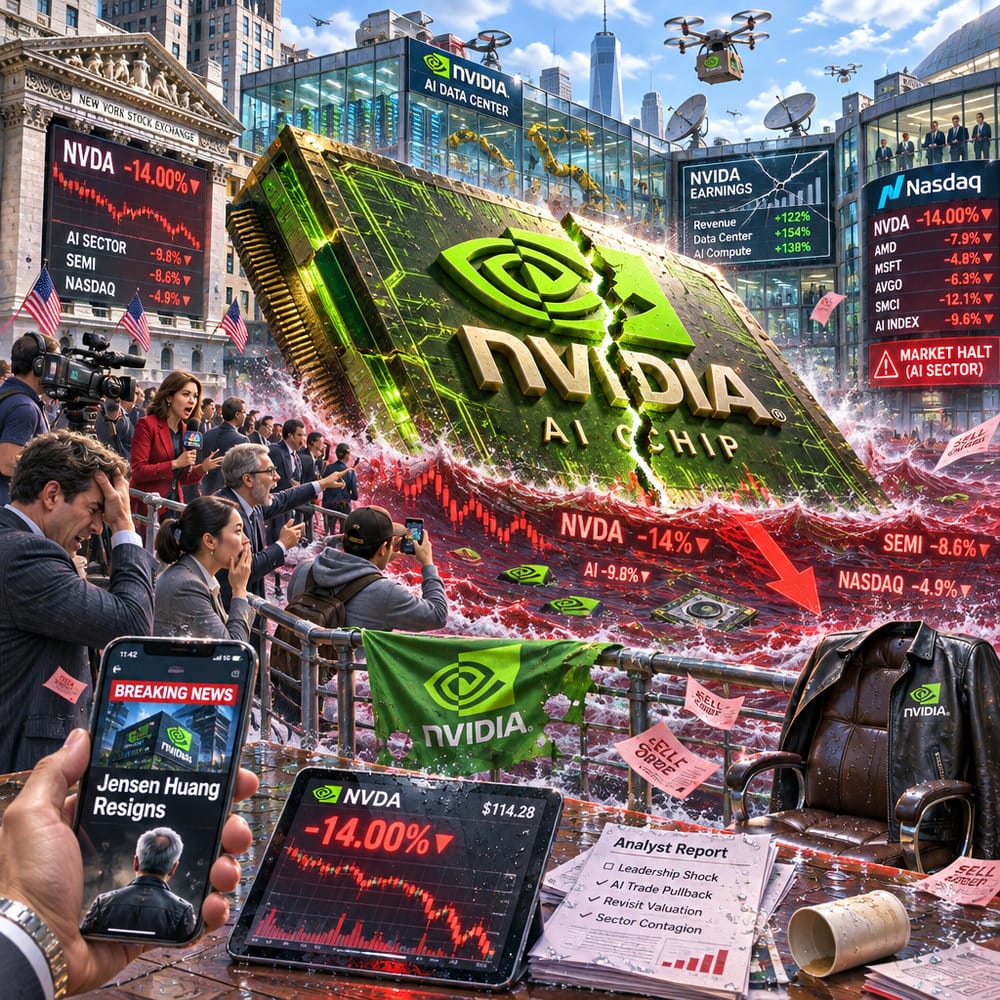
Picture this: Nvidia, a stock that seemed to defy gravity, has been knocked back to earth with a thud, a jaw-dropping 14% drop recently. The reasons? A cocktail of shaken investor confidence, the AI sector's wild ride, and the sudden CEO exit that has everyone asking, "Now what?"
So, why did Nvidia, the darling of the digital age, take such a nosedive? Well, part of the blame can be placed squarely on the shoulders of Jensen Huang, the now-former CEO, who unexpectedly decided to step down. Huang, who’s been the charismatic face of Nvidia, leaving the stage is like ripping Iron Man out of the Avengers—suddenly, you don't quite know who’s steering the ship. Investors are understandably jittery. Leadership changes always bring uncertainty, and in the tech world, that’s the kiss of death for stock prices.
But let's not forget that Nvidia's plunge isn’t happening in a vacuum. The broader AI sector, which once promised untold riches, is beginning to show cracks. As reality bites, the air seems to be seeping out of this once-inflated balloon. Allegations of a Chinese intelligence operation targeting Nvidia are just fuel to the fire, shaking investor trust even further. It’s like when you realize your favorite reality show is scripted—it’s unsettling, to say the least.
SO, WHAT'S THE TECHNICAL STORY?
Technical analysis can often seem like reading tea leaves, but it’s crucial here. Nvidia's stock price plummeted through several key support levels like a hot knife through butter. The $400 mark was supposed to cushion the fall, but Nvidia blew past it and hit around $377. The next support level for investors to watch is around $350. If that barrier gives way, we might be looking at a free fall. It's the stock market equivalent of watching your younger sibling ride a bike without training wheels for the first time—it's wobbly and nerve-wracking.
IS THE STOCK NOW OVERSOLD?
Given the recent sell-off, some analysts are waving their “oversold” flags. But before you rush in thinking you’re snagging a bargain, remember: oversold doesn't mean "cheap" in the way dollar store trinkets are. It merely suggests that selling pressure might have been overdone in the short term. In plain English: the stock could see some bounce back, but with all these headwinds, betting the farm would be risky business.
HOW DO LEADERSHIP CHANGES AFFECT INVESTOR CONFIDENCE?
Ah, the burning question: how much do we care about who's in the captain’s chair? For a company like Nvidia, the answer is tons. Investors are watching closely to see who will step into Huang’s sizable shoes and whether they can keep the Nvidia ship steady in rocky seas. New leadership could bring fresh vision, or it could be a cue for investors to hit the "sell" button faster than you can say “AI revolution."
THE BIG PICTURE
So, what's the takeaway for retail investors? Nvidia is a bellwether for the AI sector, meaning its struggles could be the canary in the coal mine for tech stocks. The market is experiencing a reality check, and Nvidia’s fall is a stark reminder that even market darlings aren’t invincible.
If you're holding Nvidia or considering jumping in, this roller coaster ride isn’t over. Keep an eye on those support levels, the leadership shuffle, and sector trends. It’s a volatile world out there, and making sense of it requires a balance of cautious optimism and strategic skepticism. After all, in the world of stocks, as in life, nothing ventured means nothing gained—but also, sometimes, nothing lost.
This article is for informational purposes only and is not investment advice. Always do your own research or consult a licensed financial professional before making investment decisions.
© Copyright 2024. All Rights Reserved.
© Copyright 2024. All Rights Reserved.