

Nvidia's AI Financing Backstop Spurs Sector Sell-off
Saturday, August 15, 2026
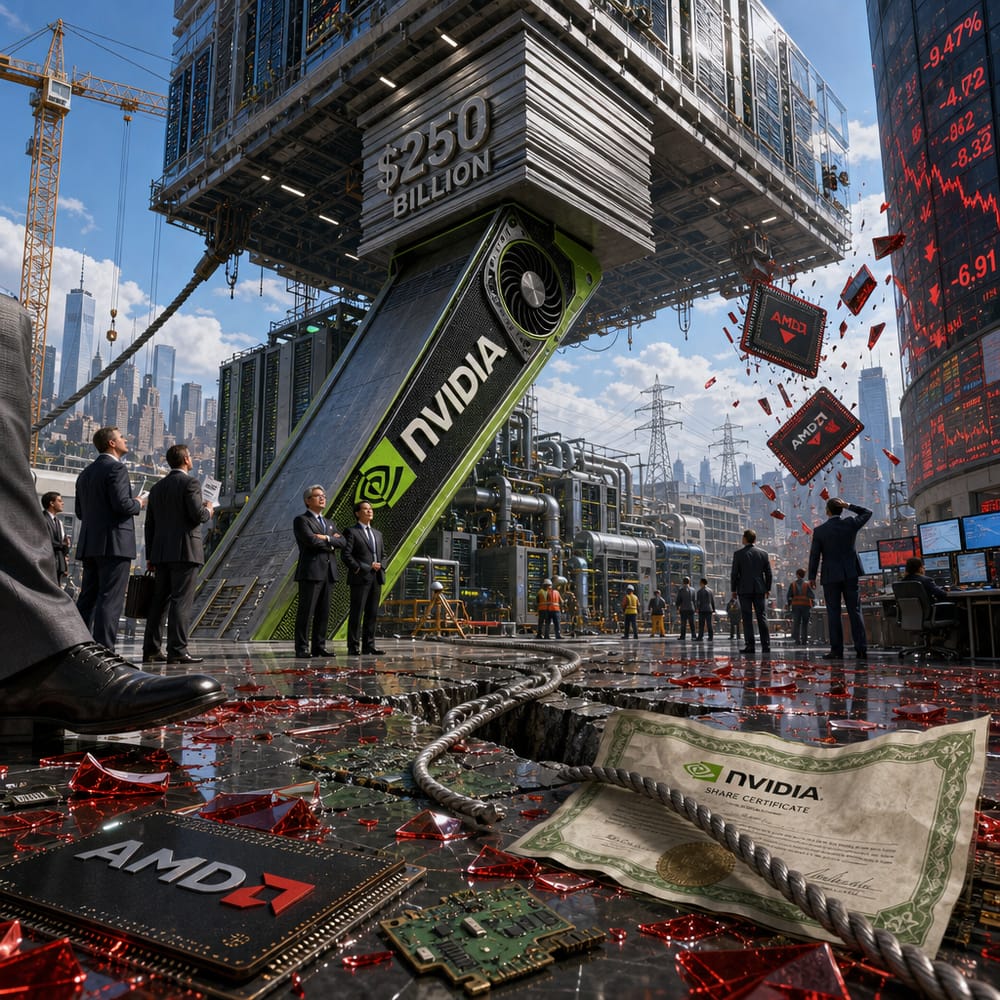
Nvidia just sent a shockwave through the tech world that might have even your smartwatch raising its digital eyebrows. Just as the AI hardware sector was hitting its stride, Nvidia's latest move to backstop $250 billion in financing for OpenAI's ambitious data center project has given investors the jitters, leading to a nosedive for Nvidia and AMD stocks. Buckle up, because this ride through Silicon Valley's latest thriller is about to get bumpy.
In the world of tech giants, staking a quarter-trillion dollars on one project is akin to betting the farm – and then some. Nvidia, the chip-making powerhouse known for its AI prowess, decided to put its chips on the table (pun intended) to support OpenAI's newest brainchild: a sprawling, energy-guzzling, ultra-sophisticated data center. We're talking about a facility so advanced, it might just make your coffee maker look like it's from the Stone Age.
So, what made Nvidia take this leap of faith? It's no secret that AI is the golden goose of the tech industry, and OpenAI is one of its most promising hatchlings. The data center promises to supercharge AI research and implementation, potentially putting Nvidia at the front of the AI hardware race. But as investors have pointed out, all that glitters is not gold; sometimes, it's just a well-polished investment risk.
The potential downside here is significant. If the data center doesn't perform as expected or if OpenAI's plans hit a snag, Nvidia could find itself in a financial black hole. This kind of backstop isn't just a safety net; it's more like signing up to be the safety cable for a cliff-side tightrope walker.
For Nvidia's competitors, this move could be both a blessing and a curse. On one hand, it might leave Nvidia financially stretched, giving competitors like AMD the chance to pounce like a cat on a laser pointer. On the other, if the investment pays off, Nvidia could leapfrog its rivals with the kind of technological advancements that turn market leaders into legends.
And let's not forget about the ripple effects on the broader AI sector. A successful venture could accelerate advancements across the field, driving up demand for AI hardware like GPUs (graphics processing units), which are Nvidia's bread and butter. But if things go awry, it could lead to a slowdown, causing investors to rethink their bullish stance on the entire sector.
The market's knee-jerk reaction was swift and unforgiving. Nvidia watchers are like hawks—one whiff of risk, and they're already diving for cover. Shares of Nvidia and its competitor AMD took a tumble, as investors grappled with the potential for Nvidia's plans to backfire.
Despite the sell-off, it's worth remembering that Nvidia didn't become a tech titan by playing it safe. This is a company that thrives on visionary projects and, sometimes, wild bets that others shy away from. CEO Jensen Huang has been known to play the long game, and if history is any guide, he's not afraid to roll the dice on big ideas.
So, where does this leave everyday investors? If you're holding Nvidia or AMD, it might be time to reassess your appetite for risk. The current volatility could be an opportunity to buy on the dip if you're feeling brave—or a cue to bolt if you can't stomach the uncertainty.
As with any high-stakes drama in the tech world, this story is still unfolding. Nvidia's colossal wager might just redefine the AI landscape, or it could serve as a cautionary tale for future generations of tech investors. Until then, we'll be watching (and refreshing our screens) as the plot thickens.
In the meantime, grab some popcorn and keep your portfolio close. This Silicon Valley saga is far from over, and who knows? You might want to catch the next episode live.
This article is for informational purposes only and is not investment advice. Always do your own research or consult a licensed financial professional before making investment decisions.
© Copyright 2024. All Rights Reserved.
© Copyright 2024. All Rights Reserved.