

NVIDIA's AI Factory Demand Boosts Stock Outlook
Friday, August 21, 2026
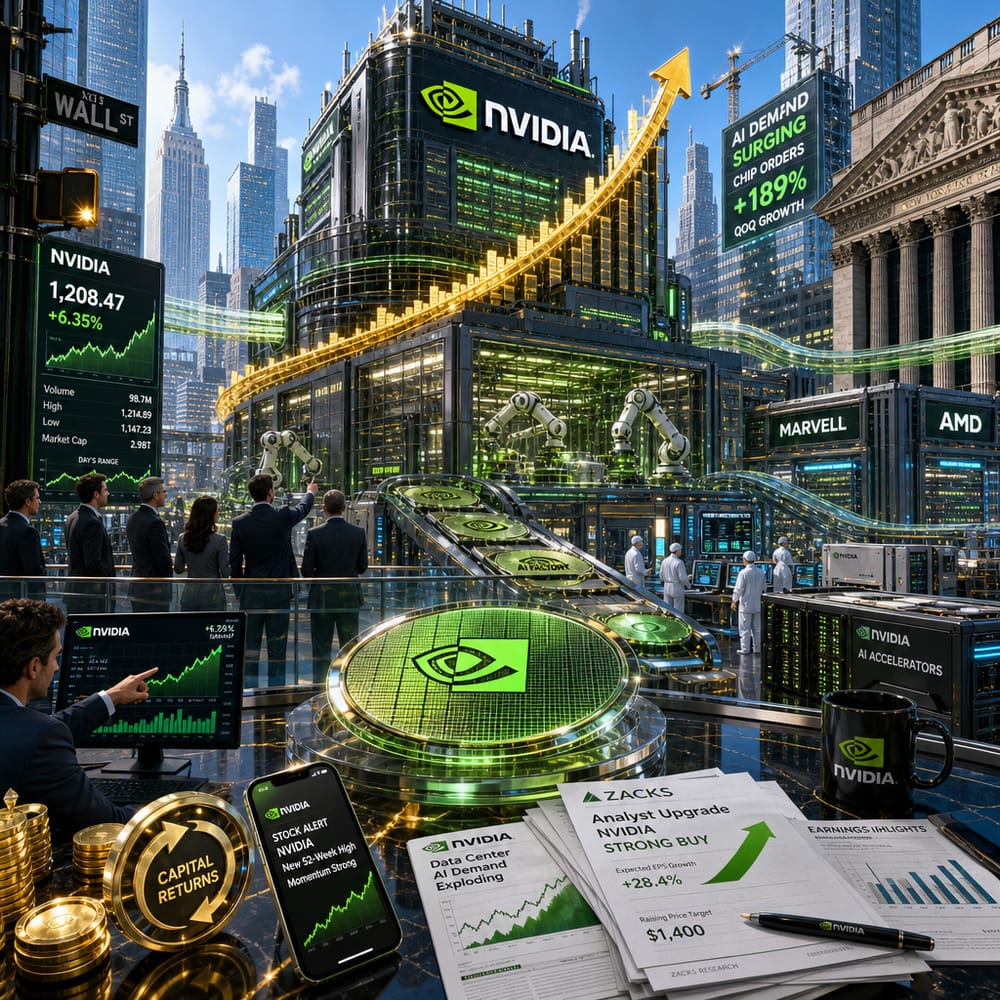
When you’re the heavyweight champion of the semiconductor world, people pay attention to your every move. And when that champ is NVIDIA, known for powering everything from your gaming rig to data centers that might one day host conscious robots, the stakes are sky-high. Recently, NVIDIA caught an analyst upgrade from Zacks, thanks to booming demand for their AI factory products and their savvy capital return strategies. Talk about a one-two punch that's sure to keep investors on the edge of their seats.
So, what's the buzz all about? Well, NVIDIA's looking more like a ticker symbol for "rocket ship" following this analyst upgrade. News of the upgrade sent NVIDIA's stock price boogieing upward, again proving why this company is like the LeBron James of semiconductors: when they move, the whole industry takes notice. In a volatile market, there’s nothing like a bit of good news to lift spirits, and NVIDIA has been serving it like it’s Thanksgiving dinner.
But how does an analyst pat on the back translate into Wall Street whispering sweet nothings? That’s a tale woven by NVIDIA’s deep dive into AI and capital return strategies. Imagine every tech CEO holding a crystal ball that shows AI as the future. If NVIDIA’s stock performance is anything to go by, they aren’t just peering into that crystal ball; they’re building it.
Here’s why this matters: NVIDIA isn’t just selling components; they’re providing the raw horsepower that fuels AI factories, turning algorithms into the magic behind your Netflix recommendations and self-driving cars. The demand for their AI products is so hot it’s giving the sun a run for its money. And it’s not just investors who are taking note. The entire semiconductor sector feels the ripple effects, with companies like AMD and Marvell finding themselves pulled along for the ride.
But before we crown NVIDIA the uncontested king of silicon, let's sprinkle in a little caution. AI factory demand is burning bright, but like any tech trend, it brings risks. There’s the ever-looming cloud of potential oversupply – we've seen tech bubbles before, and they aren't pretty when they burst. If too many companies dive headfirst into building similar AI-fueled factories, well, it could be like musical chairs, but with a lot more money at stake.
Then there’s the small matter of global competition. With tech giants from China, South Korea, and even Europe stepping up their game, NVIDIA has to stay nimble to maintain its lead. The company’s ability to innovate faster than a caffeine-fueled coder is vital, but let’s not forget the geopolitical hiccups that could come like a curveball in a championship game.
So, how does this NVIDIA momentum influence other semiconductor stocks? Picture a domino effect — when NVIDIA strides confidently, it boosts confidence in the entire sector, making investors take a second look at other chipmakers. AMD, often NVIDIA’s friendly rival, can catch some good vibes too, as can companies like Marvell, which offer complementary products. It’s like a tech stock fiesta, and even if NVIDIA’s the guest of honor, everyone gets to dance.
Yet, as much as NVIDIA's riding high, the broader market’s been a bit jittery lately. Stock futures have been on a rollercoaster, with treasury yields playing the villain in this saga. But amidst the uncertainty, NVIDIA’s upgrade keeps the semiconductor gang optimistic. While others fret about inflation and yield curves, NVIDIA's boardroom is likely echoing with the sound of clinking glasses.
All in all, NVIDIA’s latest triumph isn’t just about one company doing well; it’s a signal to anyone invested in tech that the world of semiconductors is as dynamic as ever. For investors, the message is clear: keep your eye on NVIDIA, but don’t forget its friends. Because in the semiconductor world, a rising tide does more than lift all boats—it builds a fleet, ready to ride the waves of the tech revolution.
This article is for informational purposes only and is not investment advice. Always do your own research or consult a licensed financial professional before making investment decisions.
© Copyright 2024. All Rights Reserved.
© Copyright 2024. All Rights Reserved.