

Nvidia's AI Chip Sales to China Amid U.S. Export Restrictions
Sunday, October 04, 2026
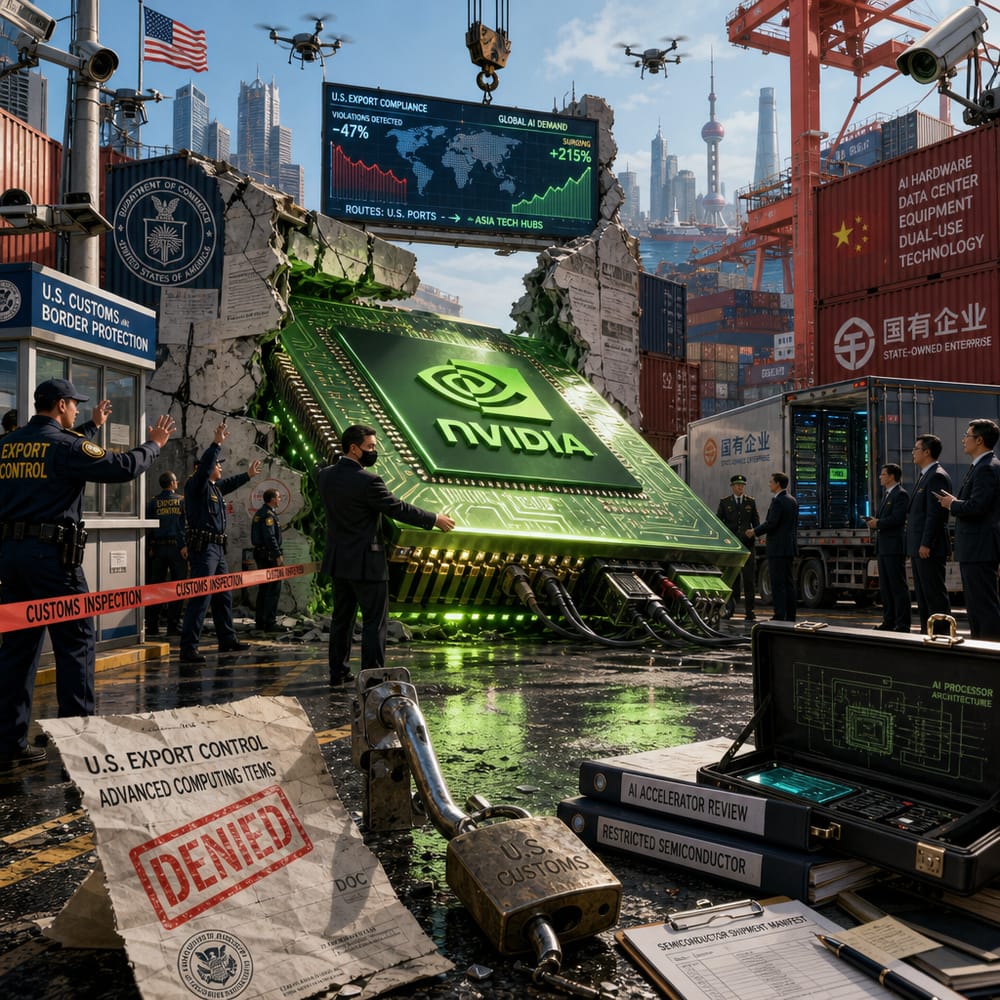
NVIDIA'S AI CHIP SALES TO CHINA: BENDING THE RULES OR BREAKING THEM?
In the neon-lit world of tech, where microchips are the new gold, Nvidia is the shimmering nugget everyone wants a piece of—even China, despite Uncle Sam's stern warnings. Sure, U.S. export restrictions are clear as day, but reports suggest that Nvidia's AI chips are making their way to Chinese firms, some with a little nudge from the government. So, is this a clever loophole or a tightrope walk between innovation and regulation?
Let’s take a stroll down Silicon Alley to unpack how Nvidia found itself between a rock and a hard place—or rather, a silicon chip and a trade embargo. With Washington clamping down on tech exports to China faster than you can say "Great Firewall," Nvidia still seems to be finding ways to send its prized AI chips through the global supply chain. This isn’t just another episode of "Tech Giants Gone Wild"; it’s a full-blown geopolitical chess match with Nvidia as the queen in play.
Now, if you're wondering how Nvidia is juggling this without toppling over, the answer might be a bit of strategic side-stepping. The company has been mum on the specifics, maintaining its trademark poker face. However, the whispers in tech circles hint at shipping lower-spec versions of their chips that skirt the edges of U.S. restrictions. Think of it as Nvidia being the James Bond of the semiconductor world, slipping through the cracks without breaking the rules—officially, at least.
But what’s the catch? Well, while Nvidia is busy dancing on the line, the regulatory watchdogs in D.C. aren’t exactly impressed. There are rumblings that Nvidia could face a regulatory thunderstorm bigger than a California wildfire. With the U.S. government watching closely, Nvidia's stockholders might feel an uncomfortable itch—like wearing a scratchy sweater at a summer BBQ.
And let's not forget the big picture here—U.S.-China tech relations are like a soap opera with no end in sight. If Nvidia’s chips continue to find their way into Chinese hands, it could escalate tensions, leading to even stricter regulations. The kind of regulations that slow down tech as a whole, like a turtle crossing a highway.
Why does all this matter? Well, for starters, Nvidia is a bellwether for the semiconductor industry. What happens to Nvidia could ripple across the tech sector, impacting everything from your next smartphone to the AI that’s supposed to make life easier (or creepier, depending on who you ask). Plus, let’s not forget the economic implications—billions of dollars and countless jobs hang in the balance.
So, Nvidia finds itself walking a tightrope with the U.S. government on one side and the insatiable demand from China on the other. How they navigate this tricky terrain will be watched closely by investors, tech enthusiasts, and policymakers alike. Will Nvidia be able to maintain its balance, or will market forces and geopolitics push it off the line?
In a world where the lines between ally and competitor blur faster than a supercomputer crunching data, Nvidia's situation is a daring dance of diplomacy and innovation. As the semiconductor narrative unfolds, it’s clear that Nvidia's chips are more than technology—they're power players in a global game of influence that could dictate the next chapter in tech history. Buckle up; this silicon saga is just getting started.
This article is for informational purposes only and is not investment advice. Always do your own research or consult a licensed financial professional before making investment decisions.
© Copyright 2024. All Rights Reserved.
© Copyright 2024. All Rights Reserved.