

Nvidia's $3 Billion Investment in AI Power Infrastructure
Monday, August 10, 2026
Nvidia Bets $3 Billion on AI Power Infrastructure: A Game-Changer or a Risky Move?
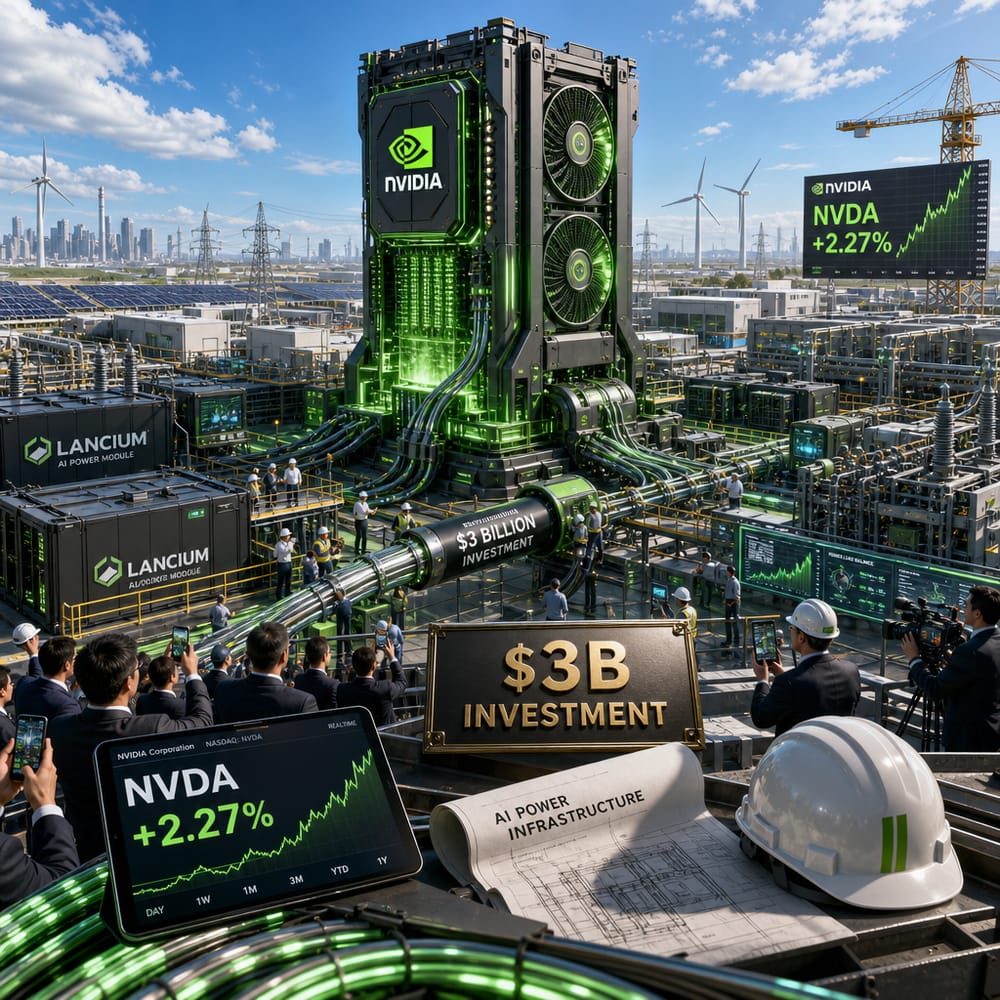
Here’s a plot twist for you: Nvidia, the chip-making titan that’s been riding the AI wave for years, just decided it's not content with being the king of semiconductors. Nope, it wants a piece of the AI power infrastructure pie too. Enter Lancium, a company you've probably never heard of unless you're knee-deep in the energy sector. Nvidia’s dropping a whopping $3 billion to buddy up with Lancium, and this move shot their stock up 2.27% like a celebratory fireworks show. But what does this mean for Nvidia, and why should you, dear retail investor, care about a tech giant playing in the power sandbox?
Let’s start with why it matters. This isn’t just about Nvidia flashing some cash to diversify its portfolio. It’s a calculated move to bolster its AI capabilities by ensuring it has a robust energy infrastructure to support the massive demands of AI processing. Imagine trying to power an entire city on a couple of AA batteries; that’s the kind of challenge AI faces with current energy solutions. By investing in AI power infrastructure, Nvidia isn’t just ensuring its own future—it’s potentially reshaping the AI landscape altogether.
You might be wondering, "How does this affect Nvidia's core business, which is all about making those shiny graphics cards everyone wants for gaming and, you know, running AI stuff?" Good question. The investment in Lancium doesn’t mean Nvidia’s leaving its bread and butter behind. Instead, it’s more like upgrading from a well-made sandwich to a full-blown gourmet meal. The company’s adding a side dish, not tossing out the main course. This diversification could enhance Nvidia's existing offerings by making its AI solutions more efficient and reliable.
Now, let’s talk risks and rewards, because, spoiler alert, every investment has both. On the plus side, Nvidia’s move could position it as a leader in AI energy solutions, an area that’s ripe for innovation. They’re not just making the tech; they’re investing in the infrastructure to back it up—a vertical integration play that could pay off in spades if they get it right. Think of it as owning the goldmine rather than just selling the shovels.
But no venture is without its perils. The energy sector is a whole different beast from semiconductors—different competitors, different regulations, different challenges. Nvidia’s navigating uncharted waters here, and there’s no telling if they’ll hit a jackpot or a shipwreck. Plus, while the investment in Lancium is a bold move, it’s also a hefty bet that could backfire if the transition doesn’t pan out as planned.
So, what’s the bottom line for you, the retail investor scrolling through your phone on a lunch break? If you’re already an Nvidia fan, this could be exciting news. The company’s not just sitting on its laurels; it’s aggressively pushing into new territory, which could lead to big things down the road. But if you’re cautious—and who isn’t in today’s economic climate?—keep an eye on how Nvidia manages this expansion. Are they successfully integrating their new energy interests with their core business? Are they maintaining their market dominance in semiconductors while growing elsewhere?
Nvidia’s $3 billion bet is more than just a storyline about a tech giant flexing its financial muscles; it’s a glimpse into the future of AI and energy. It’s about a company that’s refusing to stand still in the fast-paced world of tech. As always, the stock market is a rollercoaster, and while Nvidia’s ride looks thrilling from the ground, remember that all investments come with ups and downs.
In the end, whether Nvidia’s latest move will turn out to be a masterstroke or a misstep is a story yet to be written. But one thing’s for sure—it’s going to be a fascinating one to watch. So, grab some popcorn (or maybe a data sheet), and stay tuned.
This article is for informational purposes only and is not investment advice. Always do your own research or consult a licensed financial professional before making investment decisions.
© Copyright 2024. All Rights Reserved.
© Copyright 2024. All Rights Reserved.