

Nvidia's >15% Server Price Hikes Due to Memory Cost Surge
Monday, August 24, 2026
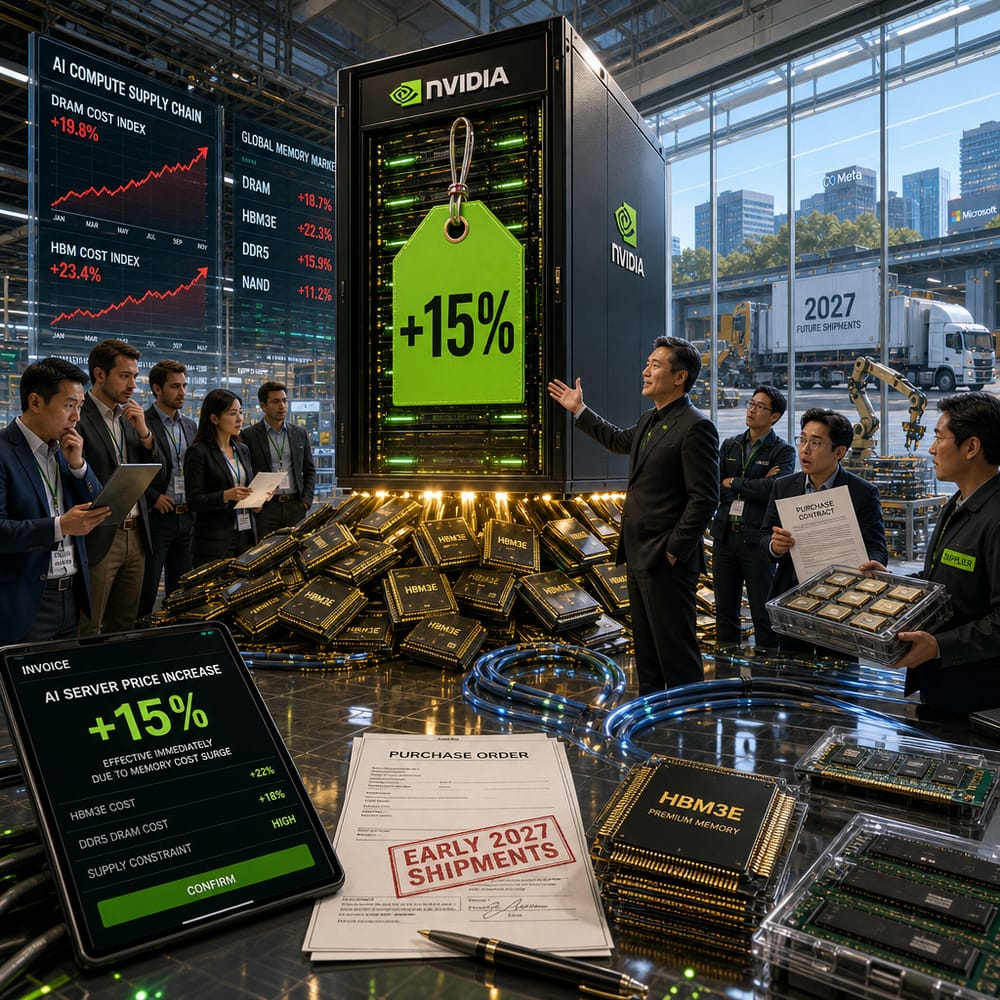
NVIDIA'S PRICE HIKE: ARE AI SERVERS GOING TO BREAK THE BANK?
Nvidia is flexing its muscles, and it's going to cost you. Or, more precisely, it's going to cost its biggest customers dearly. The tech giant just announced that prices for its sought-after AI servers will jump by over 15%, and you can blame the surging costs of memory for this financial jolt. These updated prices will kick in with deliveries in early 2027. If you’re wondering what this means for Nvidia and its customers, buckle up. It’s a ride worth understanding.
First, let's talk about this memory crisis. Remember those long lines outside Apple stores when a new iPhone drops? Well, imagine that frenzy, but in the world of chips. Specifically, DRAM and HBM memory chips, which are essential for the kind of AI magic Nvidia servers perform. As these prices climb, Nvidia is passing that cost down the line. After all, someone has to foot the bill, and it certainly won’t be Nvidia eating into its own profit margins.
Why should you, as a retail investor scrolling through this on your phone, care? Because this move puts a spotlight on Nvidia's clout. In the tech realm, Nvidia isn't just any company. It's the Beyoncé of semiconductors: whatever it releases, the world pays attention. This price hike underscores just how much sway Nvidia holds over the market. If you can't make it without Nvidia, you pay what they ask. That’s a kind of power most companies only dream about.
But hold your applause. While Nvidia’s strategy might solidify its dominant market position, it could also set off some tremors. For starters, Nvidia’s customers, ranging from giant corporations to nimble startups, now have to reassess their 2027 budgets. Imagine planning to build a skyscraper and finding out midway that steel prices have jumped so high you'd have to sell your penthouse to finish the project. Tough choices lie ahead.
This brings us to the question: is Nvidia's move a stroke of genius or a high-stakes gamble? On one hand, raising prices when demand is sky-high reinforces its premium status. On the other, it risks pushing customers toward competitors. Slight problem, though – competitors might not offer the same caliber of AI servers, at least not yet.
For businesses relying on Nvidia's servers, the decision resembles choosing between Starbucks and a local coffee joint when you really need that double espresso shot. With Nvidia’s price increase looming, companies may start looking at alternatives like Advanced Micro Devices (AMD) or Intel, hoping for some relief, even if just temporary.
And what about Nvidia’s shareholders? If you're holding Nvidia stock, you might feel like you’re on a seesaw. Sure, increased prices mean higher revenue, but what if customers bolt to the competition? It’s the classic balancing act of making the till ring without alienating your loyal patrons. And if Nvidia loses too many customers, those ringing tills might go eerily silent.
Nvidia's gambit also opens up opportunities for memory suppliers. With Nvidia spilling the beans on its price hike due to memory costs, DRAM and HBM suppliers could find themselves basking in newfound attention. The tech world will be watching their every move like hawks.
In the grand scheme, Nvidia’s strategy is a microcosm of market dynamics in tech: the constant tug-of-war between price, value, and demand. While Nvidia’s making waves, its rivals are likely plotting strategies to lure customers away. The coming months will tell whether this price hike is Nvidia’s victory lap or a stumble.
So, dear reader, watch this space. Nvidia’s price hike isn’t just a number; it’s a narrative unfolding in a rapidly evolving tech landscape. Whether you’re an investor, a tech enthusiast, or just someone who loves a good underdog story, Nvidia’s latest move is one to watch. Who knows? It might just be the catalyst for the next big shake-up in the AI world.
This article is for informational purposes only and is not investment advice. Always do your own research or consult a licensed financial professional before making investment decisions.
© Copyright 2024. All Rights Reserved.
© Copyright 2024. All Rights Reserved.