

Nvidia: Post-Earnings Reaction and Stock Technicals
Saturday, August 29, 2026
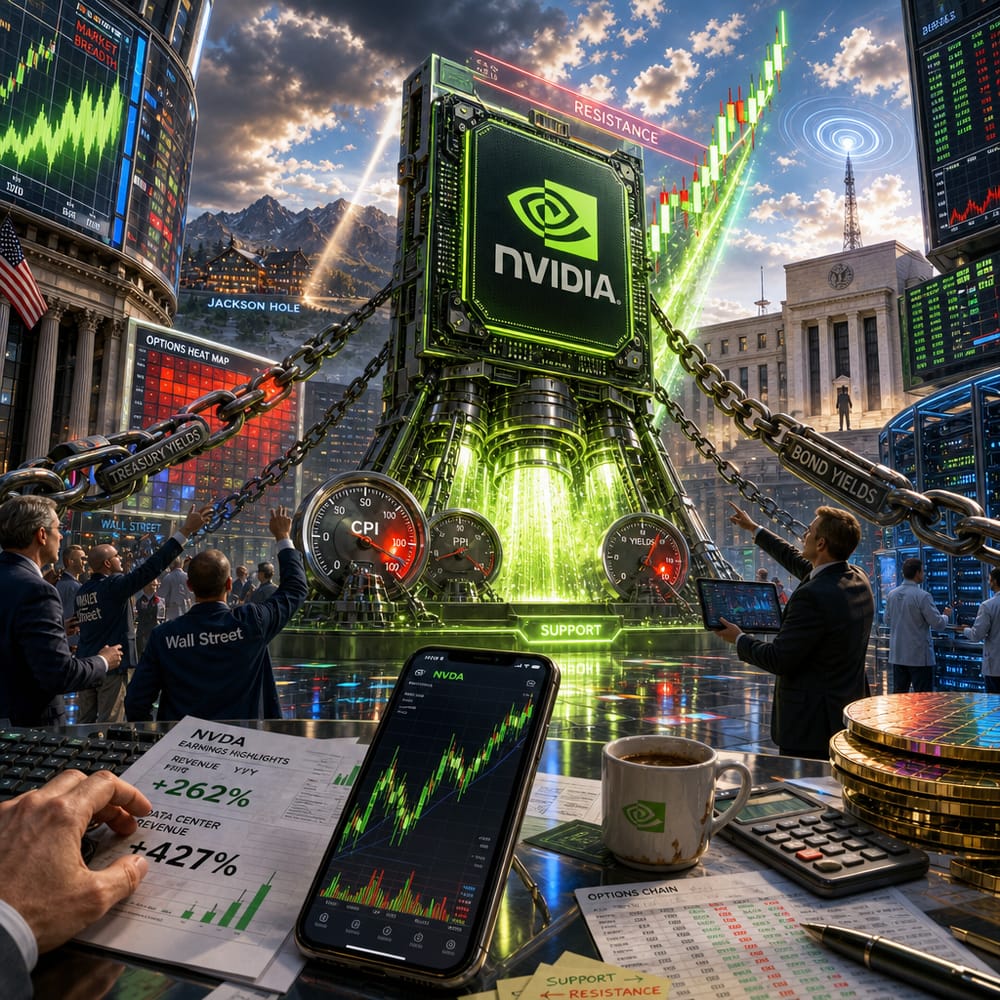
Nvidia's Latest Move: Are You Ready for the Ride?
Blink, and you might miss it. Nvidia just doubled its sales, leaving jaws dropping across Wall Street, but the company's future is the real show-stopper here. In a world where AI is the golden child, Nvidia isn't just attending the party—it's throwing it. And retail investors, you better buckle up, because the ride could get wild.
Nvidia recently released its Q2 earnings, and they were nothing short of spectacular. Think mind-blowing revenue growth, the kind that gets investors salivating. The numbers? A cool $96.2 billion for the quarter, a 106% rise from a year ago. Data center sales alone accounted for $89 billion. Yet, it was the whisper of future growth that truly got investors' attention. Nvidia's CFO, Colette Kress, hinted at a 70% income growth for fiscal 2028—way past the 45% analysts were expecting. If Nvidia's revenue growth were a Hollywood blockbuster, it would be breaking box office records.
But let's not just ogle at the revenue mountain. Nvidia's stock took an initial dip post-earnings announcement, only to leap more than 4% after the earnings call. It's a classic case of the markets playing hard to get, only to come back with roses and chocolates after hearing Nvidia's plans for the AI ecosystem. It's like your favorite TV show leaving you on a cliffhanger, only to return with a season finale that blows your mind.
Now, before you start dreaming of a yacht bought with your Nvidia stock profits, let's talk about the road ahead. Nvidia's guidance is optimistic, no doubt, but it's the broader economic landscape that might throw a wrench in the works. Inflation is like that annoying neighbor who shows up at your barbecue uninvited—persistent and hard to ignore. Fed Chairman Kevin Warsh has been playing it coy with interest rates, labeling inflation as "concerning" during the Jackson Hole symposium. Investors are left trying to read the tea leaves, and Nvidia is smack dab in the middle of it all.
Inflation isn't just an abstract economic term here. For Nvidia, it could mean higher costs for raw materials, logistics, and labor. And let's not forget the consumer side of things. If inflation shrinks disposable income, there's less cash floating around for Nvidia's goodies. It's the economic version of a game of Jenga, where each move could topple the whole tower.
So, what should retail investors like you do? Keep your eyes peeled for certain technical indicators that could offer a sneak peek into Nvidia's stock trajectory. Look out for the relative strength index (RSI)—a tool that tells us if a stock is overbought or oversold. An RSI above 70 could signal that investors are getting a bit too enthusiastic, while below 30 might mean they're snoozing on Nvidia's potential.
Another indicator to watch is the moving average convergence divergence (MACD). This technical term might sound like a mouthful, but it's essentially a tool that helps you understand the momentum of a stock. A bullish crossover—when the MACD line crosses above the signal line—could be your green light.
Despite all the numbers, charts, and economic jargon, the most crucial thing to remember is this: Nvidia is a bellwether for the tech sector. Its moves reflect broader market trends, so keeping an eye on Nvidia is like having a window into the future of tech.
The bottom line? Nvidia is offering a spicy mix of excitement and uncertainty, much like your favorite thriller series. Whether you decide to binge-watch with your wallet open or cautiously nibble at the edges, just remember that understanding the plot twists—be they inflationary fears or Fed whispers—can help you navigate the electric world of financial markets. And who knows? With Nvidia, you might just end up with a story worth telling.
This article is for informational purposes only and is not investment advice. Always do your own research or consult a licensed financial professional before making investment decisions.
© Copyright 2024. All Rights Reserved.
© Copyright 2024. All Rights Reserved.