

Nvidia (NVDA) — Valuation Falls to Pre-AI Boom Levels After $1 Trillion Market Cap Drop
Thursday, August 13, 2026
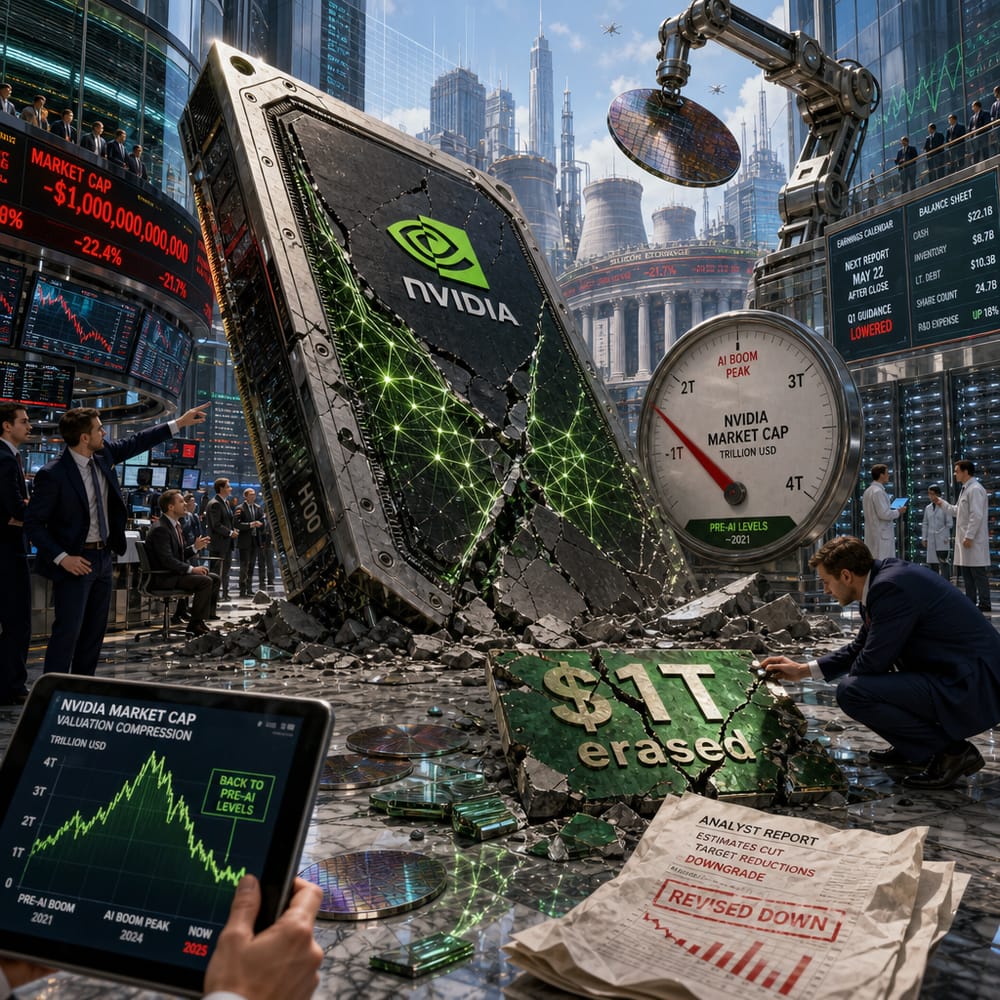
NVDA: NVIDIA'S HUMBLE RETURN TO EARTH — A HERO'S JOURNEY OR A PREMIER LEAGUE FADEOUT?
Once the darling of Wall Street, Nvidia's market cap has now spiraled down faster than you can say "artificial intelligence." After shedding a colossal $1 trillion, the chipmaker’s valuation has crash-landed back to pre-AI boom levels. So, what's the lowdown? Are we simply on a reprieve in the AI hype cycle, or is this the beginning of a deeper trend that signals investor fatigue with AI-driven stocks?
Remember back in the day (by which I mean like, two months ago) when Nvidia was hailed as the torchbearer of the AI revolution? Every investor with a smartphone was tripping over themselves to get a piece of the action. Nvidia was practically printing money, and its stock was hotter than a jalapeño on a summer grill.
But what goes up must come down—or at least pause for a pit stop. Nvidia's deflated market cap is making folks wonder if this powerhouse has lost its steam. A drop of such magnitude isn’t just making headlines; it’s raising eyebrows on Wall Street and living rooms alike.
Now, let's cut through the noise and get to the meat of the matter: Is Nvidia's current valuation justified? The jury is still deliberating on that one. While Nvidia still boasts a killer product lineup and has fingers in all sorts of pies (from gaming to AI to data centers), the market’s skepticism might hint at a broader reality: AI stocks might have been playing at full volume on a broken stereo.
Nvidia isn't flying solo on this turbulent ride. The company's peers in the AI sector are feeling the pressure, too. The once-rosy projections of AI-driven prosperity are now clashing with some stark realities: inflation concerns, geopolitical tensions, and an unpredictable economic landscape that rivals anything the Kardashians could cook up.
Investors who were banking on AI stocks to carry their portfolios to the moon are now having second thoughts. When Nvidia catches a cold, guess who sneezes? That’s right: the whole AI sector. Tech stocks, particularly those with a penchant for AI, are tiptoeing on eggshells in an attempt to dodge any more market turbulence.
We also can't ignore Nvidia's competitive landscape. Companies like AMD and Intel aren't resting on their laurels. They're hustling their silicon tails off to reclaim their piece of the pie. And then there's the new kid on the block: Nebius Group. With Bank of America still seeing steam in its future, Nebius is the classic underdog story we all love to root for. It's like watching Rocky Balboa fight the AI juggernaut.
But let's hit pause on the gloom and doom. For all the fretting, Nvidia remains a titan in the tech world. They're not exactly scrambling to keep the lights on. Their partnerships with the likes of Apollo and Goldman Sachs to build financing platforms are not the moves of a company on the decline but rather a strategic pivot to harness new growth avenues.
So what's the game plan for us retail investors? Should we be hitting the panic button, or is it time to double down? The truth is, there's no one-size-fits-all answer. If you're the type who gets cold feet at the first sign of turbulence, it might be time to reassess. But if you believe in the long-term potential of AI and Nvidia's ability to innovate, well, this slump could be your chance to snag some shares on the cheap.
As Nvidia recalibrates, the broader implications for AI-driven stocks are clear: We may be entering a new phase of the AI cycle, where hype makes way for a more nuanced, sustainable growth story. And while Nvidia's wild ride down is certainly an eyebrow-raiser, it could also be the reset button we didn't know we needed.
So, what's the takeaway? Nvidia might be licking its wounds, but don’t count it out just yet. Whether it’s a brief detour or a new trajectory entirely, the future remains AI-laden and full of potential plot twists. Grab your popcorn. This story is far from over.
This article is for informational purposes only and is not investment advice. Always do your own research or consult a licensed financial professional before making investment decisions.
© Copyright 2024. All Rights Reserved.
© Copyright 2024. All Rights Reserved.