

Nvidia Faces Analyst Downgrades Amid AI Sector Volatility
Thursday, November 19, 2026
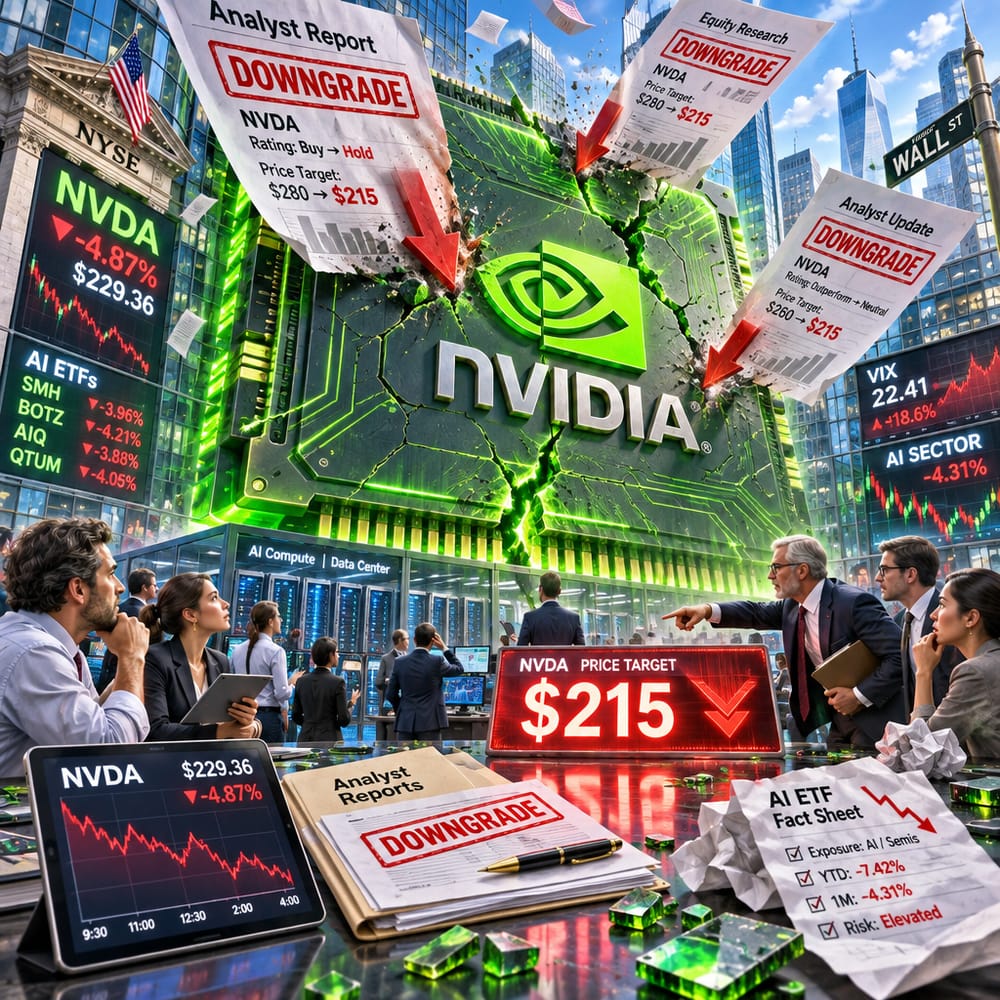
Nvidia: The Once Untouchable King of AI Gets a Reality Check
If you’re looking for drama, you might expect it from a Hollywood blockbuster, not the world of semiconductors. But here we are, with Nvidia in the lead role, and the plot twist no one saw coming: a swarm of analyst downgrades. Just when we thought the AI titan was untouchable, analysts have clipped its wings, lowering the average price target to a mere $215. Let’s dive into why Wall Street is suddenly acting like Nvidia's been wearing the emperor’s new clothes.
WHAT’S FUELING THE DOWNGRADES?
First up, the AI sector is experiencing the kind of volatility that makes a nerve-racking rollercoaster seem like a gentle carousel ride. Nvidia, the cool kid in the AI block, dominates graphics processing units (GPUs) — the engines powering artificial intelligence applications from gaming to autonomous driving. But even cool kids sometimes get a wake-up call. Analysts are beginning to wonder if the sector's sky-high valuations are more fairy tale than reality.
The recent leadership changes at Nvidia haven't exactly helped calm nerves either. With fresh faces in the C-suite, there’s uncertainty about whether the new leaders will navigate the AI landscape as adeptly as their predecessors. Leadership transitions can be like changing pilots mid-flight: you hope for a smooth journey, but there’s a chance for turbulence.
In addition, Nvidia’s pricing power is under scrutiny. The AI boom sent prices soaring, but as competition heats up, particularly from companies like AMD and new entrants from China, there’s pressure to keep those prices in check. If rivals can offer similar tech at a discount, Nvidia might find itself in a pricing war it didn’t plan for.
IMPACT ON STOCK PERFORMANCE
Now, what does this mean for Nvidia’s stock performance in the near term? If you're holding Nvidia shares, you might be glancing at your portfolio through squinted eyes. The analyst downgrades signal a shift from the euphoric optimism that boosted Nvidia's shares to record highs. It’s like hearing whispers at a party that the host’s got a secret everyone wants to know.
In the short term, expect some choppy waters as investors recalibrate their expectations. It’s not all doom and gloom, though. Nvidia still commands a significant share of the GPU market, and its tech is deeply embedded across industries well beyond gaming. However, the days of easy gains might be behind us, as the market sorts out which companies in the AI sector are truly built to last.
BROADER IMPLICATIONS FOR THE AI SECTOR
These downgrades aren’t just a Nvidia problem; they cast a shadow across the entire AI industry. If the market darling is stumbling, what does that mean for the rest? AI-focused ETFs might see some turbulence too, as they hold Nvidia and other stocks linked to the AI dream.
This situation serves as a cautionary tale about the hype surrounding emerging technologies. Just like the dot-com bubble of the early 2000s, the AI sector may be due for a reality check. Companies that have bet big on AI without solid fundamentals might find themselves exposed.
Analysts are essentially saying, "We still love AI, but let's be realistic about what it can achieve and when." This prudent skepticism can help steer the sector towards more sustainable growth. Investors should brace for a landscape where due diligence and careful stock picking replace the broad-brush approach of investing in anything with 'AI' in its name.
THE BOTTOM LINE
Nvidia’s experience is a reminder that even the mightiest can face challenges. It’s a wake-up call for investors to rethink how they evaluate high-flying tech stocks. As the AI sector matures, expect more scrutiny and perhaps more surprises. But remember, in every shakeup, there are opportunities for those willing to look beyond the headlines.
Stay sharp, stay informed, and remember that in investing, as in life, the only constant is change.
This article is for informational purposes only and is not investment advice. Always do your own research or consult a licensed financial professional before making investment decisions.
© Copyright 2024. All Rights Reserved.
© Copyright 2024. All Rights Reserved.