

NVIDIA Eyes Re‑Entry into China’s AI Chip Market
Friday, August 21, 2026
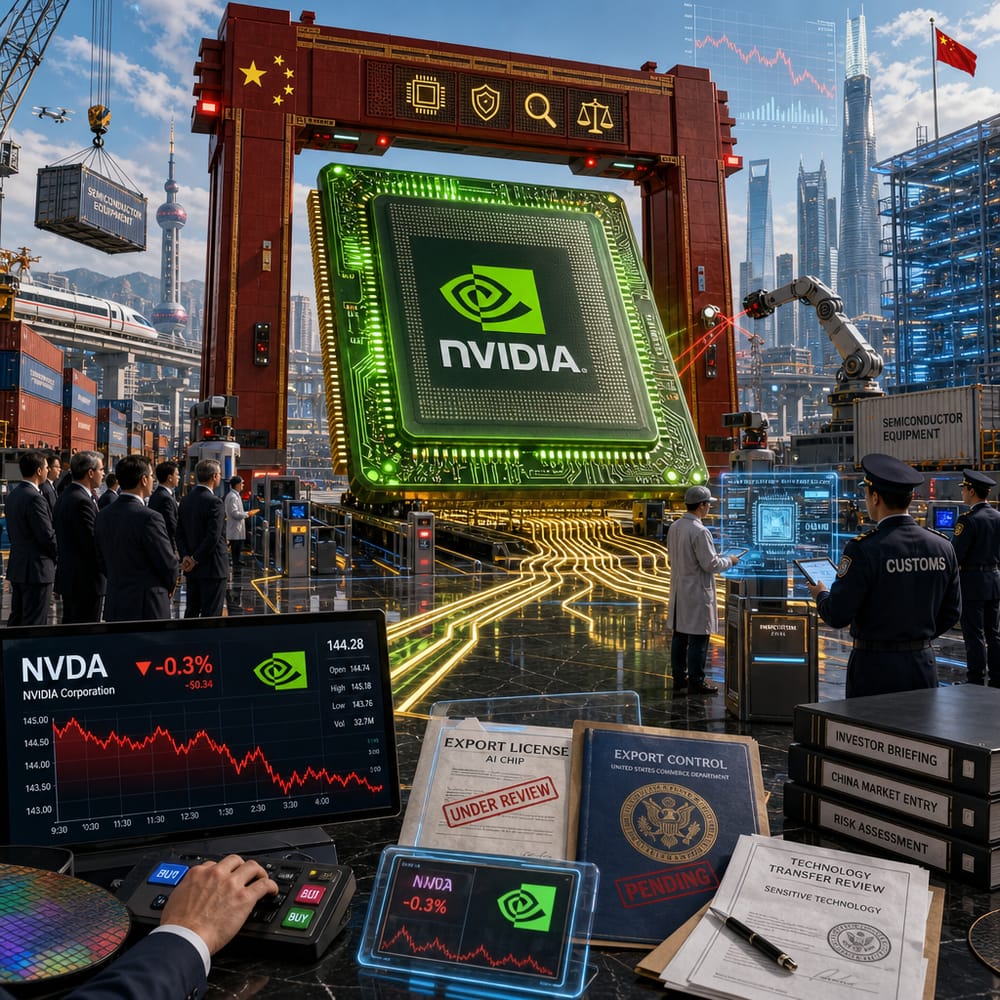
NVIDIA doesn’t just make chips; it makes headlines. And this time, they're of the spicy geopolitical variety. The Silicon Valley titan is trying to waltz back into China's AI chip market. Sounds like a tech soap opera? Well, grab the popcorn, because there's plenty of drama in store.
With a 0.3% pullback in its share price, Wall Street's already jittery—and why wouldn't it be? NVIDIA’s re-entry into China is like a high-stakes game of chess, played on a board made of silicon and semiconductors. The backdrop? U.S.–China tensions hotter than a jalapeño. So, what gives NVIDIA the audacity, or perhaps the courage, to make such a bold move?
CHALLENGES IN RE-ENTERING CHINA
First, a little flashback: NVIDIA, the golden child of the AI revolution, has been in a bit of a pickle with China. The U.S. government slapped export restrictions on high-performance chips to China, aiming to keep its AI capabilities under control. That didn't just throw a wrench in NVIDIA’s works—it lobbed a whole toolbox. But if you think they're throwing in the towel, think again.
Navigating this geopolitical minefield means dealing with layers of red tape thicker than a New York deli sandwich. NVIDIA will need to comply with U.S. export controls and Chinese regulations, a delicate dance where one wrong step could mean a diplomatic faux pas or a regulatory smackdown.
On top of the bureaucratic rigmarole, NVIDIA has to compete with domestic Chinese companies like Huawei and Alibaba, which haven’t been sitting idly by. These local giants have been binging on chips, turbocharging their AI capabilities while NVIDIA sorted out its export conundrums. Re-establishing its market share amid China's growing self-reliance won’t be a walk in the park.
HOW THIS MOVE COULD AFFECT NVIDIA'S GLOBAL MARKET SHARE
So, what’s in it for NVIDIA? Imagine the Chinese market as that elusive level in a video game that means leveling up big time. We're talking about billions of revenue potential. Cracking this market could supercharge NVIDIA’s growth trajectory—and give its stock a jolt of adrenaline.
But this is no risk-free venture. Re-engaging with China could siphon off focus and resources from other promising regions. And let's not forget the possibility of future restrictions—again. The international community is less predictable than the weather, and a sudden policy change could rain on NVIDIA's parade.
Beyond the immediate returns from selling chips in China, there's the added bonus of refining AI technologies with one of the world’s largest and most dynamic datasets. However, this data extravaganza comes with strings attached—like stringent data privacy laws and potential cybersecurity risks. In other words, a techie's dream and nightmare rolled into one.
IMPACT ON VALUATION AND THE BIGGER PICTURE
Then there’s the valuation question. Investors are already twitchy at the sheer mention of geopolitical risks, and re-entering China is like waving a red flag in front of them. Sure, NVIDIA’s stock took a slight dip, but this move could also be the plot twist that catapults its valuation into the stratosphere, provided it pulls this off without a hitch.
In the grand scheme, NVIDIA's Chinese comeback might also prod the U.S. into rethinking its chip policies, potentially setting off a domino effect in the global semiconductor landscape. If NVIDIA succeeds, it might set a precedent for other tech companies, painting a new blueprint for navigating geopolitical and regulatory challenges in the tech sector.
NVIDIA's re-entry into China is more than just a commercial maneuver; it's a strategic gambit in a world where technology and politics are increasingly intertwined. For retail investors, it's crucial to keep an eye on how the cards fall. In the ever-evolving chess match of international tech, NVIDIA is making moves that could redefine its position on the global board.
So, while NVIDIA and China hash it out, the rest of us are left to watch how this audacious move plays out—and, just maybe, reshape the future of tech investments in the process. Stay tuned, because the semiconductor saga is far from over.
This article is for informational purposes only and is not investment advice. Always do your own research or consult a licensed financial professional before making investment decisions.
© Copyright 2024. All Rights Reserved.
© Copyright 2024. All Rights Reserved.