

Nvidia CEO Crisis: Impact on Stock and AI Regulation
Wednesday, November 11, 2026
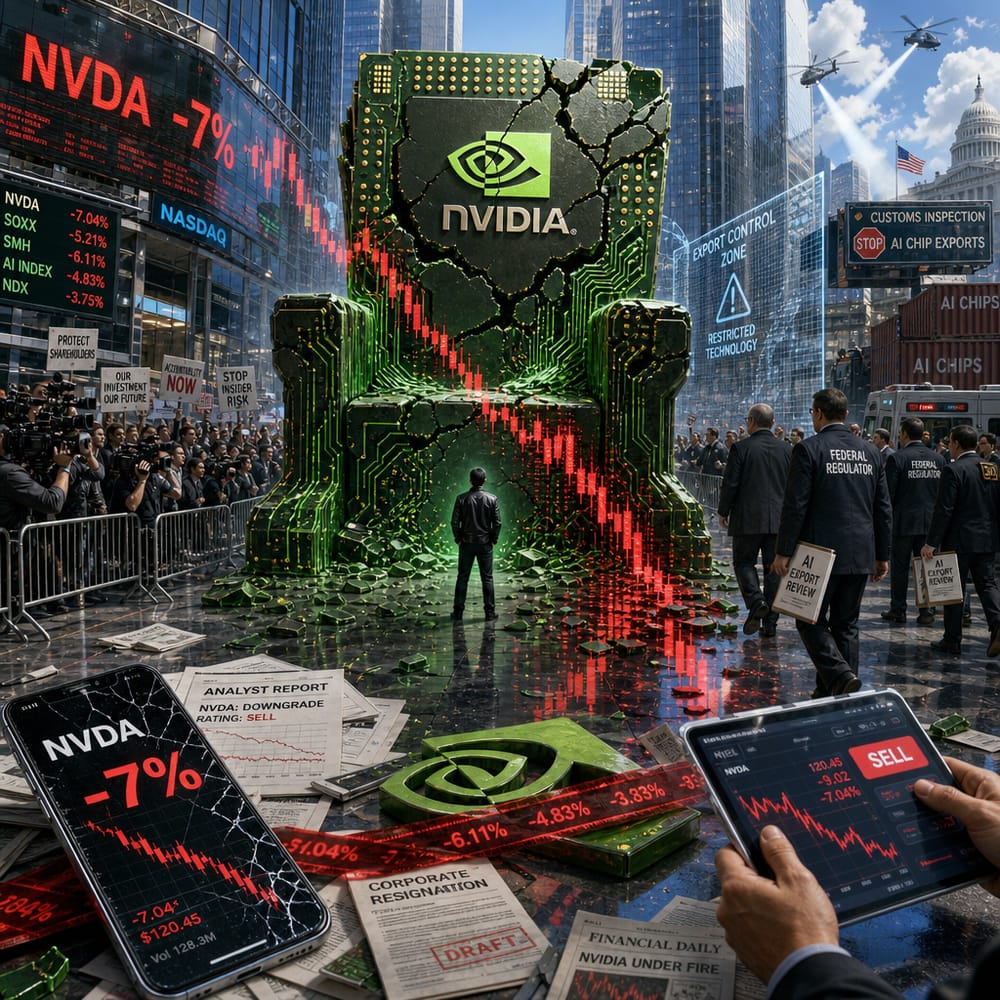
Nvidia’s CEO Jensen Huang found himself in the eye of a corporate storm this week, and the financial world is watching his every move like a hawk. The 7% drop in Nvidia’s stock was the market equivalent of a gasp, following revelations of a scandalous affair that have thrown the company's future into question. Huang’s alleged relationship with Kimberly Powell, an Nvidia executive, has sparked a full-blown leadership crisis, placing the company’s prized status in the AI chip sector under threat. Buckle up, retail investors; this drama’s got just as many twists and turns as a Silicon Valley soap opera, but the stakes are all too real.
Nvidia has strutted across the tech stage like it owns the place, thriving in the AI boom with its cutting-edge chips that are practically the neurons of modern AI systems. But what happens when the conductor might be forced to leave the orchestra? The company's board is reportedly considering showing Huang the door, and investors are now biting their nails over Nvidia’s next act. With the CEO's chair potentially up for grabs, the immediate market response was a sharp stock slide—a reminder that in the high-stakes world of tech, leadership stability can be just as crucial as the latest innovation.
But before you start panic-selling Nvidia shares, it’s worth considering the lay of the land. Could this upheaval be just a short-term squall? That depends on who steps into Huang's shoes if he resigns or is pushed out. A new captain with a steady hand and vision could restore investor confidence. However, any leadership void or a contentious CEO transition could leave investors jittery, prolonging the stock slump. In the wild west of tech, change at the top can be both a risk and an opportunity.
And then there’s the geopolitical quagmire. Huang’s personal choices have pulled in the heavyweights of Washington, with some lawmakers fearing national security implications given the alleged ties of Huang’s affair. The specter of tighter regulations on AI chip exports to China is looming large, particularly since Nvidia was previously allowed to sell its tech there. The U.S. government may soon clamp down harder, aiming to keep America’s AI edge sharper than a pair of scissors.
Any move to tighten AI export restrictions could send ripples across the global chip market. Nvidia isn’t just any player; it’s a heavyweight, and its products are vital to both the tech industry's giants and the AI revolution. If the U.S. decides to rein in chip exports, Nvidia might see its international revenue streams dry up faster than a spilled drink in the desert. Such regulatory shifts could make investors rethink their bets on not just Nvidia, but the entire AI chip sector.
In the broader market, companies like AMD and Intel are likely watching Nvidia’s soap opera unfold with no small amount of schadenfreude. If Nvidia blinks in the face of tighter regulations, its competitors might rush to fill the gaps left in the market. However, they too would face the same export hurdles if restrictions are broadly applied. The sector could see a period of uncertainty, where volatility reigns supreme as the companies adjust to new regulatory landscapes.
To paint the picture with a broader brush, this situation isn’t just about Nvidia or even the AI chip sector. It’s part of a larger narrative of how corporate governance issues can ripple out to affect national security concerns, regulatory policies, and market movements. In the end, Nvidia’s current house-of-cards moment is a cautionary tale: in the tech world, where innovation thrives, stability is still king.
For now, keep an eye on the headlines and have your popcorn ready. Whether Nvidia's internal tumult leads to a strategic reinvention or a prolonged period of uncertainty, the saga of Jensen Huang and Nvidia is far from over. For investors, the best play might be to ride out the storm but keep your portfolio diversified—after all, the only certainty in investing, as in life, is change.
This article is for informational purposes only and is not investment advice. Always do your own research or consult a licensed financial professional before making investment decisions.
© Copyright 2024. All Rights Reserved.
© Copyright 2024. All Rights Reserved.