

Nvidia Board Installs National Security & Export Control Oversight Committee
Thursday, November 19, 2026
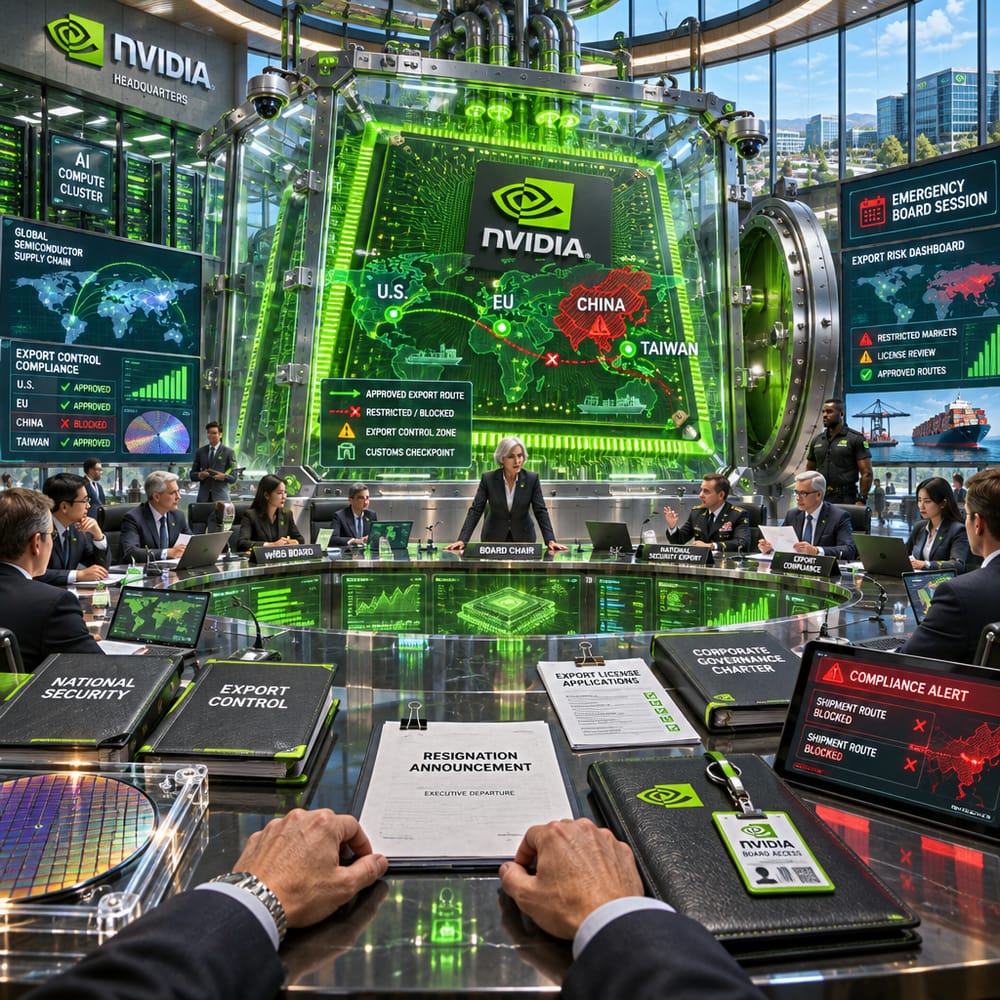
NVIDIA'S NEW SECURITY COMMITTEE: KEEPING CHIPS AND CHECKS IN BALANCE
In the high-stakes game of tech titans, where stock prices can soar and plummet quicker than a caffeine-fueled day trader, Nvidia's boardroom just switched up the playbook. Following the surprise exit of their charismatic co-founder and CEO, Jensen Huang, Nvidia has unveiled a new National Security and Export Control Oversight Committee. And trust me, it's not your run-of-the-mill corporate reshuffle—this one's aimed at the very heart of geopolitical intrigue and investor confidence.
First, let’s address the elephant in the Silicon Valley boardroom: Why now? Huang’s departure sent more than ripples through Nvidia's waters; it was a full-blown tsunami. The man wasn't just a tech leader; he was Nvidia's visionary oracle, leading the pack with groundbreaking neural networks and AI advancements. His farewell meant the board needed a solid strategy to keep the ship steady amidst the storm of market speculation.
Enter the Oversight Committee. This isn't just a shiny new nameplate at headquarters. Nvidia's board is getting serious about aligning its operations with global security standards. They're bringing in external experts to arm-wrestle with the stiff regulations that come with operating at the intersection of sensitive technology and global markets. The committee’s mission? To navigate the treacherous waters of national security implications and export control laws, ensuring Nvidia’s golden goose, its cutting-edge chips, don’t end up in the wrong hands.
Now, why should you, the savvy retail investor scrolling through your phone, care about Nvidia’s new club? For starters, the creation of this committee speaks volumes about Nvidia’s commitment to governance reform—a move that could either reassure or rattle investors. Remember, the world isn’t just watching Nvidia; it’s watching how they comply with intense regulatory scrutiny, especially as nations tighten grips on tech trade.
Expected outcomes? Picture Nvidia as a high-performance race car getting a safety upgrade. By tightening its compliance game, Nvidia could potentially dodge costly legal potholes and maintain its license to thrill in high-demand markets. That means potentially fewer regulatory speed bumps and a smoother ride towards future profitability.
But let’s not sugarcoat it. There’s a flip side. Governance reform of this magnitude could also mean greater oversight, translating into operational slowdowns. The committee's decisions could curb some of the fast-paced innovation Nvidia is known for—a necessary evil if they want to keep Uncle Sam and international regulators on their side.
The bigger question, though, is how this committee's formation might alter Nvidia's market strategy. Nvidia doesn’t just build fancy graphics cards; it’s at the forefront of AI technology, powering everything from self-driving cars to cloud computing. A tighter grip on export controls might limit its overseas expansions or collaborations with certain international partners. But in the long run, it's a calculated gamble that could enhance Nvidia's global standing as a compliant tech leader, trusted by governments and investors alike.
As Nvidia steps into this new chapter, investors are likely to keep a keen eye on how these governance changes could impact market sentiment. If Nvidia can successfully manage the balancing act between innovation and regulation, it may very well solidify its position not just as a tech juggernaut but as a robust, resilient presence in the semiconductor industry.
So, whether you’re Team Nvidia or just watching from the sidelines, one thing's clear: the stakes are high, the game is on, and Nvidia’s new oversight committee could be the wildcard that reshapes its future. Now, isn’t that something to think about before your next scroll through the stock tickers?
This article is for informational purposes only and is not investment advice. Always do your own research or consult a licensed financial professional before making investment decisions.
© Copyright 2024. All Rights Reserved.
© Copyright 2024. All Rights Reserved.