

Nvidia Analyst Upgrade: Mizuho Raises Price Target Amid CEO Turmoil
Monday, November 16, 2026
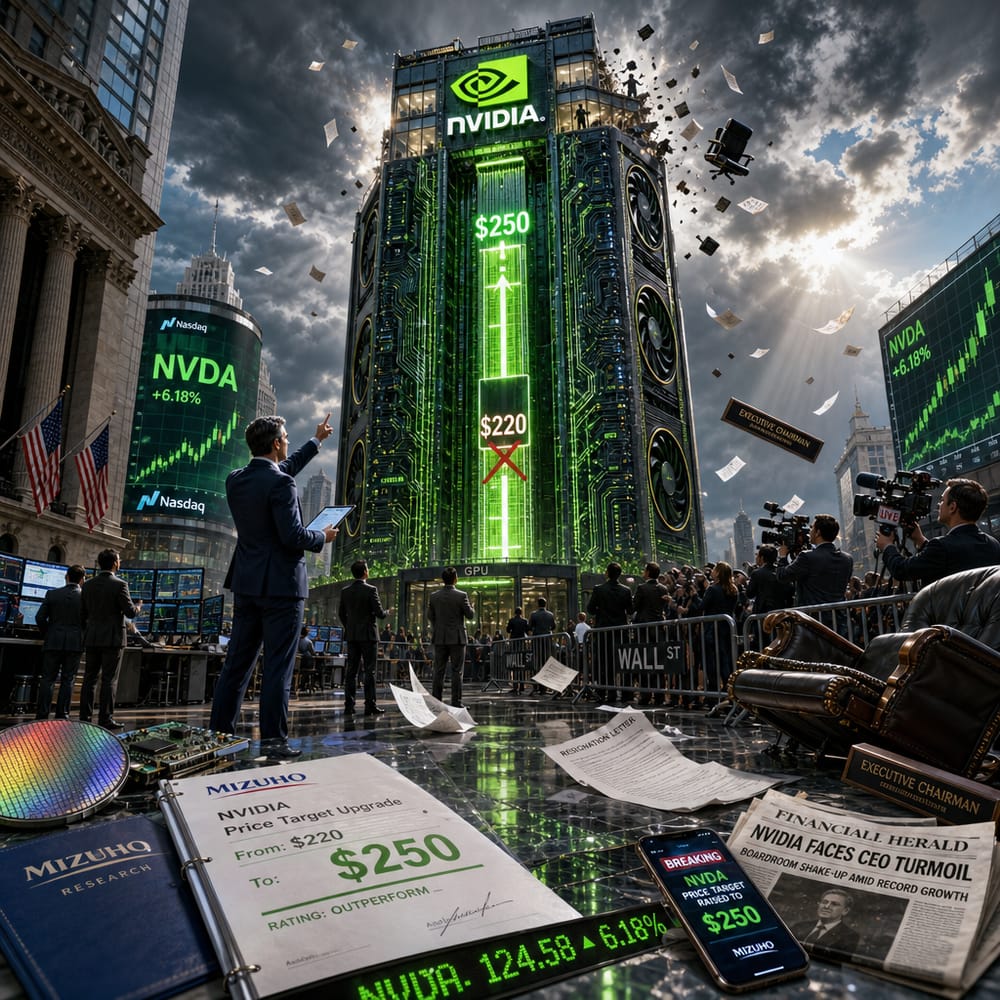
NVIDIA ANALYST UPGRADE: MIZUHO RAISES PRICE TARGET AMID CEO TURMOIL
Is Nvidia actually in chaos, or is it just business as usual in the tech world? You might think the company that practically stuffed AI chips into all our devices would be immune to drama. But when your CEO walks out the door after three decades, leaving a trail of scandals, it’s fair to wonder what’s next. Lucky for us, Mizuho’s got an opinion worth listening to.
Mizuho analyst Vijay Rakesh just raised Nvidia’s price target from $220 to $250. Bold move, right? This isn’t a casual nudge; it’s a statement. Rakesh is essentially telling the market, “Yeah, there’s some boardroom melodrama, but Nvidia’s still got the goods.”
So, what has Rakesh so optimistic? Let’s break it down. Nvidia's fundamentals are strong as ever. Despite the upheaval at the top, the company’s tech prowess and financials remain stout. They're expected to post nearly 100% year-over-year earnings and revenue growth in their upcoming third-quarter results. That kind of performance can make even the most skeptical investors swoon.
But wait, there’s more. The AI boom isn’t going anywhere, and Nvidia’s chips are the beating heart of this revolution. Sure, the recent market tremors have knocked Nvidia’s stock down a peg or two, but in the grand scheme of things, the AI narrative is still very much in their favor. As tech stocks took a bit of a nosedive recently, Nvidia led the plunge, but not because folks think they’re suddenly bad at making chips. It’s more like everyone’s nervous about who’s steering the ship.
Let’s not forget that Rakesh's optimism isn’t isolated. Many analysts are still bullish on Nvidia. Their tech remains integral to AI, gaming, and a slew of other lucrative sectors. While some have paused to raise eyebrows at the leadership shuffle, few have jumped ship entirely. In fact, Nvidia’s dominance in AI chips has competitors envious and investors excited.
The boardroom intrigue surrounding Jensen Huang’s resignation doesn’t seem like it's going to throw Nvidia off its game. Huang, who resigned among whispers of scandal and security concerns, isn’t coming back, according to sources. The board isn’t even entertaining the idea, focusing instead on finding a new leader who’ll steer clear of controversy.
The market’s immediate reaction to these developments has been a bit of a mixed bag. Nvidia’s stock slumped over 4% amid the uncertainty, with broader tech stocks also feeling the heat. It’s a reminder that leadership does matter, and when your CEO goes out in a blaze of not-so-glory, it tends to shake investor confidence, at least temporarily. But savvy investors are watching those fundamentals, not just the headlines.
What about other analysts? Well, some are sitting on the fence until Nvidia's upcoming earnings reveal more. Others, however, echo Mizuho's sentiment, maybe not lifting price targets but certainly not downgrading them either. The sentiment is clear: Nvidia might be wobbling a bit, but it’s far from teetering on the edge.
In the broader context, Nvidia represents the delicate balance between tech’s promise and the inevitable human element. AI and chip technology are fields of dizzying potential, but they're steered by people who, as we’re reminded, can be fallible. Yet, as Nvidia navigates these choppy waters, analysts like Rakesh bet on the company’s substance over its current soap opera.
So, what should the everyday investor take away from all this? If you’re not allergic to a little risk and believe in the power of AI to reshape our world, Nvidia might still be your ticket. Pay attention to the fundamentals, watch how the new leadership takes shape, and don’t let a little boardroom drama make you lose sight of the bigger picture. After all, in the world of tech, revolutions are rarely smooth, but they’re often worth the ride.
And if nothing else, at least it’s never boring.
This article is for informational purposes only and is not investment advice. Always do your own research or consult a licensed financial professional before making investment decisions.
© Copyright 2024. All Rights Reserved.
© Copyright 2024. All Rights Reserved.