

Nor’easter-Induced Volatility: Power Outages Shake Risk Appetite
Saturday, September 26, 2026
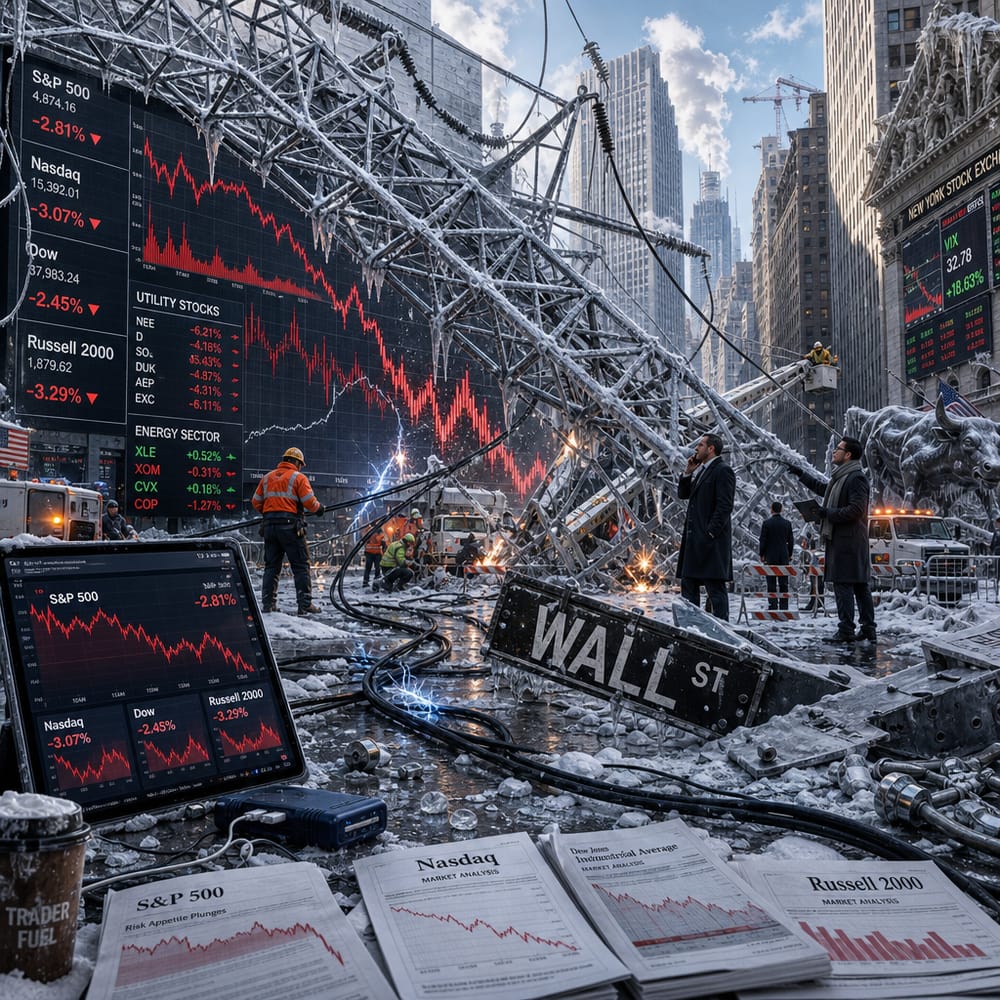
NOR’EASTER-INDUCED VOLATILITY: POWER OUTAGES SHAKE RISK APPETITE
Grab your galoshes and hold onto your portfolios—Mother Nature just threw the Northeast one heck of a curveball. A powerful nor’easter swept through, leaving a trail of power outages and soaked spirits in its wake. Now, you might wonder: why do a few fallen trees and flooded basements have Wall Street quivering like a wet dog? Well, when a couple of hundred thousand people find themselves in the dark, it's not just lights that are flickering—investor confidence is too.
THE PERFECT STORM FOR UTILITY STOCKS
Let's start with regional utility and energy stocks. When power lines start doing the limbo under the weight of branches and ice, utility companies like Con Edison and National Grid scramble to get the juice flowing again. But the market doesn't always wait to see their heroic recovery efforts. Investors, skittish as ever, saw this as a cue to jump ship, sending utility stocks on a rollercoaster ride. After all, uncertainty is the stock market's kryptonite.
This nor'easter didn't just freeze power lines; it froze investor appetites for risk, too. Equity volatility—the stock market equivalent of weather whiplash—ticked up as the storm clouds gathered. Think of it as market turbulence: one moment, you're cruising through clear skies, and the next, you're clutching the armrest as the plane dips. The VIX, a popular measure of market choppiness, often spikes when Mother Nature tantrums, adding fear to the mix of reasons stocks could slide.
AN INDEX TUG-OF-WAR
So, how did this meteorological mayhem impact the big-name indices? Picture the S&P 500, Nasdaq, Dow, and Russell 2000 like a toddler in a snowsuit—layered and vulnerable to every puff of wind. As the nor’easter howled, these indices felt the chill. The S&P 500, a barometer of the broad market, sagged under the weight of declining utility and energy stocks. The Nasdaq, always the techie, tried to defy gravity with its digital darlings, but even it couldn't completely dodge the downdraft.
The Dow, with its band of blue-chip companies, took a similar hit. Investors sought safety in treasuries and other havens, causing a knee-jerk selloff in equities. Meanwhile, the Russell 2000—home of the scrappy small-caps—wrestled with its own demons. Smaller companies, sensitive to economic disruptions, found themselves wrestling with the storm's fallout.
RISK-OFF? MORE LIKE RISK-OH-NO
If you're hearing the term "risk-off" sentiment and imagining traders running around covering their heads, you’re not far off. The nor'easter spurred traders to retreat from riskier assets, like stocks, into the relative warmth of bonds and gold. It’s like fleeing to a cozy cabin during a blizzard, except instead of blankets and hot cocoa, you’ve got yield and security. But as we know, such flights to safety can often exacerbate market volatility.
ALL EYES ON ENERGY
Then there's the energy demand curveball. When power goes out, you'd think energy demand would dip, but it’s a bit more complex. Utility companies, under the gun to restore service, might burn more fuel, and increased demand for heating during frigid times can also put pressure on energy supplies. Energy stocks, consequently, get pulled into the fray. Investors, attuned to these nuances, often react swiftly, resulting in fluctuating stock values for companies like ExxonMobil and Chevron.
WHAT’S NEXT?
As the storm clouds begin to clear, the pivotal question remains—how long will this tempest's effects linger in the market's psyche? Nor’easters, after all, are nothing new to the Northeast but can still jolt markets with surprising force.
For now, investors are watching closely. Power restoration efforts will be key, not just for residents but for investor sentiment, too. If the lights come back on swiftly, market confidence could be restored just as quickly. However, continued disruptions might keep volatility and risk aversion high.
In the end, this nor’easter reminds us that weather doesn’t just affect our commutes and weekend plans. It can ripple through financial markets, stirring up volatility and reshaping investor behavior. So, while you might be tempted to dismiss these storms as just another headache, remember: Wall Street is always watching the skies, ready to react at the drop of a snowflake.
This article is for informational purposes only and is not investment advice. Always do your own research or consult a licensed financial professional before making investment decisions.
© Copyright 2024. All Rights Reserved.
© Copyright 2024. All Rights Reserved.