

Nike's Struggles: Downgrades and Weak China Sales
Friday, October 09, 2026
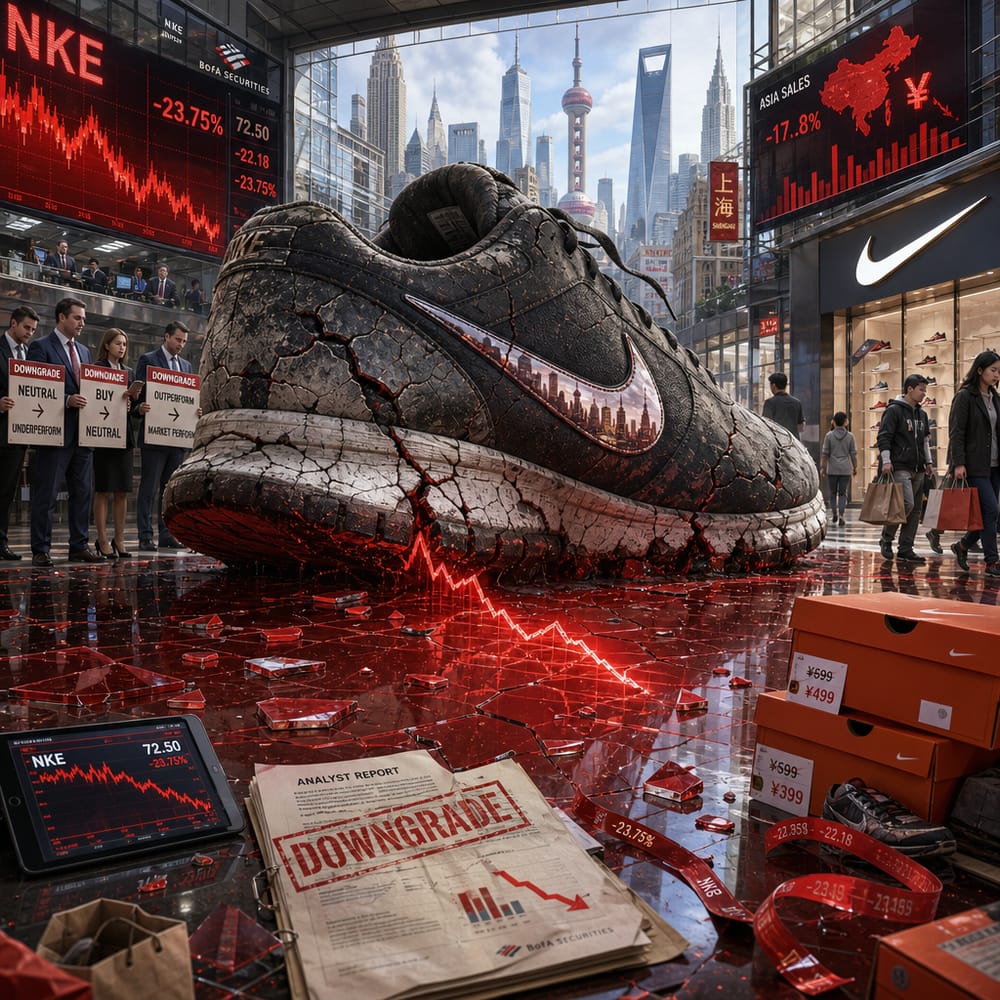
NIKE'S STRUGGLES: DOWNGRADES AND WEAK CHINA SALES
Once upon a time, Nike was the undisputed king of the sneaker world, flexing its swoosh-adorned muscles across the global market. Today, however, the athletic giant is stumbling, and not just on the basketball court. Recent headlines reveal that Nike’s performance in China is slipping, and Bank of America has just delivered a downgrade that feels like a sucker punch. So, what does this mean for investors who have long considered Nike a safe bet? Let’s lace up and take a closer look.
First off, let’s talk about the elephant in the room: the Bank of America downgrade. It’s the kind of announcement that sends shockwaves through Wall Street and makes investors clutch their smartphones a little tighter. Analysts at the bank cited concerns over Nike’s slowing sales in China and its ability to keep pace with competitors as key reasons for the downgrade. While Wall Street types throw around words like “headwinds” and “competitive landscape,” for everyday investors, the message is clear: Nike’s path forward looks a little rockier than before.
Why does a downgrade from one financial institution matter so much? Well, it’s all about perception. Bank of America’s analysts wield significant influence, and their words can act like a barometer for investor sentiment. When they suggest Nike might not be the star player it once was, investors pay attention. The impact? Nike’s stock took a hit, leaving some wondering if now is the time to buy on the dip or bail out before things get worse.
Now, let’s zone in on China, a crucial market for Nike and many other global brands. China isn’t just any market; it's a gigantic, sneaker-hungry nation with a growing middle class that loves its brands. So, when Nike sees its sales in the region decline, it’s not just a red flag—it’s more like a giant neon sign flashing “trouble ahead.” This slump in China could be a symptom of broader issues, like fierce competition from domestic brands and changes in consumer preferences. Or, it could just be a temporary blip. But either way, it’s a big deal for Nike’s bottom line.
So, what’s Nike’s game plan? Can they rebound from this downturn, or are they facing a prolonged slump? The company has a few potential moves up its sleeve. For starters, innovation and fresh product lines could spark consumer interest. Remember when Nike’s self-lacing sneakers made headlines? More of that, please. Plus, with a focus on sustainability and digital sales channels, Nike could still find ways to entice eco-conscious and tech-savvy shoppers.
Another potential play is expanding further into markets outside of China, where competition might be less fierce, or where they can capitalize on a loyal fan base. Think of regions with burgeoning sports culture or untapped retail potential. If Nike can strike the right balance between global brand appeal and local preferences, they might just write their next comeback story.
But let’s not forget the contrarian angle. While some investors shy away from stocks facing headwinds, others see opportunity. If you’re the type who believes in buying when others are fearful, Nike’s current struggles might just be a golden opportunity. After all, this is a company that’s weathered storms before. The swoosh has been around since 1964, and it didn’t get here by sitting on the sidelines.
So, where does that leave us? Is Nike a buy, a sell, or a hold? Well, that depends on what kind of investor you are. If you’re risk-averse, you might want to wait and see how this plays out, keeping a watchful eye on sales figures and market strategies. If you’re a risk-taker, you might consider this a chance to grab shares at a potential discount, banking on a turnaround once the dust settles.
In the end, investing is all about perspective. Nike’s current woes—whether from analyst downgrades or dipping sales in China—are all part of the market’s ebb and flow. The key is to stay informed, agile, and ready to pivot when opportunity knocks. After all, in the fast-paced world of retail stocks, you need to be ready to sprint, not just jog.
This article is for informational purposes only and is not investment advice. Always do your own research or consult a licensed financial professional before making investment decisions.
© Copyright 2024. All Rights Reserved.
© Copyright 2024. All Rights Reserved.