

Nike's Revenue Decline and Strategic Reset: Investor Concerns
Friday, October 02, 2026
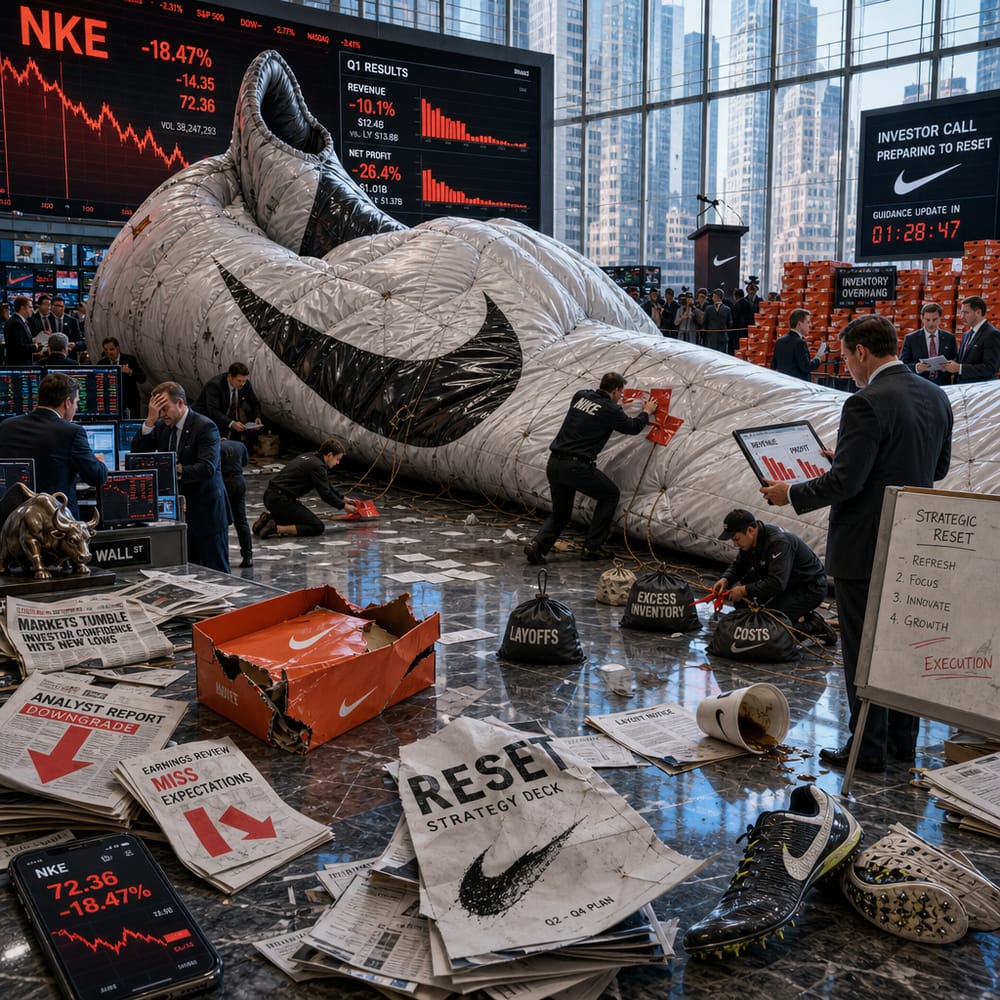
Nike, the swoosh that's synonymous with sportswear supremacy, has found itself on a slippery slope with its recent financial performance. The iconic brand, revered for its "Just Do It" mantra, is now whispering "Let's Reassess" after a concerning revenue decline, a gloomy outlook, and looming layoffs. The result? Investors are lacing up for a swift exit, causing Nike's stock to faceplant.
What's causing this revenue tumble? The answer lies partly across the Pacific. Nike's revenue was down by 4% to $11.2 billion in its fiscal first quarter, heavily dragged by a downturn in Greater China, one of its crucial markets. While North America showed some signs of life, China’s Achilles' heel forced the company to confront cracks in its global domination armor. Add to this a growing competition from local Chinese brands and the economic slowdown in the region, and you can see why the numbers aren't in Nike's favor.
Now, in a move that feels a bit like throwing your life jacket overboard, Nike has launched "Pace"—a new cost-saving initiative. The aim? To slash expenses by a jaw-dropping $2.5 billion by 2030. In theory, these savings could bolster Nike’s financials, providing a buffer against market volatility. But here's the kicker: the road to efficiency could be paved with pink slips. Nike plans to cut jobs, which might save some dollars but could also sap morale and innovation, the very lifeblood of a brand that lives on the cutting edge of cool.
For investors, the question looms large: Is this cost-cutting spree a Band-Aid on a bullet wound? The market's initial reaction suggests skepticism, as shares took a nosedive by 6% and have plummeted nearly 45% this year. The problem isn't just about pinching pennies; it’s about preserving the brand’s mojo while navigating an increasingly competitive and unpredictable landscape.
Looking to the future, the implications for Nike's market share are as uncharted as a new trail run. As the company battles headwinds in China and restructures internally, its rivals aren’t sitting idly. Brands like Adidas and Puma, not to mention niche startups, are all too eager to snag a piece of the action. Plus, the shift towards direct-to-consumer sales, which Nike has embraced with gusto, could backfire if it alienates wholesale partners who helped build the brand.
Another factor to watch is consumer sentiment. Nike's brand cachet has always been more about lifestyle than just sneakers. If layoffs and cost-cutting measures start to tarnish its image, the ripple effects could dampen consumer enthusiasm, particularly among younger shoppers who are increasingly conscious of where their money goes.
Nike's predicament is a case study in how even the mightiest brand must adapt or risk obsolescence. The global market is a brutal arena—brand loyalty can falter the moment consumers find a shinier, perhaps more ethically-robust alternative. And in this fast-paced, constantly evolving environment, Nike's ability to pivot effectively will determine whether it sprints back to the top or stumbles further behind.
All eyes are on how Nike will navigate this terrain. As the company adjusts its strategy under the "Pace" model, the world—and its investors—are eager to see if it will be enough. Will Nike find its second wind and dash past these hurdles? Or are we witnessing the beginning of a gradual descent from the mountaintop of the sportswear world? Investors, stay tuned. This is one race where the finish line is anything but clear.
This article is for informational purposes only and is not investment advice. Always do your own research or consult a licensed financial professional before making investment decisions.
© Copyright 2024. All Rights Reserved.
© Copyright 2024. All Rights Reserved.