

New U.S. Rule Closes 'Cloud Rental' Loophole for AI Chips to China
Monday, November 16, 2026
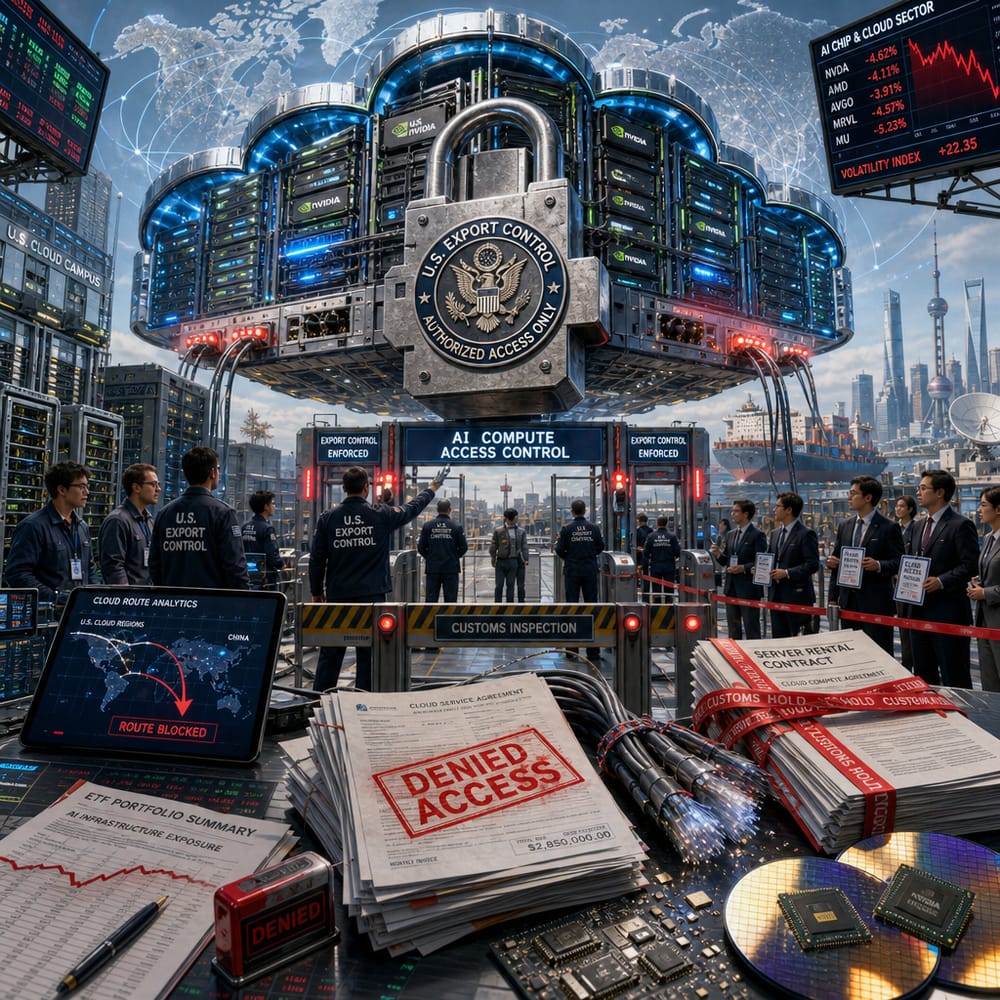
NEW U.S. RULE CLOSES 'CLOUD RENTAL' LOOPHOLE FOR AI CHIPS TO CHINA
Imagine Uncle Sam standing at the border, swatting away sneaky tech escapades like a world-class goalie. That’s the vibe with the latest U.S. export rule aiming to seal a crafty backdoor through which Chinese companies have been scoring access to state-of-the-art American AI chips. If you’re picturing a digital cat-and-mouse game, you’re right on target.
HERE'S THE SCOOP
The U.S. has decided it’s time to slam shut the 'cloud rental' loophole. This nifty trick allowed Chinese firms to bypass bans on direct sales of cutting-edge AI hardware by renting them from third-party data centers globally. Now, the Department of Commerce is playing hardball, scrapping this loophole faster than you can say “Silicon Valley.”
THE PLAYERS
So, who’s in the spotlight? Think Nvidia, Amazon Web Services (AWS), and Google Cloud, to name a few. These tech titans have been happily supplying the computing oomph that underpins many AI advancements. And Chinese companies have been keen customers, gobbling up this computational power like it’s the latest tech buffet.
But wait, there's more! It's not just the big names. AI-themed ETFs (Exchange-Traded Funds) and a slew of data-center providers are taking a hit too, with the new rule pinching off a potentially lucrative revenue stream. Essentially, Uncle Sam just turned the AI tech faucet off for China, and everyone’s scrambling to adjust.
ECONOMIC RIPPLE EFFECTS
So, what does this mean for the tech sector’s bottom line? For starters, expect some profit forecasts to get a brutal reality check. Companies like Nvidia, which have ridden the AI wave to dizzying financial heights, could see some turbulence ahead. It's a bit like having a profitable limb suddenly go numb. Sure, these companies are diversified enough to survive, but they're bound to feel the sting.
AWS and Google Cloud might need to recalibrate their strategies, too. With Chinese demand now facing a brick wall, these cloud giants may have to pivot, perhaps eyeing other emerging markets or doubling down on domestic innovation to keep investors smiling.
THE BIGGER TECH WAR
Beyond the dollars and cents, there’s a grander geopolitical chess game in play. The U.S. is drawing a clear line in the silicon sand, signaling a more stringent stance against tech exports to China. This move isn't just about plugging a loophole—it's a message wrapped in a policy: the U.S. is serious about safeguarding its tech crown jewels.
What we have here is a classic case of tech warfare in the 21st century. Chips are the new oil, and the race for AI supremacy is the new arms race. This tightening of tech transfers is likely to stoke the already simmering U.S.-China tensions over technology and innovation.
FUTURE RELATIONS
Looking forward, this latest policy shift could further strain U.S.-China tech relations. Beijing isn't exactly thrilled, and who could blame them? Losing access to superior AI tech bruises ambitions and potentially slows progress. We could see retaliatory measures, maybe tighter scrutiny on American companies operating in China or fresh barriers to other tech imports.
For U.S. tech companies, it means threading the needle between complying with domestic regulations and maintaining as much market access as possible abroad. In a world where global supply chains are as tangled as a pair of earbuds in your pocket, that's no easy task.
THE BOTTOM LINE
In a nutshell, the new export rule throws a wrench into the gears of the U.S.-China tech dynamic. While it’s a smart play to protect U.S. technological interests, it’s also a high-stakes gamble. As the landscape shifts, companies, investors, and regulators will need to stay nimble, navigating this new frontier where every move counts like never before.
So, folks, stay tuned. With the stakes this high, the tech world is about to get a whole lot more interesting.
This article is for informational purposes only and is not investment advice. Always do your own research or consult a licensed financial professional before making investment decisions.
© Copyright 2024. All Rights Reserved.
© Copyright 2024. All Rights Reserved.