

New SEC Frameworks for Tokenized Asset Issuance
Monday, August 17, 2026
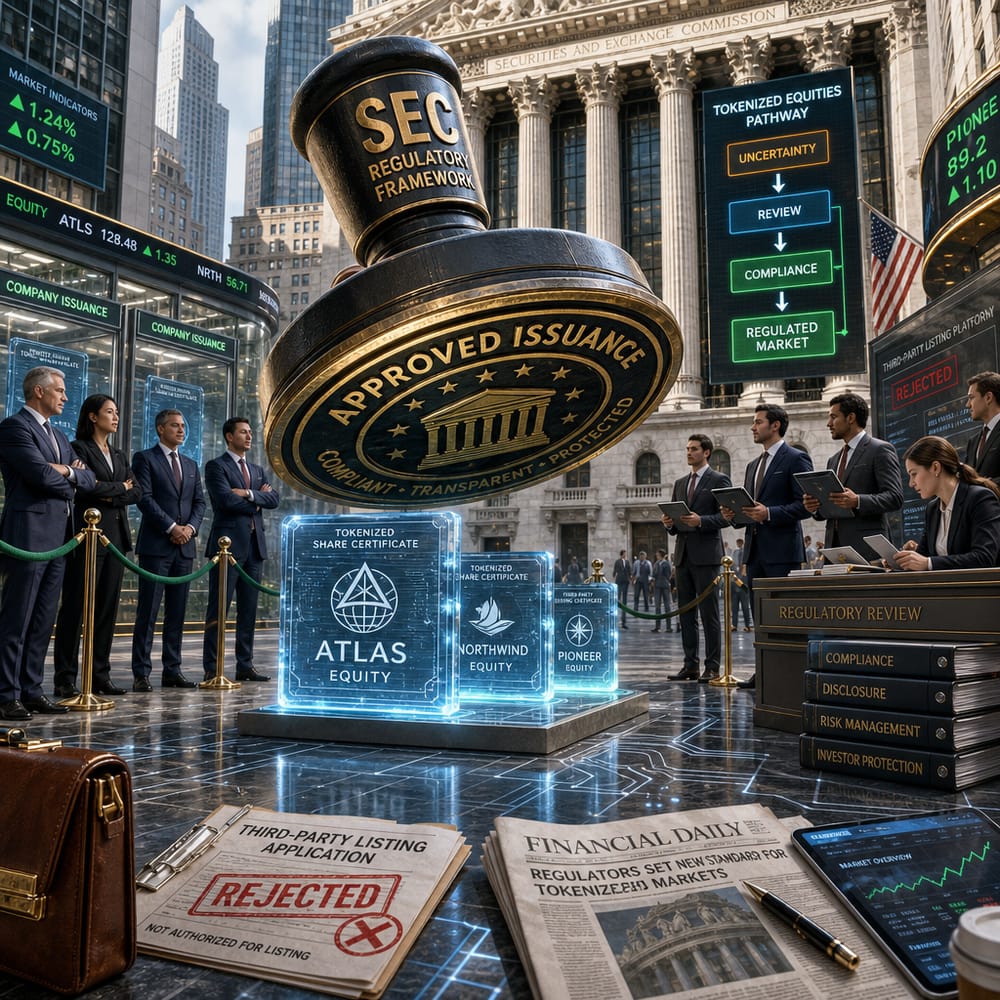
THE SEC'S TOKENIZED TANGO: POWER PLAY OR POWER SHIFT?
If the SEC were a party host, it would certainly be the one who insists on checking your ID twice before letting you in—especially if you’re trying to waltz in with a tokenized asset. And now, the SEC is set to shake things up on the dance floor of the financial markets with a new proposal that's sure to get tongues wagging among the investors and companies alike.
So, what's the new move? The SEC is considering a fresh set of frameworks that would allow companies to object to third-party listings of their tokenized shares. In plain English, it's like giving corporations a veto card when someone tries to list their digital goodies without their say-so.
But before we dive into the implications of this proposed change, let’s take a quick detour into what tokenized shares actually are. Imagine a world where every stock share you own can be sliced, diced, and served on a blockchain platter. That’s the magic of tokenization. It turns tangible assets into digital tokens, making them easier to trade, track, and—potentially—manipulate. It's like taking an old vinyl record and converting it to a Spotify playlist—more accessible, but not without its nuances.
Now back to the SEC’s brainstorm. In a landscape where tokenized securities are gaining traction faster than cat videos on the internet, this move is pivotal. Why? Because it could reshape corporate governance and redefine investor protection in the digital age.
First off, let’s talk about control. By allowing companies to object to listings, the SEC is handing a bit more power back to the issuers. It's about letting companies say, "Hey, hang on! We didn’t approve this listing!” This could prevent unauthorized trading that may not align with a company’s broader strategic goals. After all, nobody wants their assets listed in the Wild West of exchanges without a chaperone.
But this isn’t just about Grinch-esque corporations clutching tighter to their assets. There's a potential silver lining for retail investors too. With added oversight, the risk of running into fraudulent or misrepresented tokens decreases. It’s like shopping on a verified marketplace rather than a sketchy alleyway bazaar. Investor protection could see a boost, promising a fairer, more transparent market environment.
Now, what could this mean for the tokenized securities market as a whole? For starters, it may slow down the frenetic pace of token listings as companies exercise their new powers. But let’s not mistake a slow dance for a bad one. This could lead to higher quality, more reliable listings, which could ultimately attract more serious investors. Think of it as trading in your junk food diet for something a little more nourishing.
However, this proposal could also prompt a mixed bag of reactions. While some companies might welcome the newfound control, others could see it as an additional hurdle in an already complex regulatory maze. And if companies start playing their veto cards too liberally, it could stifle innovation just as the tokenized market is finding its groove.
The SEC’s idea is still a concept, mind you, not the law of the land. But the very notion of it stirs the pot, raising important questions about the future of digital finance. Will this be the change that ensures the market's maturity, or will it be seen as regulatory overreach that chains the market down?
In this dance of progress and regulation, the SEC seems intent on playing the responsible chaperone. But whether this leads to a harmonious waltz or a clumsy tango is yet to be seen. What’s clear is that the conversation is just getting started—and for retail investors and companies alike, it’s a conversation that’s worth tuning into.
This article is for informational purposes only and is not investment advice. Always do your own research or consult a licensed financial professional before making investment decisions.
© Copyright 2024. All Rights Reserved.
© Copyright 2024. All Rights Reserved.