

New Federal Regulations Set to Reshape Data Center Power Infrastructure
Saturday, October 10, 2026
NEW FEDERAL REGULATIONS SET TO RESHAPE DATA CENTER POWER INFRASTRUCTURE
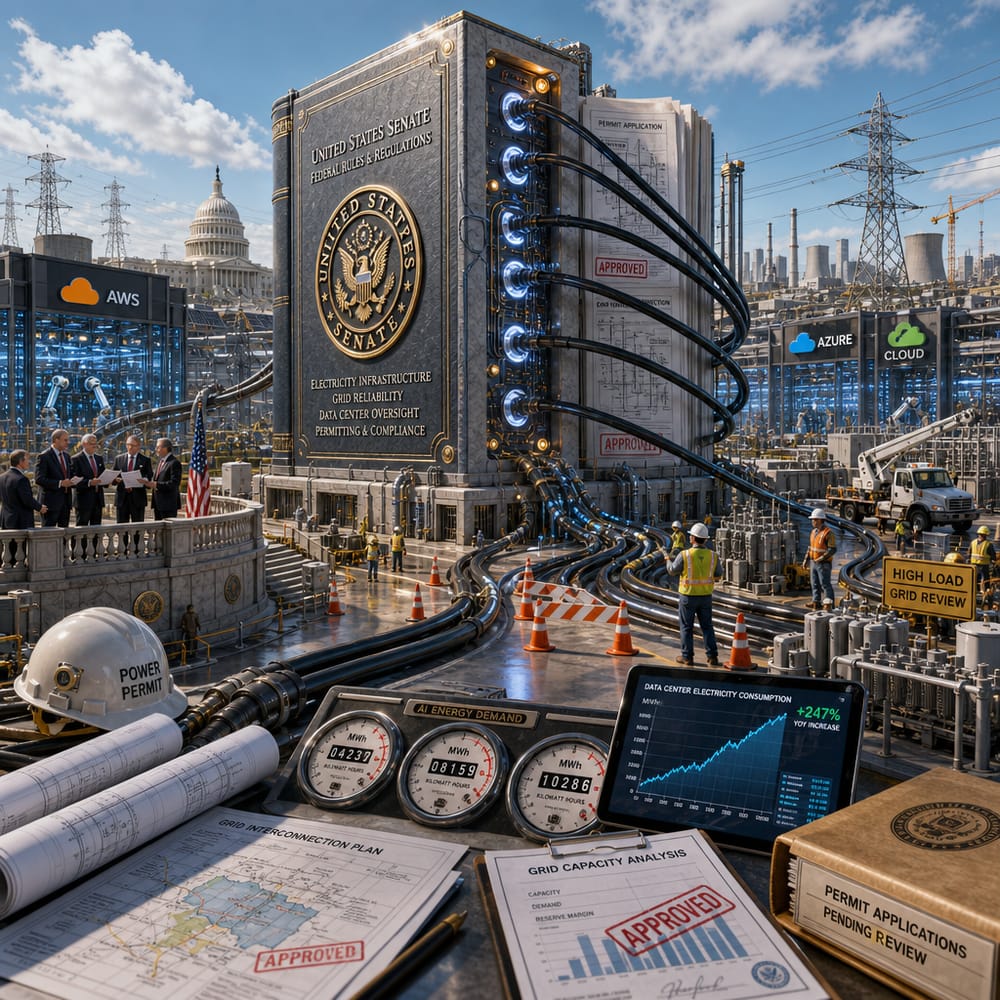
If you thought your streaming binges and cloud storage sprees were energy hogs, brace yourself because Uncle Sam is stepping in to tame the power-hungry beasts of the tech world. Yep, the Senate just dropped a regulatory bomb aimed squarely at data centers, the silent giants eating up electricity faster than you can say “artificial intelligence.” These new rules are more than a blip on the tech radar—they’re a seismic shift that could upend how big names like AWS, Azure, and Google Cloud manage their infrastructure.
So, what’s the deal with these new rules? Picture this: The legislation is a cocktail of power usage mandates and permitting protocols, stirred with a dash of AI-driven urgency. The main ingredients? New efficiency standards that will make data centers leaner and greener, and a streamlined permitting process that should, in theory, expedite the construction of new, more efficient facilities. With AI gobbling up power like it’s on an all-you-can-eat buffet, lawmakers are keen to curb the attendant spike in demand.
How will these changes affect the tech titans? Well, the hyperscalers—those data juggernauts like AWS, Azure, and Google Cloud—might need to rethink their strategies. Imagine your favorite tech behemoth trying to squeeze into a pair of jeans two sizes too small. These regulations are a tight fit, pushing companies to innovate or risk getting squeezed. More efficient power usage could mean investing in cutting-edge tech to better manage data loads—think AI-driven energy management systems and innovative cooling tech.
But it’s not just about tightening belts. There’s a golden opportunity here for these companies to shine. By leading the charge in sustainable tech infrastructure, they can set the standard for the entire industry while potentially unlocking a treasure trove of cost savings in the long run. It’s a chance to be both a fiscal hero and an environmental champion, and let’s be real, who doesn’t love a two-for-one deal?
On the flip side, let’s not sugarcoat it—this transition won’t be a walk in the park. The initial outlay for new technologies and revamped infrastructures could be steep. It’s the classic “spend money to save money” scenario, and not every company is going to have the deep pockets needed to dive in headfirst. Smaller players might feel the pinch more acutely, possibly leading to industry consolidation as they struggle to keep up.
So, when does this whole shake-up kick off? The timeline is set to roll out over the next couple of years, with gradual implementation before a full swing by 2028. This gives companies time to adjust, but it also signals a ticking clock. The race is on to innovate and adapt, setting the stage for a power-play showdown across the tech landscape.
In short, these regulations are more than just a bureaucratic shuffle; they’re a clarion call for the tech industry to evolve. Hyperscalers will need to navigate a delicate balance between compliance and competitiveness. While it’s clear there will be growing pains, the potential for long-term gains and industry leadership is enormous. This is one energy revolution you’ll want to keep on your radar—after all, it’s not just about powering up; it’s about powering smart.
This article is for informational purposes only and is not investment advice. Always do your own research or consult a licensed financial professional before making investment decisions.
© Copyright 2024. All Rights Reserved.
© Copyright 2024. All Rights Reserved.