

New BIS Interim Final Rule Chokes Off Remote AI Chip Access by Foreign Actors
Sunday, November 29, 2026
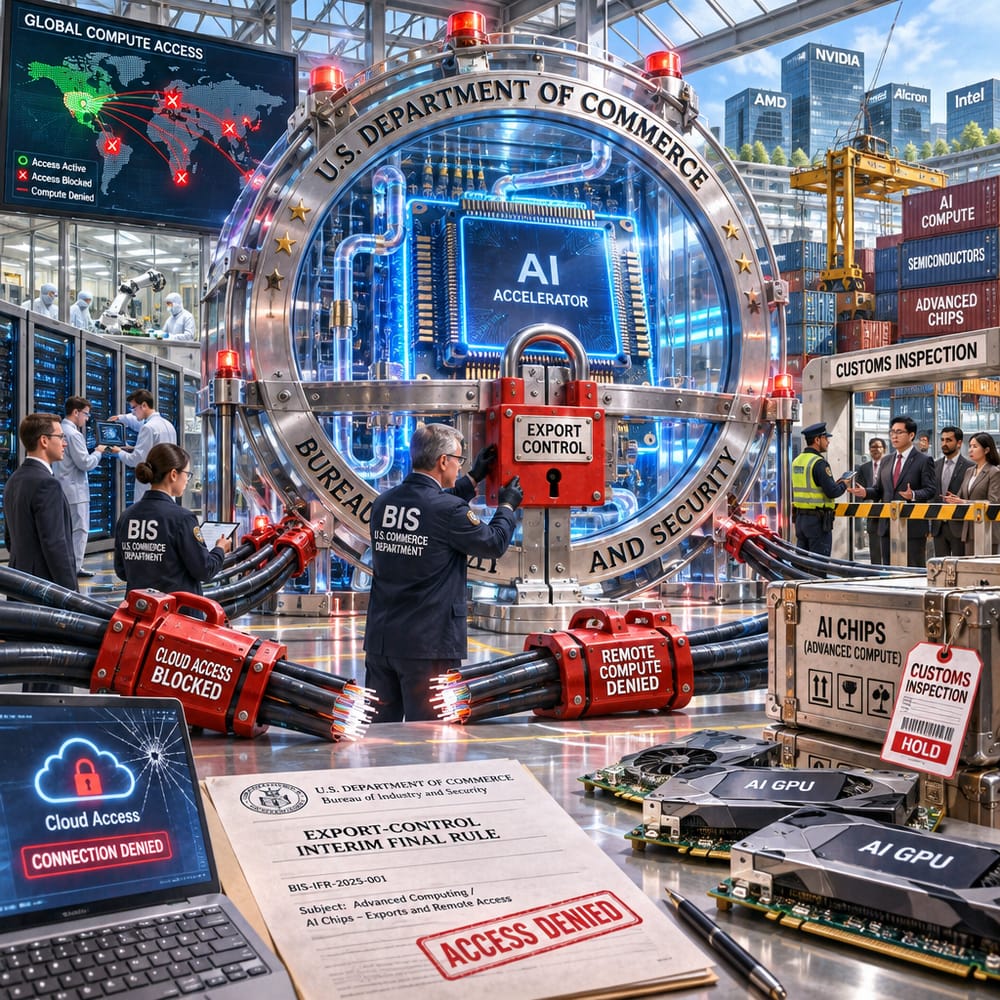
NEW BIS INTERIM FINAL RULE CHOKES OFF REMOTE AI CHIP ACCESS BY FOREIGN ACTORS
Imagine you’re at a tech buffet, ready to load up on all the latest AI innovations, when suddenly the chef locks the doors, leaving the global crowd outside holding empty plates. That’s exactly the feeling across the world right now, as the U.S. Commerce Department has just served up a new Interim Final Rule that hogties the export of advanced AI chips — specifically to foreign entities who might misuse them. This compliance cocktail? It’s shaking up the semiconductor industry like a Friday night earthquake.
Welcome to the semiconductor sector's version of musical chairs, where the U.S. just yanked a chair out from under foreign tech players faster than you can say "artificial intelligence." The rule, which is effectively a tech-savvy gatekeeper, is designed to restrict the access of certain AI chips to foreign actors — but not without a splash of drama for global supply chains and cloud computing deployments. So what gives?
HOW WILL THIS RULE AFFECT GLOBAL SEMICONDUCTOR SUPPLY CHAINS?
This Interim Final Rule is like the ultimate roadblock on the international chip highway. The rule could mean a bottleneck in the supply of AI chips to countries considered a national security threat by the U.S. These chips, often the brainpower behind cutting-edge technology, might now take a detour around the globe, straining supply chains and forcing tech giants to rethink their sourcing strategies.
Consider this: companies that rely heavily on AI for their products and services might soon find themselves in a bit of a pickle. They’ll have to navigate this new landscape, balancing between restricted access and maintaining their competitive edge. This is no small feat when the tech world moves faster than a cat meme goes viral.
WHAT ARE THE POTENTIAL COST IMPLICATIONS FOR U.S. AND INTERNATIONAL FIRMS?
The impact of this rule? It’s going to hit the pocketbooks, and not just like a gentle breeze. We're talking a financial nudge that could inflate costs for companies both in the U.S. and internationally. Firms that have built their empires on AI will have to spend more to source chips from approved suppliers or adapt their technologies to the chips they can get their hands on. It’s a recipe for increased expenses that could have many CEOs reaching for the antacid.
In the semiconductor world, giants like Nvidia, AMD, and Intel are the star players, and now they’re on the hot seat to strategize around these new restrictions. Imagine them as marathon runners suddenly faced with a hurdle race — they’ll have to jump through regulatory hoops to maintain their stride.
HOW ARE MAJOR SEMICONDUCTOR COMPANIES RESPONDING TO THIS REGULATION?
Let’s focus on the big names: Nvidia, AMD, Intel, and Micron. These companies are the rockstars of the chip industry, and they’ve got some strategies up their sleeves to cope with this regulatory shake-up.
Nvidia, for instance, known for its prowess in AI chips, has been riding a high wave of success. The company might pivot by amplifying its focus on markets where these restrictions don’t apply. Think of them as chess players, always a few moves ahead, recalibrating their game to stay ahead of the pack.
AMD and Intel aren't just twiddling their thumbs, either. They’re likely exploring diversification of their supply chains, reinforcing partnerships that align with U.S. regulations, and doubling down on domestic manufacturing capabilities. It's like a tech version of musical chairs, where everyone’s scrambling to secure their spot.
Micron, the memory chip maestro, is in a slightly different position. While not as directly hit by AI chip restrictions, they could feel the ripple effects as partners and customers adjust their own strategies. It’s a classic domino effect, where one toppled block could shift the entire landscape.
As for the rest of the globe? Tech companies relying on U.S. AI chips will have to do some serious logistical gymnastics. They might consider alternative suppliers, perhaps in Europe or local markets, but whatever the strategy, it’s going to require some creative agility — think Cirque du Soleil in the boardroom.
THE OFFICIAL AFTERPARTY: WHAT’S NEXT?
While the tech world figures out its next moves, investors and companies alike should keep a watchful eye on the ripple effects of this rule. This isn’t just about chips — it’s about power, control, and the future of AI innovation.
The stakes have never been higher, and as the dust settles, the semiconductor industry will evolve, adapt, and hopefully, come out stronger. One thing’s for sure: in the tech world, the only constant is change, and this new rule is just another chapter in the ever-unfolding drama of innovation and regulation. Grab your popcorn, folks — it’s going to be a blockbuster.
This article is for informational purposes only and is not investment advice. Always do your own research or consult a licensed financial professional before making investment decisions.
© Copyright 2024. All Rights Reserved.
© Copyright 2024. All Rights Reserved.