

Netflix Nears 52-Week Lows After Q2 Disappointment and Disclosure Pullback
Sunday, August 16, 2026
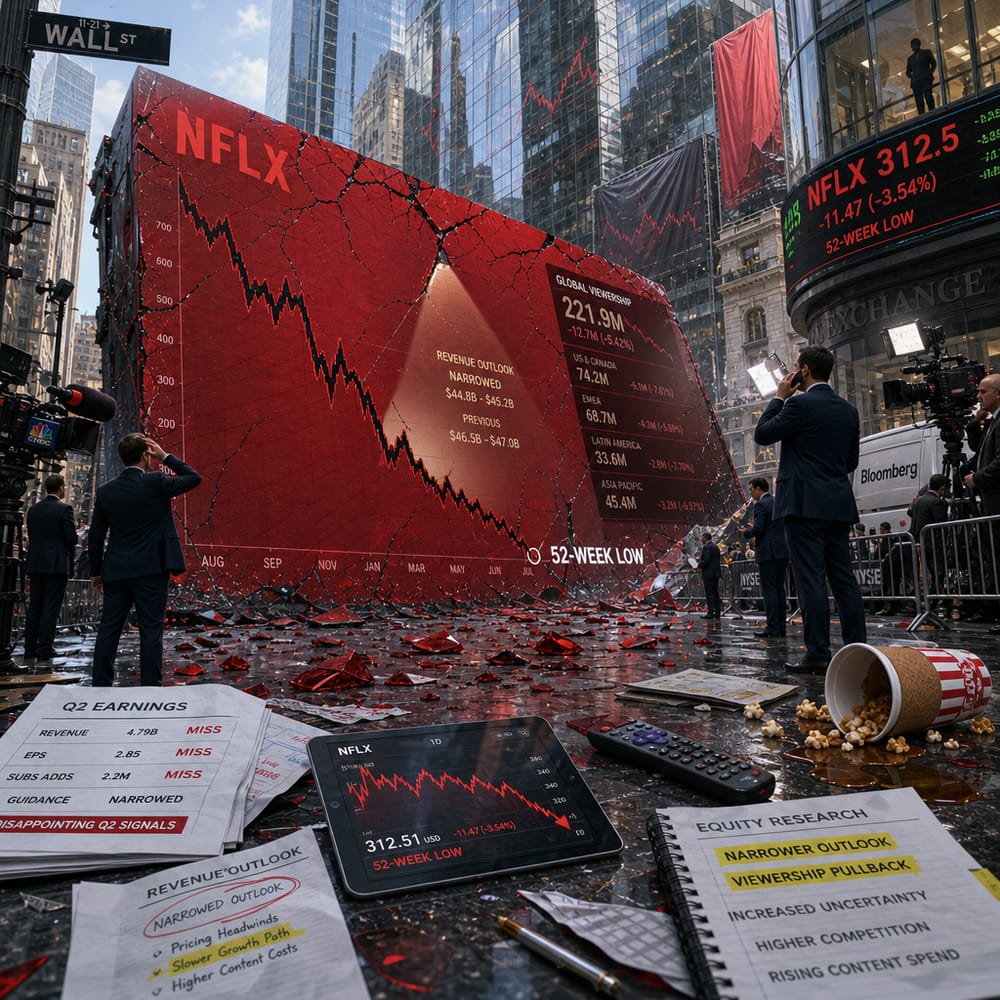
Netflix investors are rolling their eyes right now harder than a teenager at a family reunion. The streaming juggernaut—once the darling of Wall Street—has skated dangerously close to its 52-week low. Wall Street isn’t impressed, and there are many reasons why.
Let’s start with Netflix’s Q2 earnings report, which was, shall we say, as thrilling as a tax seminar. Sure, they hit their guidance targets, but they also trimmed their full-year revenue outlook and decided to play peekaboo with viewership data. The market didn’t exactly throw a ticker-tape parade. Instead, Netflix shares took a nosedive, falling nearly 40% from their 52-week high. If you’re wondering why Wall Street is sulking, read on.
Netflix’s decision to scale back viewership reporting isn’t winning any popularity contests. Investors like numbers; they love transparency even more. But Netflix, instead of laying its cards on the table, has decided to keep a few aces up its sleeve. The company argues it’s shifting focus to more meaningful metrics. Translation? They’d like you to trust their strategic vision without inundating you with trivial details like how many people are actually watching Stranger Things for the umpteenth time.
But why did Netflix yank on the viewership data leash in the first place? It's a classic case of closing the curtains on a bad hair day. As Netflix shifts its business model to embrace ad-supported content, the focus is shifting from mere eyeballs to dollars. It’s about how effectively they can monetize their audience through advertising, which is expected to double to a cool $3 billion by 2026. But Wall Street isn’t convinced that playing hide-and-seek with data is the best way to instill confidence.
So where does that leave Netflix's stock price? Hovering tantalizingly close to its 52-week low like a cat eyeing a patch of sunlight. The stock is down nearly 40% from its 52-week high, a tumble that might make even the calmest investor reach for the antacids.
But here's the kicker: The underlying business isn't exactly in shambles. Revenue has grown 13% year-over-year, and profitability remains robust. The drop in stock price is more about a change in investor expectations. The market is asking whether Netflix can keep delivering high growth now that it’s hit the colossal 300+ million subscriber mark. It’s like trying to squeeze a little more juice out of a fruit that’s been squeezed nearly dry.
What’s the street chatter saying about Netflix's future? Analysts are split like a Thanksgiving wishbone. Some believe Netflix can maintain its double-digit growth and fatten its profit margins, thanks in part to its ad-model shift. Others, though, are skeptical. They wonder if Netflix can remain the invincible Goliath of streaming or if it's time for David to shine—a.k.a other streaming services nipping at its heels like a pack of hungry chihuahuas.
What does all this mean for you, the retail investor scrolling through your phone, contemplating your next move in the stock market jungle? Well, the streaming sector is a wild beast right now. If you’re investing in Netflix, you’re betting on a company that’s radically reshaping its strategy—kind of like remodeling a house while you’re still living in it.
In the grand scheme, Netflix's dip is a barometer for the wider streaming industry. As Netflix sneezes, the rest of the industry catches a cold, reflecting broader worries about growth prospects and transparency. The moral of the story? Keep your eyes peeled. The streaming wars are far from over, and Netflix’s next moves could spell opportunity or risk.
In the meantime, grab some popcorn. This show is just getting started.
This article is for informational purposes only and is not investment advice. Always do your own research or consult a licensed financial professional before making investment decisions.
© Copyright 2024. All Rights Reserved.
© Copyright 2024. All Rights Reserved.