

Netflix Faces Headwinds After Sharp Downgrade
Thursday, September 24, 2026
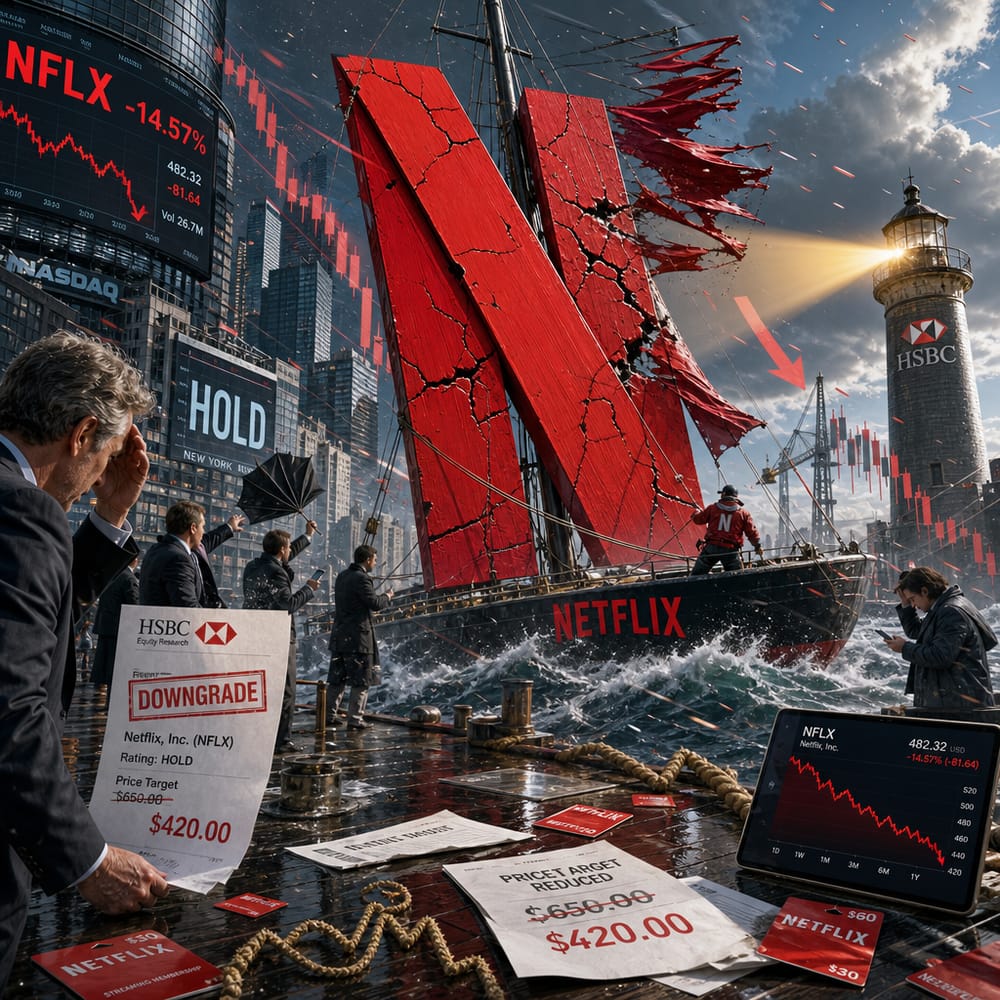
NETFLIX FACES HEADWINDS AFTER SHARP DOWNGRADE
You might want to sit down for this one: HSBC just took a red pen to Netflix's future, and the scribbles aren't pretty. The banking behemoth downgraded our favorite binge-watch enabler from a sparkling "Buy" to a rather pedestrian "Hold." And if that wasn't enough to make investors clutch their remote controls tighter, the price target has been axed significantly. So, what's in Netflix's latest season that has HSBC so nervous? Let's dive into the drama.
Netflix has been the darling of the streaming world for years, captivating audiences with everything from gritty dramas to stand-up comedy that makes you laugh until your sides hurt. But not even the slickest new season of Stranger Things can distract from some underlying issues that have HSBC sounding the alarm.
HSBC's downgrade centers around some familiar foes: subscriber growth and margin pressures. You see, while Netflix has expanded into almost every corner of the globe, the days of double-digit subscriber growth are over. New subscriber numbers have been chugging along rather than racing, and in the adrenaline-fueled world of tech stocks, that doesn't sit well. Investors like their growth stories unending and dramatic, not slow and steady.
Then there's the money talk. Producing entertainment content is expensive—think blockbuster movie-level expensive. With every new show and movie, Netflix is burning through cash like it's confetti at a ticker-tape parade. Margins—essentially the profit Netflix makes after covering its wild spending spree—are feeling the squeeze. They're being pinched by both higher production costs and the intensifying competition that Netflix faces from every corner of the digital realm. Disney, Amazon, and even HBO are all vying for that same screen time and dollar.
But what does this mean for Netflix's stock in the short term? Well, if you're one of those retail investors with your eyes glued to stock tickers, expect a bit of turbulence. The downgrade by HSBC could be akin to a reset button, prompting other analysts and investors to re-evaluate their positions. Typically, a downgrade like this can lead to a sell-off as jittery shareholders re-assess their portfolios and potential buyers hit pause, waiting for the dust to settle.
But here's where it gets interesting: Is this dip a buying opportunity, or a harbinger of darker days ahead? That depends on your perspective. Some investors might see the downgrade as a chance to grab Netflix stock at a discount, banking on the company's ability to innovate its way out of these challenges. After all, Netflix's track record of shaking up the entertainment industry is well-documented.
On the flip side, the challenges are real, and they might not evaporate overnight. Sluggish subscriber growth and margin woes could be a sign of deeper, systemic issues—a plotline that even the best Netflix writers can't resolve easily. With competition growing and costs continuing to climb, Netflix may have to start thinking outside the box it created if it wants to keep its crown.
Looking further down the road, Netflix's future will hinge on its ability to adapt and innovate. Could they venture into live sports, or perhaps tighten their hold on interactive content? Finding new revenue streams might be crucial in safeguarding their position as streaming royalty. Also, the company might need to reassess its pricing strategies or even consider ad-supported models to enhance revenues without alienating subscribers.
In the end, Netflix's story isn't over—this is just the latest twist in a saga that's been as thrilling as any of its shows. Whether you'll find this chapter exciting or nerve-wracking likely depends on your investment style and risk appetite. For now, though, maybe pick a new series to binge-watch; Netflix isn't going anywhere, but its next episode will be one to watch.
This article is for informational purposes only and is not investment advice. Always do your own research or consult a licensed financial professional before making investment decisions.
© Copyright 2024. All Rights Reserved.
© Copyright 2024. All Rights Reserved.