

nCino's Mixed Q2 Results and Market Reaction
Wednesday, August 26, 2026
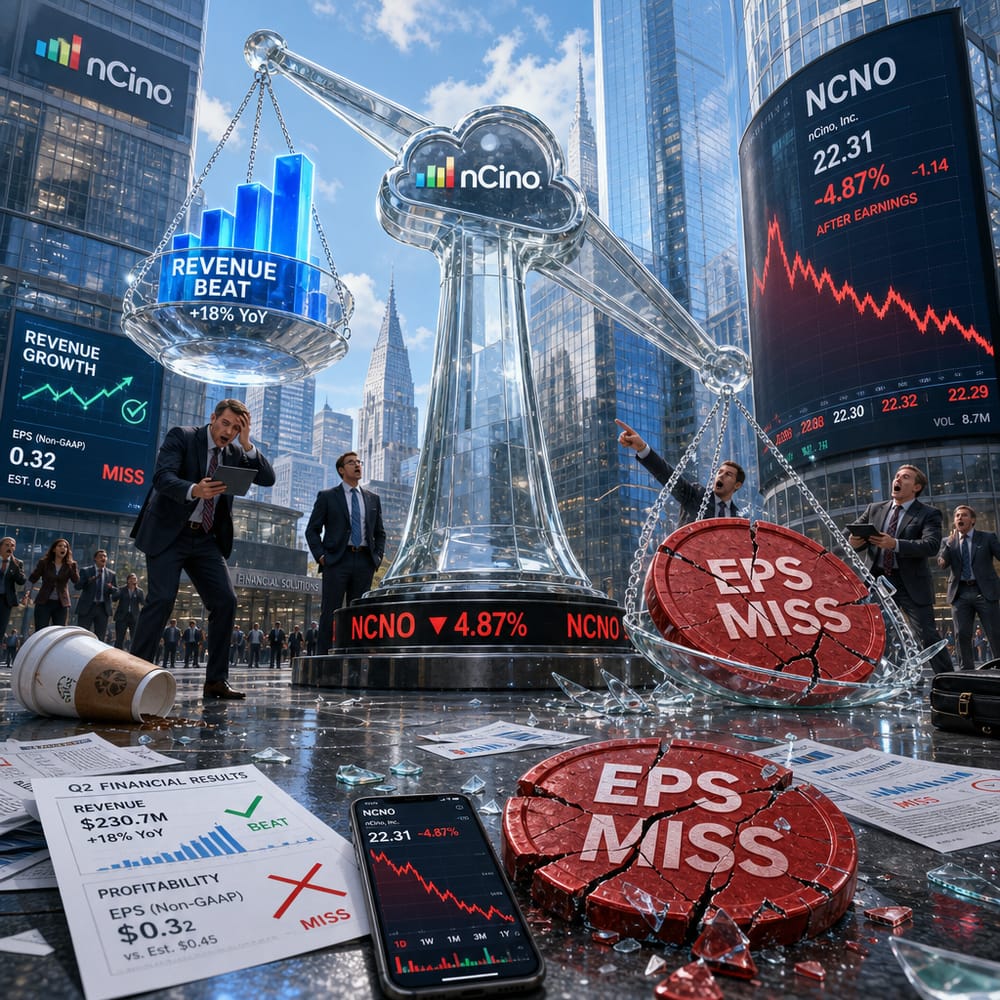
MARKET TEMPERATURE CHECK: NCINO'S MIXED Q2 RESULTS AND MARKET REACTION
In the land of fintech, where dollars dance and spreadsheets sing, nCino just pulled a classic plot twist: a revenue party with an awkward EPS hangover. Investors were expecting a Broadway performance, but instead, they got an off-Broadway production. Let's dive into why the market's got the Monday blues over this mixed quarterly report.
First, the good news: nCino's revenue did a little happy dance, beating analyst estimates. You’d think that would have investors clinking glasses, right? But hold your applause, because the bottom line did a faceplant. Earnings per share (EPS) missed the mark, and that's like showing up to a Wall Street gala in flip-flops. Not exactly what the market was hoping for.
SO WHAT HAPPENED BEHIND THE CURTAIN?
nCino's business model is all about cloud-based banking solutions, helping financial institutions streamline operations. They’ve been riding the digital transformation wave, where banks are swapping out dusty old systems for slick new digital platforms. More banks signed on, hence the revenue rise. But here's the kicker: growing fast often means spending fast. And nCino's expenses ballooned quicker than a birthday balloon at a toddler's party. Higher operating costs and increased investment in product development meant their profits had a bit of a disappearing act.
So, what’s nCino doing to calm frazzled investors? For starters, they’re pulling a play from the classic tech company handbook: promising future profitability. CEOs love that line, but it’s like saying you'll clean your room tomorrow—investors have heard it before. However, nCino’s execs are emphasizing their long-term vision, focusing on scaling their operations efficiently and investing in areas with high growth potential, like AI-driven banking solutions.
In terms of investor concerns, nCino's management is hitting the PR circuit hard, assuring shareholders that these growing pains are just a phase. They’re highlighting their strong market position and continued customer acquisitions as reasons to believe in the company's future value. But, convincing Wall Street skeptics is easier said than done, especially when tech investors are increasingly twitchy about balancing growth with profitability.
WHAT'S THE LONG GAME FOR NCINO?
Let’s put the crystal ball to work. nCino sits in a sweet spot within the banking tech sector, poised to capitalize on the ongoing digital shift in financial services. As more banks wake up to the reality that they need to integrate tech-savvy offerings to attract tech-hungry consumers, nCino’s solutions become more attractive. But, competition isn't a slumbering giant. Plenty of fintech startups are nipping at their heels, eager to claim a slice of the pie.
The company aims to expand its footprint internationally. However, globetrotting in the financial world isn’t as glamorous as it sounds. Each region comes with its own regulatory mazes and market dynamics. But, if nCino can navigate these waters, they could open up significant new revenue streams. And for the long-term investor, this is where the real treasure might be buried.
So, should you bet the farm on nCino? Well, if you're someone who likes your investments a bit spicy, with a side of risk, nCino offers potential—just remember that tech stocks can be as volatile as a soap opera plot. They have the digital know-how and product offerings that suggest staying power, but profitability is the golden ticket they still need to fully pocket.
For now, nCino's stock might feel like a rollercoaster at times, but for the investor who can stomach the ups and downs, holding tight for the long haul might just pay off. Just make sure you have a firm grip—because fintech, as always, is full of twists, turns, and the occasional unexpected loop.
This article is for informational purposes only and is not investment advice. Always do your own research or consult a licensed financial professional before making investment decisions.
© Copyright 2024. All Rights Reserved.
© Copyright 2024. All Rights Reserved.